Building Wealth Through Compassion with Kevin Macho
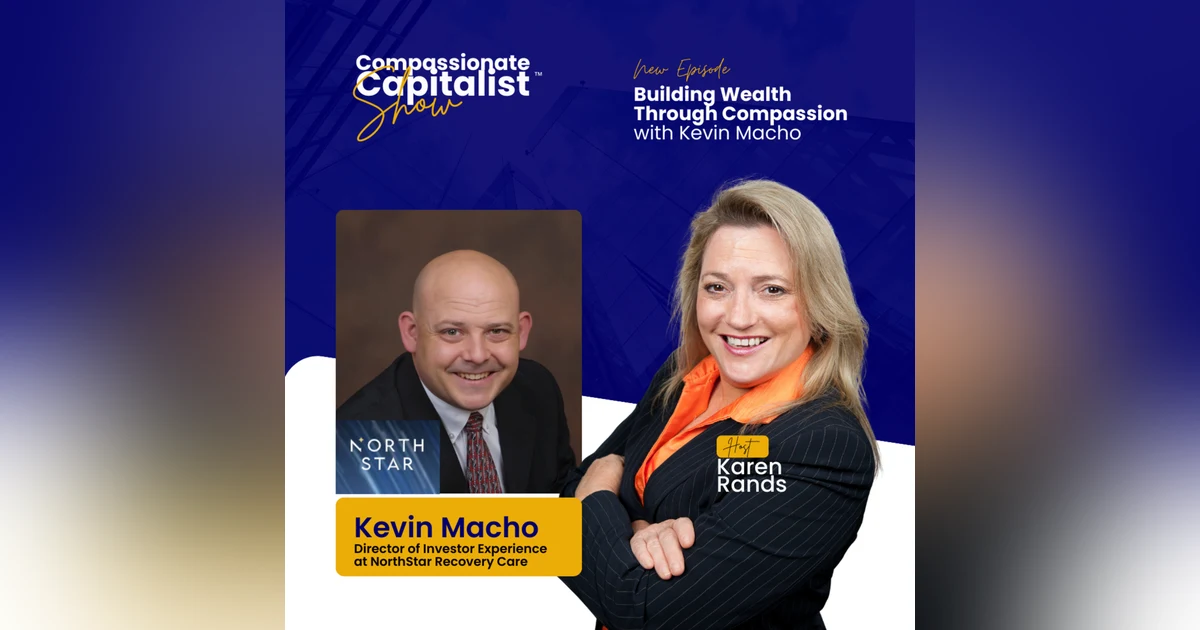
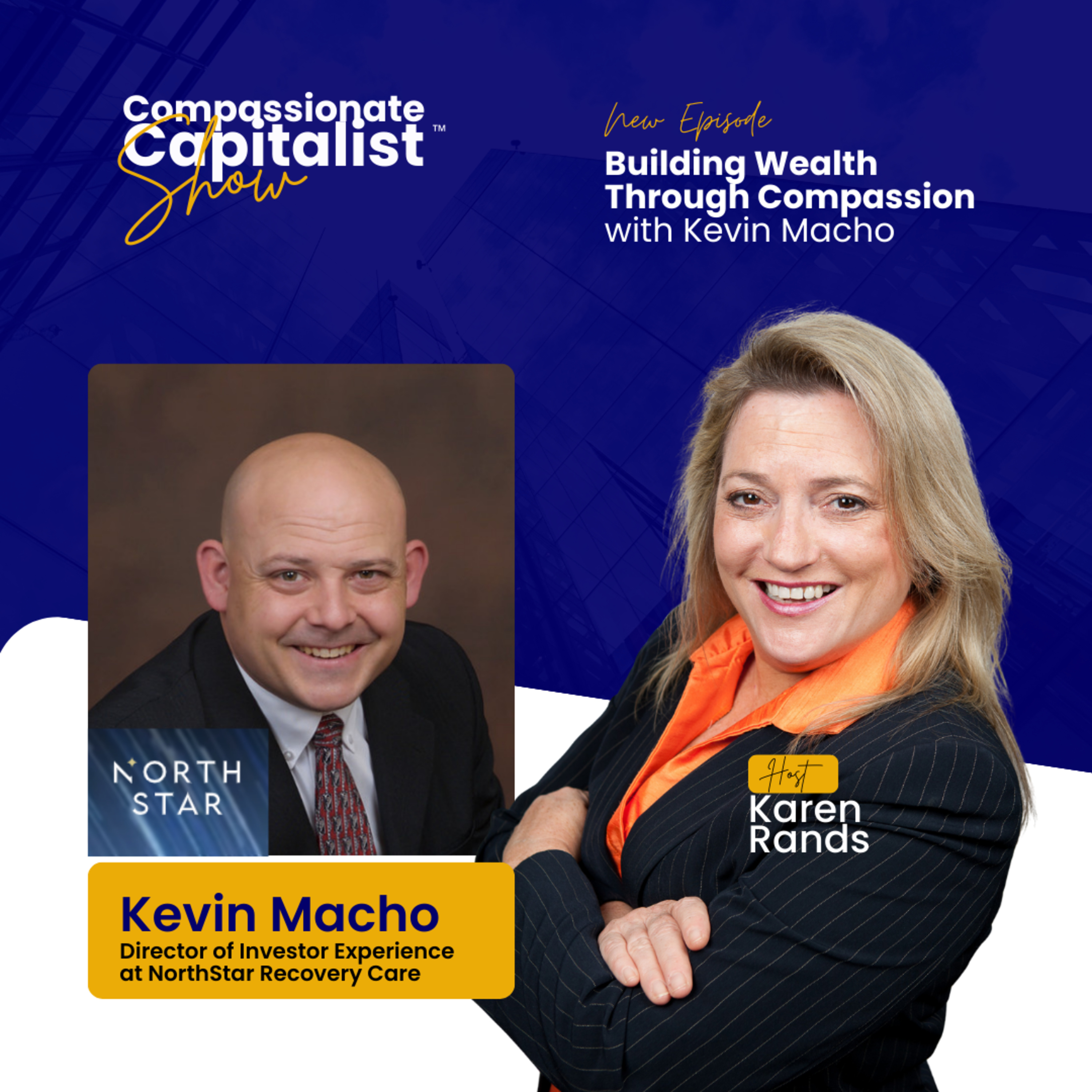


What if your investment dollars could both generate steady returns and help solve one of society’s biggest crises?
In this episode of The Compassionate Capitalist Show, I sit down with Kevin Macho to explore how addiction recovery and mental health facilities can be transformed into powerful investment opportunities.
Kevin shares how NorthStar Recovery Care is pioneering a model that allows everyday investors to earn predictable, real estate-backed returns while expanding access to critical treatment services. This is capitalism with compassion at its core; a pathway to building wealth and changing lives at the same time.
Key Takeaways:
Compassionate capitalism focuses on investing with purpose and impact.
Investors can participate in projects that address community needs.
Real estate can provide a stable investment opportunity in recovery services.
Investing in addiction recovery facilities can yield both financial returns and social benefits.
The importance of financial education in making informed investment decisions.
Investing in oneself and delaying gratification can lead to long-term wealth.
The role of regulation A funds in democratizing investment opportunities.
Creating a supportive ecosystem for addiction recovery is crucial.
Investors should consider the risks and benefits of their spending habits.
Compassionate capitalism can change lives while generating profits.
Chapter Breakdown:
00:00 Introduction to Compassionate Capitalism
03:44 Kevin Macho's Journey and Background
07:52 The Shift to Investing for Passive Income
13:47 Understanding Investment Strategies and Risks
19:50 Creating Hope through Impactful Investments
22:50 Exploring Nature's Beauty
24:11 Finding Balance: Work and Life
26:04 Investment Opportunities in Addiction Recovery
31:51 Building a Comprehensive Care Ecosystem
37:58 Compassionate Capitalism: Merging Profit with Purpose
About Kevin Macho
Kevin Macho is a textbook compassionate capitalist, a former police chief turned seasoned real estate investor. Today, he serves as Director of Investor Experience at NorthStar Recovery Care, where he helps everyday people generate passive income while making a meaningful difference. NorthStar’s mission is twofold: to provide comprehensive solutions for addiction recovery and mental health treatment, and to create accessible pathways for investors of all walks of life to earn predictable returns.
🔗 Learn more at www.northstarrecovery.care
About Karen Rands
I'm Karen Rands, founder of the Compassionate Capitalist Movement. I help entrepreneurs prepare to raise capital the smart way and guide investors in identifying startup opportunities that build wealth and make a difference. This show is your roadmap to funding success, from pitch deck to public offering.
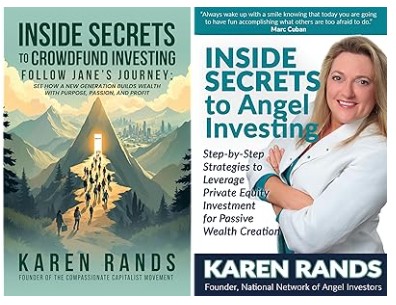
My newest book in the Inside Secrets series for investors, “Inside Secrets to Crowdfund Investing: Follow Jane’s Journey: See How a New Generation Builds Wealth with Purpose, Passion and Profit,” is now available. It can be purchased as a Kindle, Paperback, or Hardback edition, with an Audible version coming soon.
Find it here: https://amzn.to/4gmUFyq.
📅 Want expert feedback on your pitch? Book a consult with me: bit.ly/KCHcalendar 🔗 Learn more: karenrands.co 🎧 Catch more episodes: thecompassionatecapitalistshow.com 📘 Free eBook: The 4 Ws of Crowdfund Investing: https://bit.ly/FreeCrowdfundInvestingBook 🎓 Join the Academy: bit.ly/CA-prelaunch
0:06 The Compassionate Capitalist Show empowers entrepreneurs and investors alike to create wealth with passion and purpose. Join Karen Rands, a best selling author, for insights on Angel investing, crowdfunding, business growth, and wealth creation. As a seasoned entrepreneur and investor herself, Karen engages in dynamic conversations with industry leaders, successful entrepreneurs, seasoned Angel investors, and venture capitalists as they share their proven strategies and lessons learned. Once you listen, you will understand why this podcast is ranked in the top 2 1/2% globally. Subscribe and share and be a catalyst for the compassionate capitalist movement. Just no, give it up and go in the back and you must keep an open mind and you try your best just to leave your tracks and do not fall too far behind.
1:00 Regret is for the printer part. In the end, it's all the same. Take what the wise I've got to in part. These are the principles of the game, the principles of the game. These are the principles of the game. OK, welcome back to the Compassionate capitalist show. You know, one of the things that we try to do on this show, we don't try. We do is you know, it's all about the the success principles to grow and build a company successfully to exit, but also realist also for investors to know the best practices for investing in that. But because the passion of a compassionate capitalism and part of you know you if you didn't hear the blurb at the very beginning of this my latest book is out inside secrets to crowdfund investing Follow Jane's journey. Yay.
2:03 I guess follow Jane's journey to see how a new generation invest with for purpose, passion and profit. A big, big part of what we're doing with the whole concept of compassionate capitalism and what I'm doing with these mechanisms of of various types of crowdfund investing or Angel investing is for people to find something outside of the traditional asset classes of stocks. Crypto, I guess is still sort of out there part of it, you know, kind of a thing, this transactional base and real estate, which has become so costly, it's hard for people to fulfill the same dreams that maybe their parents had or something like that. That says I can go in over the next few years, 10 years, I'll invest in 678 rental homes and have, you know, reoccurring revenue on that and, and income.
2:56 And so that is kind of a lot of people have been shut out of that marketplace and they're looking for alternatives that they can have an impact with their investment dollars. What I call compassionate capitalist, you're making money, but you're putting money to work investing in something that you're passionate about. That's Jane's journey and in fact, that's what my guest today, Kevin Macho's journey has been. He's waving there for those. That are watching on spotlight. Or YouTube and so he he, he came to me as this person is a compassionate capitalist and I and I believe that that's the case because of his journey. He's going to talk about real stories and practical insights of how for it really as little as $500 people can get involved in investing in their projects, which I don't want to steal a Thunder on it too much that there are projects that have a profound impact in a community, has a profound impact in the lives of the people that they're serving.
4:01 And then and therefore for the people that are investing have a way to put their money to work. One of my sayings is, you know, you work hard for your money, 9 to 5. Don't go get a second gig or do these other things from 5:00 to 9:00. Put that money to work working for you, investing in things where other people are doing the work and they're just using your money and giving you a compound on that, that money while you, you know, explore other opportunities for you to invest in when it comes to investing in entrepreneur and entrepreneur endeavors. So let me tell you about Kevin. Kevin Macho is a, he's a, like I said, he's a textbook compassionate capitalist. He's a former cop turned real turned real estate investor.
4:45 He's now helping regular folks like the folks that are listening here today, generate passive income by funding addiction recovery facilities and mental health campuses across the US. That to me, I mean, if you were we know that we are in a crisis situation in the United States with mental health issues, which is often times coupled up with addiction challenges and people turning to that, whether it's pain of physical pain or mental pain. We know that a lot of veterans are dealing with this and right now with so many, so much turmoil in our subsidy systems for healthcare, for, you know, getting the care in the, in the Veterans Administration, all these different things that are putting a lot of people even further at risk than they had been over several years. It really is inspiring.
5:46 I to me and hopefully to you as a listener to hear that there's a private enterprise out there that is it's accomplishing 2 things. They're serving a critical need in the marketplace for providing these facilities, but also helping, not just bringing in big institutional money to do it. They're helping the everyday working people in those communities and around the US to participate in the solution. So with that, let me say welcome to the show, Kevin, very excited to have you on the show today on the Compassionate Capitalist Show to tell your story and talk about this, you know, really impactful work that you're doing. Thank you so much for having me on. It's exciting anytime we get to talk about what we're doing. It's what attracted me to the company and all the things that you're talking about.
6:34 Is it it? It's very exciting. So I really appreciate the opportunity to be on. Yeah. So let's talk about that because you're still you still do police work. I still do police work, yes. So The thing is, you were, you were correct. And then I'm a former cop and then I was out in the private sector basically. I've owned businesses all my life. I started when I was 15. I owned a baseball card shop when I was growing up in high school, vending machines in college, 2 branches of investment, mortgage company with a couple of trucking companies, part of a stock brokerage and and some other things. So I've been involved in business all my life. So there's kind of there's business Kevin and there's police Kevin and I got I started in police work when I was 18. Most of my time was with the Portland, OR police Bureau.
7:16 I was also with the Oregon State Police for a while. I was police chief in a small town for a little while. I've, I've done most of what people can do in police work. And yeah, after, after some time, just straighten the private sector. I, I still feel like I have something that I can give back. I feel like I understand people pretty well. So I decided to go back in one more time. And I currently work as a detective here in, in the, in the Salt Lake Valley. So yeah, I, I do those things, but my kids are grown, so I've always been kind of high energy. So I've got plenty of time to, to do business also. So yeah, I'm actually I I'm actually both, yeah. So now you know you, you, I mean, I know there's one of those things we don't pay our police officers enough money for the, the risks that they take.
8:02 But you, you got started understanding and investing outside of that by, you know, talk about your first investment and then let's talk about how you discovered. And I don't even think I did I mention the company is is Northstar Recovery dot care is the name of the company that. Northstar Recovery Care is US. Director of investor experience. So talk about that, that your first, you know what, like what went off in your head that says I need to put my money working for me, making money rather than just keep working for your money as your first sort of gate of a, of an attitude shift that you have. Yeah, so I was, I was young.
8:43 I was in, I was in my early 20s and I was working as a state trooper over on the Oregon Coast in the town where I grew up. And most of my friends were cops and really good people, but nobody had any money like people who had like 2025 years and nobody had any money except for one guy who was, he was a Fish and Game trooper in Oregon. We did both both the, the highways and Fish and Game with the state police. And he was a really good mentor to me. And he, he sat me down and he basically said exactly what you're saying. He said you've got to get your money working for you. You've got, you've got to do something, you've got to do something different than your friends are doing. So he talked to me about four O 1K matches and we actually, it was like 457, but it wasn't actually 4O1K. But he talked to me about deferred comp matches and taking your money and setting up like a Roth and actually like doing something.
9:38 And of course my answer was like a lot of people are like, oh, I don't know, I've got a young family. I just don't think I can spare it. And he, and he looked, he looked at me and he said, how many lunches do you buy a week? And I'm like, oh, well, you know, not, not a lot, not what do you said? Probably like 3. And I'm like, maybe right. And, and, and he's like, you'll get sodas and stuff with your friends. You spend money on that. And I'm like, maybe, right. And he, and he started kind of sussing out the fact that the truth is I was spending money on stuff I didn't need to be spending it on. And, and, and he brought me the idea that I can go to like having one lunch a week with my friends.
10:19 Set aside some of that money, stop spending money on some of just the garbage that we buy. We buy so much as Americans that we tell ourselves we need it, but we don't need it a lot of time. So it's taking some of that money, delaying a little bit of gratification and putting it towards something that's real, right. So that was kind of my first introduction. And the truth is most of us do have I mean, we have people, you know, making 60 seventy $80,000 a year that are that are that are going out and spending 30-40 bucks on lunch like like multiple times in a week. Pack your freaking lunch and go put your money away so you can have a nice life.
11:02 Yeah, right. Go out to lunch with your friends once in a. While part of the trick on that, this is a thing that people mentally will do that, but they need to pay themselves. So take that 30 bucks said you were going to do that and if you had to stick it in a a coffee jar or something until you get your hundred 200. Whatever you got to do, right? Or, or, or you, yeah, you move your money to you move your money into Well, first of all, if you work for any organization that gives you a deferred copper 4O1K match, 3%, four percent, 5 percent, 6%, you are absolutely insane if you don't put that money away. Generally tax deferred. Sometimes you can do it in Iraq, but usually it's going to be tax deferred because if they match it, that is a 100% return on your money.
11:47 Like that is an insane like return. And you've got people that are like, oh, I don't know what like like, why would you not do that? Right. So that was, that was kind of my first exposure to doing that. I started doing those kind of things, but but a year or so later, I felt like we really needed to to do actually, it was, it was a couple years later, I moved up to Portland. We had layoffs with the Oregon State Police. That's the thing. Safe jobs aren't always that safe, right? So I went to work for the police Bureau in Portland, OR and we lived on the Bank of the Washington side. And I was basically calling around. This is not crazy. There's like, I had no idea what I was doing. All I know how to do is be a policeman. That was it. Like my dad was a policeman. His dad was a policeman, right? And so I'm calling around for people to, to help me because I wanted to invest in real estate, but I don't really know what that meant.
12:33 And finally I met a guy that became a friend of mine. His name's Greg Fowler and he ended up starting his own investment mortgage company. And I ended up owning, owning 2 branches of of that company over time. But but short version is that he taught me how to invest in duplexes and fourplexes from the ground up to start with. And so my first duplex that I bought was in Coos Bay OR and I did an 80 with a 20 seller carry back on it. That's how we structured it and we came out, I bought the duplex, rented it for little less than two years turn around and sold it and I made just under $60,000 on that duplex.
13:18 And I was looking at that and that was more than I made in the year like as a trooper. And I'm like, I can't believe that actually happened. Like I'm a policeman. I can't believe I did that. Like, that's crazy. You can actually do these things right now. One can say that my, my world view hadn't been opened as to everything that's possible and what you can do in funds. And I didn't know anything about all of that, but I knew that you had to have something going on besides what everybody else is is doing, right? I've got a lot of friends who were, who were wealthy people and they just think and act differently then then the masses. People that have money, they don't waste a lot of time when when they see something where the risk is outweighed by the benefit, they go for it. My friends that are that are police officers, like wonderful people and firefighters and people in all various occupations.
14:15 They'll sit and Stew on something for six months until the opportunity's gone, right. So what we were trying to do with with Northstar was, was create a way where regular people can start this process, they can start investing, they can do it through their Roth, they can do it. Sometimes you can do it through your deferred comp, depending if it's participatory or not, but but whatever it is that you're doing where people can participate. So we created what was called a regulation a fund. And for people that don't know what that is, that's a it's a fund that you got to go through a lot of hoops with the SEC because this is made for the non like you don't have to be what's called an accredited investor for a regulation a fund.
14:57 You don't have to be super smart when it comes to this stuff, but then our responsibility was to show the, the SEC that we were being responsible with what we were doing, right? So we created a fund where you can come in for as little as $500 as you go right to our website and, and you can go like click literally like right on invest. You can get a hold of one of us start talking about details. We've got our, we've got our, what we call our deck, which is presentation. You go through documents, all kinds of different things and then you can put in as little or as much as you want going forward. So you don't, you don't have to risk the farm to get started, but for heaven's sake, do something right. I've got two friends right now. I also used to be a pro baseball umpire and I did not make it to the major leagues.
15:42 I wasn't good enough. But I've got two friends who are doing Major League Baseball games right now. And the majority of their friends who are long time Major League umpires, they don't have much money. You know, they spent it, they spent it on crap, right? And I was having this talk because they're they're two twins. They're the first, they're actually the first twins to work Major League Baseball as umpires during the same seasons in history. But what we were talking about was there's there's always risk. There's always some risk when there comes to investment. So a lot of my friends are like, oh, I don't know, that's risky. And I'm. And then they go back to buying a whole bunch of lunches that are guaranteed to make them zero money at all. None. 0 nothing.
16:23 Yeah, it's it's a guarantee, right. And go forward and do that. Yeah, there's some risk, but there's no risk at all. If you're spending it on stuff that's just going to deplete your bank account, it's 100% guarantee you'll never make any money when it comes to that. Stuff. Yeah, that's one of the things I talk about in the new book when I'm kind of, you know, I like Jane, right, is figuring out that the difference between you can spend time, you can spend money on stuff, right? You can't get your time back. You can't always make more money. If you just spend it on something like a lunch, you eat it and it's gone and then you're hungry again. But if you spend it on something that can create a compound, even if you lose it, you're no different than if you bought 4 lunches.
17:11 Right, you're out. Nothing people like. Well, it's risky. Might as well. Do go for it. For young people, I mean, you're younger than me and I, that's the thing. That's. So great. Yeah. Is that I, you know, I think I wish, you know, and one of the reasons why I'm targeting this book is to, you know, and I saw an article yesterday that, you know, millennials working the same kind of work that we work. People think they don't have as much of A work ethic because they jump jobs and it's, but they do, they do work hard. They do have a strong work ethic. What they don't have is hope, right?
17:52 They don't have hope. They look around and they see like the crisis that you're you're helping with, like so many people are are, you know, are they're desperate out there and they don't have hope. And I believe that if we could break through the noise and we could stop the scroll just a little bit. Just for a little while. In there so that they could see something to give them hope because the idea that they could put you know in that five years before they they start the corporate gig and that five years before they get their match they don't get their match right because you're exactly right. I mean everybody hears this about the four O 1K stuff. I did it when I was with IBM, right?
18:33 And the people that have been around there is like now back then I think it was three years or depending on they could give you a perk and match right away kind of a thing. But you match right away. And they're getting that match right. Of course, all the difference. I mean, I, even though I was only with IBM for 13 years, I do have a big fat, you know, chunk of time there from back in this matching days, right? And I put it as much, but I, I could in there because out of sight, out of mind. And so the same sort of thing when it comes to investing in things that solve the problems that you care about. The thing that people would look at it or, you know, younger than us would look at it and say, I'm really upset about the fact that so many people are living in despair.
19:18 Or my friend or my brother or my cousin or my whoever felt this thing and didn't have a facility like what you're what you. Want and if. I could put my money to work doing this and I make back. You know, I don't know you're reggae plus you can talk about like what the structure of The thing is. So you know, get to that. But if you can look, if I can see that I'm I'm helping do something. And then, you know, in my course, I teach that the first three produce income or the, the, or you got to have three out of your 10, right? The average 10. Three of them have to be later stage, kind of like what you're talking about where there is a exit down the road and you can see the line of sight.
20:01 It's not a A10 year play and reggae plus typically are that way. And so you know that that way we can they can see that and they have a true balance portfolio of different structure, different stages, different industries, different things. All things that they care about, then they get to have a they maybe we give them that sliver of hope. And I say don't quit your day job. Don't. Oh no, entrepreneur. Becoming an entrepreneur is the answer. Keep your benefits because benefits are valuable these days. Keep your benefits and just carve out money to go put into things you care about, like what you're doing over there at North Star Regal. Yeah. You know, it's interesting, you talked about like normally a 10 year hold our bond fund, it's a three-year hold three years and and you have the choice so you can, so it's designed to be an income fund. So basically after 60 days have passed, once you've invested, then the beginning of the month, after 60 days have passed, you begin receiving your dividends or your interest if that's how you want it.
21:05 So basically it's let me think, I got to think about my numbers. I think it's it says it on the website. So I'm doing this by memory right now because I'm looking at you because we want to connect. But but I believe it's 500 to 49999. Look at the website, make sure that I'm correct. But that's that's that's an 8% return. And then because it's all set. And then if it's fifty, I believe it's 2:40 9/9/99. I think that's 10% and then 250 and above I think is 12%. But there are some, there are some rules. If you're not an accredited investor, you have to have certain income amounts to invest like larger amounts of money.
21:48 So if you have those larger amounts of money, I'm sure you have the time to talk to us and we'll talk about those specific rules. But I'm kind of I'm just talking to like the, the, the regular folks right now. So you're talking about having your, your money back. So it's a forward turn of principle in, in three years. That's the design of the fund and then you can either get your interest as you go or you can let it ride and let it compound and then get the compounding and the other back like over the course of three years. Then you move on to your next investment. You can reinvest it in something similar depending on what we're doing, but it's we, we feel really, really good about the structure of this. Well, the thing that's good, I, you know, I was out at Fincon in Portland, right? Your old hometown there, right?
22:29 I fell in love. I love Portland and I I took the train from the dowels over there that gets on the Washington side from over. In Oh, it's beautiful Go. Along the the river there the is that. The yeah, yeah, yeah, yeah. So you went like through Stevenson and all that? Yes, I like it's gorgeous. I like nobody wants to see the pictures I took, but I I like, love taking those pictures. You know of like, just like somebody and like looking down and imagine what it like to live on the edge of the river and people fishing. It's amazing, yeah. Did you see all the waterfalls like across the river on the Oregon side? So I actually went with digressing.
23:10 But when my friend picked me up at the airport in Portland, he lives in in Dalles. I think that's how you. Say it in The Dalles. Yep. Yep. Yeah. And so we rode along. The old thirty, I think, is what that is. Yeah, it's so pretty. Not the really big one that has the old 100 year old restaurant or whatever is there the one day before that and it was we walked up to the top of that waterfall and it was and and there's an overlook that looks out over the river. Yeah it was I was I was a book have been delayed. I was not in the best of best of moods at the time but that totally lifted my spirits. You know, it's like a walk in the. Woods to. Is it you lose your mind and find your soul or something like that when you. Go something like that, right?
23:53 Yeah. Well, OK, well. OK, well, we digress. But it's it's important though. You gotta I mean, The thing is do like for for our audience, like do you want to have the time to do some things that like feed the soul over the course of time? Or do you want to have to just continue to work like a dog basically until you drop? I mean, these are the choices we make. Right, That's what you know, this, this was a finance content creator conference and you know, there's, it's this concept that is really gaining some momentum and it's, you know, it's the financial independence. Everybody hears us striving for that. But retire early and retire early is not necessarily like, OK, at 45, I'm never working again.
24:39 It's retire early often that says I have flexibility in the where I get my income. I can get. Back from my day-to-day grind, take a year off and go do whatever 'cause I have income coming in from my investments and things that I've done and then I can go figure out what else I want to do after that. You know what I mean? It's like and it's, you know, to create a quality of life that has you your you are live, work, play within the contract construct of how you create your life, right. So, well, right. So you're not a hostage at work, right? You're not, you're not a hostage. You, you you can work, right? I I work at my job because I actually feel like I have something to offer. It's not that I have to have that job. Yeah, I don't have to have that job. I've got various options, right.
25:26 But but I am not a hostage. And I find that as things don't go perfect at work because they don't in any workplace, right? That not being that hostage my I'm able to really think things through like much more clearly. And I think it helps a lot. Yeah. So one of the things that they like, there's different ones, and this falls into line with my structure of the Angel profitability blueprint in the course is that it's not just an investment, it's an investment that's backed by real estate. So talk about why addiction recovery real estate is both a crisis solution and an investment opportunity. Yeah. So I'm going to go and kind of a little bit of the a little bit of the logical first before we get into the things that we care about, right. So First off, I, I think that that going into more essentially addiction recovery housing and step down care and even detox centers and so and so forth, basically is multi family housing.
26:31 And I've, I have personally found and people have different beliefs on real estate, but generally speaking, you get a better return when you go into multifamily, but most people don't have the money to get into multifamily. So what we set up as people to have the ability to do that. So, So what happens is that most of the addiction recovery care centers, detox centers, mental health recovery centers and so forth are like 16 beds and below, like over here in Utah and around the West. And they're set up that way for profitability reasons, but they're completely disjointed, like they have nothing to do with each other, right? So when somebody's trying to find a bed, I mean, they, it, it's very difficult. So what we're doing is we're, we're the process of, of rolling these up and putting them into one ecosystem. But the operators in general are very good at what they do. So we work deals with the operators where they generally get a portion of of the ownership to continue and they continue operating, right.
27:33 So, yeah, and, and, and the deal is that these are like we're not just buying the business. So like if I go a lot of times and buy a franchise of a restaurant that's popular, many times I'm not going to be buying the real estate under it. We're going to lease the space and we are buying the business and the business may do great, but for investors, again, nothing's 100%. But when we look at safer bond funds, safer than equity fund, accredited investors, a lot of times look at equity funds, they take a big swing. They can make a lot of money, but there's more risk. They're actually behind you as far as who gets paid if things don't go right in in the bond fund.
28:14 But when something's actually backed by real estate, there's an actual property underneath this whole thing. So if everything goes the way that nobody wanted to go and things have to be liquidated, there's an actual asset there to so and, and that's a big deal. It also helps with like accelerated depreciation because anytime you have real estate, real estate property and so forth, you can, there's, there's ways you can improve your tax situation with that as well. So that's a big deal for us both in terms of return and in terms of of making things a little bit safer when it comes to when it comes to the investment. But let's talk about what we're actually doing. So I think that was that was actually the first part of the question.
28:55 I answered the second part first, right? So for me, I definitely have been kind of a hard nosed with people doing things that they're not supposed to do over the course of the years, especially with people where there's nothing wrong with them. They're just not good people. But the majority of people that are committing crime are they have mental health issues, they have addiction related issues. A lot of times they have both issues and I've been multiple times where I've caught somebody doing something, name it a hit and run. They're doing shop lists. They've done a burglary, for example, and didn't hurt anybody. And they come to me usually as an investigator, get to know the person.
29:37 They get to a point where they're like, Kevin, I want to do the right thing, right? They admit to what they did. They throw themselves on the mercy of the court and they genuinely, they're ready to do the work and you can't make anybody want to do the work. They've got to be ready. Themselves. Right, but they're ready to do the work. So we go to the court and I am now I'm always the advocate for the victim. So people are like, well, you're a restorative justice person or are you more of accountability based person? Well, to be honest, I'm both, I'm both, right. I I think that the two are not mutually exclusive. So we go to the court through the prosecutor and the judge says, OK, you got, we've got to find you a bed, get you into treatment, you complete the treatment program and then you do not commit any more crimes for X amount of time.
30:26 And then we can dismiss these charges and the victims are happy with that. And guess what? We have nowhere to put them. Yeah, it doesn't. I mean, how many people, how many people have seen that where you've got a relative, somebody that you love, a a friend that they go in and say to the hospital for some kind of mental health issue and they've also got addiction related issues, right? And then the hospital makes an average of like 18 to 20 calls trying to find a facility that's not related to them to go put put them into. And maybe they find a facility, maybe they don't and they get done with their 30 days because that's what the insurance is going to pay for most times 28 days. And then they've graduated from what nobody knows.
31:06 And then trying to get him to step down care. It's just everything's all over the place. And that's, that's what we are working on solving is putting things together where you're our patient and, and this has been done successfully. And we have members from that original group that are that are advising us. So there was a gentleman who basically said, and this is not too long ago that he was going to create him and his group were going to create all four, all four pillars of this ecosystem. They were going to do detox, they were going to do inpatient treatment. They're going to do step down treatment and outpatient treatment.
31:46 And included in that is, is very is like life training and life skills and different things, right? And they had successfully done this. They had successfully rolled up companies, the these smaller centers helped expand them and made them into one ecosphere. But but basically there was, I believe it was him, but I don't quote me on that, but he ended up getting getting cancer. And because of all of this, they had to exit before they wanted to exit and they sold to traditional private equity. And because they didn't understand our side of the business, which has like there is so much market available for this. Like I can't even describe it.
32:31 Like the state of Utah's basically come and said we need a whole bunch of beds. I mean, there's so much market for this. But they didn't understand it and they understood just straight, straight multi family. So they basically unraveled all the work that was done by this company and just turned them into apartments again and townhouses again and so forth. So in one way that's terrible, but in the other way, like this has already been done. It's, it's completely doable, right? So we have them advising us and we're working it on doing this in on a much larger scale, so. So is this your first one or or do you have a like a whole like AI don't know multiple, multiple of these sort of combo things? Yeah.
33:16 So there's, there's a whole lot in process right now. So we, we have, we have them, we own a portion of one particular dual, dual section like multiple clinics right now where they've got detox and they've got residential recovery. There's properties under contract. There's a bunch going on. There's money coming in expected from a large group of investors like on the accredited side here like in the next week to two weeks. And that capital is going to immediately get deployed. And we're talking like most likely like $10 million plus in what we're doing. So there, there's a whole lot going on right now. It's it's actually pretty, pretty exciting. So yeah, I.
33:58 Plan there where you go with this, because the way reggae plus works for those who don't know, if you're not familiar with what we're talking about, it's not as hyped up type of music. If you go to ChatGPT and you say what's reggae plus, it will come back and say REGGAE space PLUSI correct it every time and so so you can credit me when it starts getting it right but. It's your investment month. Yeah, I said. But it is one of the provisions that were authorized in the 2012 JOBS Act. And it is what it is where you the the, the reason why Wall Street and the big institutional that Kevin is talking about like it is because you have to have this higher level of financial review, an audited review that's considered an SEC level audited review that gets put that gets filed with the SEC.
34:54 And so people and then the outcome they can set it up. It's like a use was the traditional bond, the kind of a thing that had been part of it till they split it out and they they loosen some of the rules up for what companies had to do prior. They had a higher bar when it came to the financial financial statements, but less of a bar in having to go and file with every state and pay fees in every state that they wanted to operate in. And so and the ability to anybody that can that can't invest in it, but it big money loves it because it has such a sort of a it it's it's less of unknown as it is when dealing with pure startups that you don't know what the future is this. And then I think in particularly because of what you're doing there at North Star that you've got because you have this model of these four key pillars and it's grounded in real estate. It takes on a whole nother vibe than just invest in a company, yeah.
35:53 We think so. Are y'all operating but you partnering with the companies that are operating this so they continue to operate, you're like the landlord like in that franchise model where you are correct real estate that they're operating the franchise in. Right. And then the overarching right system, we'll make sure, of course, the standards are met, standards of care, regulation and so forth. But for the most part, basically the operators, they're already doing a good job as operators, They're passionate. And different operators do treatment in different ways. So the idea is to have these different options for treatment depending on what meets the individual the best, right? Because what'll happen is somebody goes into one company for treatment, it doesn't work for them and they're just out and they're back out on the street. And that's not what we're looking for. We want to be able to raise the flag where somebody's a weekend. This isn't working for me.
36:43 That's OK. We'll move you over to Facility C where they do things a little bit differently, right? And and have a much better chance of success. And if somebody relapses, we don't want you to have to go back to square one from the ground up. We want to already know you like you're our people. So what, what I tell people is, like, a lot of people think that you, if you want to go change the world, like as a group, like all of us like together, that, that you have to, there's a choice between helping people and making money. And I, I think that that couldn't be further from the truth, right? Some people say, well, you shouldn't make money on this kind of things. Well, I mean, I hate to give people a news flash, but most investors are not going to invest their money if they're not making money. It doesn't matter whether you like that concept or not. That's just the way that it is.
37:29 So the idea of compassionate capitalism where you're actually doing something good in the world. Our entire, what we are working for is five years from now, 10 years from now, when you look at addiction recovery care, you look at mental health care with, with treatment and the things that Northstar is going to be the only name that you know. And remember, there's a whole bunch of committed people that are looking at, at, at doing exactly that. Like if if you look at the advisors that we have and, and the investors, it's amazing. Like the group that that's been assembled, like the brain trust is, is incredible. Yeah. And it's and I and I it's just, it's, it is such a needed area and, and ideally that your business model, the way you're doing this is, works really well. So it can be, you know, this success system can be, you know, you know, put into, you know, down the street or in another state or all over the place because, you know, we, as you say, there's a huge shortage for it. And I mean, the whole idea behind capitalism is you're finding a need, you're, you're fulfilling that need at an affordable price.
38:41 So people will want to buy whatever it is that you're offering. In this case, it may be you know it may be government assisted or private insurance care. Or different. Sort of ways that people participate, It is a, people aren't in there forever. It's a, it's a, it's a solution to get them to be back being productive members of society and contributing to society instead of being a, you know, somebody that has to have help and aid rather than giving help and aid, you know what I mean? And so it is, there are so many levels at which this is needed and it has to pay for itself, right?
39:24 I mean, it has to, that's right. And anybody you know the, the difference of, of I think the way you're doing it with individual money going in as part of this and the, and your purpose is that it's not just the bottom line dollars and cents that it would be if it had been the big private equity fund that you mentioned that came in and said, we don't understand this model. So we're just going to become in an apartment complex again. Right. You know, they didn't understand where that the revenues or what's the purposes or the impact it has. And you know, the ripple effect of what it of how this can be, what the everything that about what you're doing is just profound. So I wish.
40:05 Thank you. All the success, I hope everybody that listens to this today and in the future and all the other time and all the other clips that we're going to do get it. They're going to go to they're going to get my book. So they know, understand this is part of the journey of building your portfolio of companies, but you're going to go to Northstar Recovery dot care and check it out. And I always have to do the disclaimer, this is not investment advice. Any decisions you make to invest in Northstar Recovery is your own decision. You must go through all of the paperwork and disclosures and everything that they that they offer you before making your investment decision because it is between you and them to make the decision.
40:49 I am just here passing along information or something that I think is really excited that I am passionate about myself. Thank you so much for the time. And we really believe that, you know, the regulation, a fund being ready, it hasn't been ready for very long that as we get out in the world, like on your podcast, Karen, this is going to go viral. People are going to know who we are. And it's it's one of those things. And you know, when Apple computer started, you could get shares of Apple for really reasonable prices. You know, and those things happen before Apple was Apple. And we really think that we're going to be that, but in our space. So thank you so much for the opportunity to connect with your audience, Karen.
41:30 Thank you. Yes, I thank you Kevin for being such a great guest and onwards and upwards everybody. Have a great day. Bye bye. Thank you for listening to this podcast, The Compassionate Capitalist Show, brought to you by Cougar and Capital Holdings with Karen Brands as host. You are encouraged to visit the website cougarand.com to learn more about how Karen and her team help investors and Angel groups make money by avoiding investing in deals that suck, and how the Cougar and Capital companies and partners help entrepreneurs breakthrough their barriers to capital and live their dream by building companies that can scale and create generational wealth for their founders and investors. If your business could benefit from exposure to our audience of business executives, entrepreneurs, and investors, we are seeking financial partners and sponsors for The Compassionate Capitalist Show to help us take this podcast beyond our 150,000 listeners and amplify the message of the compassionate capitalist movement by making this a Top 50 business podcast.
42:43 The Compassionate Capitalist Show is available on YouTube, Apple podcast, iTunes, TuneIn, Stitcher, Spotify, Pandora, and Google Podcast. Contact us at karenrands.co to learn more. And as a listener, you can do your part of the Compassionate Capitalist movement by subscribing wherever you listen to podcasts and sharing this show with your friends and colleagues. Be sure to pick up your copy of Karen's bestseller that launched the Compassionate Capitalist Movement. Inside secrets to Angel investing. A step by step strategies to leverage private equity investment for passive wealth creation.
43:23 Thank you for listening.