The Science of Founder Success: How Angel Investors Can Predict Winners Early
The Science of Founder Success: How Angel Investors Can Predict Winners Early
Why do some startups break through while others collapse—even when they have funding, a strong product, and a real market opportunity?
That’s the question explored in this episode of the Compassionate Capitalist Show, where Karen Rands sits down with Logan Yonavjak, CEO and founder of the Founder Readiness Institute.
Their conversation goes beyond business plans and pitch decks to examine something far more important: the founder behind the company.
Most startup failures aren’t caused by bad ideas—they’re caused by leadership limitations.
In this episode, Karen Rands and Logan Yonavjak explore the hidden science behind founder success and why investors often overlook the most important factor in startup growth: the founder’s ability to evolve.
They unpack how traits like coachability, adaptability, emotional intelligence, and decision-making under pressure can predict whether a company scales or stalls. The conversation also challenges traditional investing biases—like pedigree and pattern matching—and introduces a more data-driven approach to evaluating leadership potential.
One of the biggest insights: the founder who can launch a company is not always the same person equipped to lead it through growth.
For investors, this episode offers a smarter lens for identifying high-potential founders early. For entrepreneurs, it’s a reminder that success isn’t just about vision—it’s about the ability to grow alongside the business.
At its core, the discussion reframes startup success from being purely about products and markets to being deeply about people.


The Science of Founder Success: How Angel Investors Can Predict Winners Early

Why do some startups succeed while others fail—even with funding, strong markets, and great ideas?

In this episode of The Compassionate Capitalist Show, Karen Rands speaks with Logan Yonavjak, CEO of the Founder Readiness Institute, about the science behind founder success and how investors can better predict which companies will scale.

Drawing on research in behavioral science, leadership development, and transcript analysis, Logan shares how founder readiness—including coachability, adaptability, and leadership maturity—can be measured and used as a predictive signal for startup outcomes.

Karen and Logan also explore bias in venture investing, the limitations of “gut feel,” and why understanding how a founder evolves from startup leader to organizational CEO is critical to long-term success.

Key Takeaways:

Why most startup failures are driven by internal leadership dynamics
What “founder readiness” means and how it impacts outcomes
How investors can evaluate founders beyond the pitch deck
The role of coachability, adaptability, and identity flexibility
How bias influences funding decisions—and how to reduce it
Why founder–investor alignment determines whether companies scale or stall

Guest Bio:
Logan Yonavjak is the Founder and CEO of the Founder Readiness Institute, where she helps investors and organizations evaluate leadership capability using research-based frameworks rooted in psychology and behavioral science. With a background in impact investing and capital allocation, she has worked with funds and founders to improve outcomes by focusing on the human dynamics that drive business success.

Learn more: https://founderready.io

Host Bio & Resources:
Karen Rands is a venture catalyst, angel investor advocate, and founder of the Compassionate Capitalist Movement, with over two decades of experience helping investors and entrepreneurs successfully fund, scale, and exit companies. Karen's podcast, books, and digital learning platforms are part of her mission to empower individuals to build wealth by investing in entrepreneurs and innovation. With a background spanning corporate innovation, angel investing, and capital strategy, she has spent over 20 years helping others access opportunities that create both financial returns and meaningful impact.

If today’s conversation sparked your curiosity about building wealth beyond traditional investing, we have put together a few resources for you.

Start here:
Get Karen’s FREE ebook and videos “12 Secrets to Wealth Creation” https://bit.ly/12-secrets-of-wealth

Ready to find out if crowdfund and angel investing are right for you?
Sign up for a FREE live virtual webinar to discover The Hidden Path to Wealth: Investing in Entrepreneurs
http://angelinvesting101.com

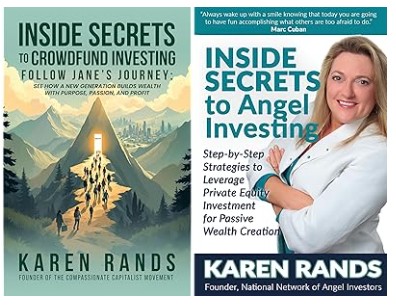
Get Karen's Best Selling Books - Inside Secrets (to investing)
https://amzn.to/47D5Lwz

Jump in and get the full digital training platform: The Compassionalist Academy
http://compassionlist.academy

Click to Follow the Compassionate Capitalist Show so you don’t miss the strategies, stories, and insights that can change how you build wealth.

Keywords:
angel investing, founder readiness, startup success, venture capital, leadership in startups, impact investing, startup failure, investor strategy, early stage investing, founder evaluation
Karen Rands (00:02.456)
Welcome to the Compassionate Capitalist Show, where we explore how investing in entrepreneurs creates wealth and impact. Today we're tackling a question that every investor and entrepreneur wants answered. Why do some startups succeed while so many others fail? Research shows that roughly 65 % of startups fail and investors often blame the market timing or access to capital. I know I do that, that's one of my premises. But there's more to it, there's more to it. The biggest factor is actually something more.
human, the readiness of the founder to lead the company. And this is the other thing we've talked a lot about, you know, coachability and the difference in characteristics of somebody that is a startup that becomes, you know, and how do they transition to be the CEO versus the founder that can, you know, spin lots of plates, right? So, you know, those are all these, you know, the question is an entrepreneur born or bred, you know, all that kind of stuff, right? But my guest today, Logan Janowatch.
Gotta react.
Logan Yonavjak (01:04.289)
Second one, you got it, you got it.
Karen Rands (01:05.347)
Yay. Has built her career around studying exactly that. Her company is, she's the CEO and founder of Founder Readiness Institute. the domain, you're going to get this again, and it's in the show notes, is FounderReady.io. This is where she helps investors better evaluate the leadership and adaptability and decision-making capacity of founders. She has worked in early stage at Impact Investing, helped direct
tens of millions of dollars toward companies solving real problems and developed research-based framework that helps investors understand what actually drives startup success. welcome to the Compassionate Capitalist Show. We're live everybody.
Logan Yonavjak (01:47.662)
Thank
Logan Yonavjak (01:52.458)
Thanks, Karen. Thank you so much for having me. While you already teed up so many great points, I can talk a little bit about myself and how I arrived here just to kind of get so people can get to know me a little bit. I've spent
Karen Rands (02:04.885)
Yeah, I'd love to like, cause you, you know, that's all we always like to start with a story because that's how, know, everybody has a story, right? And most people, you know, they, they do focus on a business idea or the funding strategy as the main thing. But with all the years that you've spent studying human factors behind this, what led you to start it, start focusing on founder capability and leadership readiness.
Logan Yonavjak (02:30.018)
Yeah, well, I think for this audience, I'll tailor my background because you have a compassionate capitalist as your tagline. I've been in the impact investing world most of my career. so I started out thinking a lot about nature. From my perspective, I wanted to see landscapes conserved. I wanted to see agriculture and forest land, working lands.
conserved and sustainably managed. And so I directed my career into investment funds and business models that would actually drive capital to solve that problem. And however, in high school and whatnot, I had a profound interest in psychology and almost became a therapist, but decided not to. So that was kind of holding that in the back of my mind.
As I went through my career and just worked on numerous teams, had a bunch of managers, directed people, led people myself, founded one of the first company I founded, I realized that most of the time, the reason that things weren't happening that could lead to innovation or to better business outcomes was actually because of the people. And so I really think the impact investing space is missing the leadership component, the people side of it. We talk a lot about
impact outcomes around communities, but we don't necessarily talk about the people running the businesses or the people running the financial services firms or the investment funds. So I just found that there was really a lot of misguided leadership and team dynamics that really were dysfunctional. so in 2024, I was sort of re calibrating myself and trying to think like, what
problems can I solve that are meaningful? Cause I'm, you know, moving along in my career. And I really wanted to solve this problem of like, I heard the number that 65 % of startups fail because of internal problems. And I thought, can we just improve that by 10 %? What kind of impactful, meaningful outcomes would we see in innovation and better product design in?
Logan Yonavjak (04:47.629)
better returns for investors if we actually were to focus on leadership capacity and the team side of things. So that's where I landed with the Founder Readiness Institute.
Karen Rands (04:59.873)
So I guess we'll get into actually how you create your framework here in just a few minutes, why do you think that, is it because of the nuance of the science that, as how you evaluate it? Because I do hear investors, angel investors, VCs looking at somebody's coachability when, like, so for example,
When I left IBM to go help one of my clients raise capital, be his go-to-market person, all that kind of stuff. I knew he was a difficult person, right? But I thought that the idea of what he was developing was so game-changing that, that, you know, I guess that would, was enough. It was like a hard lesson that I had to learn that him being difficult.
was gonna be something that would keep him from getting funding, right? Now he never changed. He never became more agreeable. He was like one of those my way or the highway kind of guys. And they didn't have to get into really understanding that and knowing him because he didn't have experience running a big software company. So one of the first things that the money people that I brought to the table
Logan Yonavjak (05:57.11)
Right.
Karen Rands (06:22.015)
wanted was we're going to put a CEO here who knows how to run a company.
Logan Yonavjak (06:25.815)
Mm-hmm.
Karen Rands (06:26.019)
And his ego would not let them do that. And it was like, it's better to be a rich founder that's got a sandbox to invent stuff. And the spokesperson for the vision behind this, then the guy that's got to run the day to day operations, why do you have to hold onto that title? know, and, and, know, that closed door after door after door, but, know, he was so obviously not of the right personality and framework and methodology that it was easy for them to not even start due diligence on this. Right. So.
Logan Yonavjak (06:40.118)
Absolutely.
Karen Rands (06:55.777)
You know, how like it's, I think one of the things that we had talked about in our prior conversation was that you can't really, people can put up a facade or play the game of us being a certain way, you know, with, but, then hide their sort of their.
real characteristics or the real triggers or whatever kinds of stuff. what do you see? Why do you see investors missing this when evaluating founders? How do they miss that as being something where people, what takes it to be a great founder that gets out of the gate are different characteristics of a person that can scale a company.
Logan Yonavjak (07:40.043)
Yeah.
Logan Yonavjak (07:51.566)
Yeah, well, I have a couple thoughts on that and I've thought deeply about it. So I appreciate you asking. One is that most investors don't necessarily have at the forefront of their mind, psychological pattern recognition or like this ability to really read people from a multi-dimensional perspective. And so they might have good pattern recognition in terms of seeing a lot of founders and
maybe seeing successful founders and that I think makes an assumption come up of I'm good at reading people and some of them are, but like as with most skills, most people are kind of somewhere in the middle. Some people are extraordinary at reading people and some people are terrible at it. And so I think most people over inflate, most investors over inflate their abilities around reading people. So that's the first thing. The second thing is we've fallen into a pattern in
I'll say early stage investing to keep it contained, but where most of the sort of current state of play, the current best business practices are gut reaction, you know, like your gut feel on somebody, whether you have a warm intro and whether you might reference check them. And so that's taking us.
somewhere. mean, it's valuable information. You certainly don't want to not pay attention to those things. But I don't think many investors are thinking about how there are people analytics or there are ways to embed additional information about a person into their decision making. So that's essentially what we're doing. We've taken the best of the research. We've digested thousands of research papers and come down to 300 that have something to do with
positive correlations with startup outcomes. So we looked at leadership traits, or I'm sorry, we call them constructs. We looked at six categories that directionally and materially positively impact a startup's outcome. And so that's coachability and identity flexibility, whether someone's good at pivoting, their relational intelligence, I won't go through all of them. But
Logan Yonavjak (10:06.589)
One of the things you're pointing to in your example is probably someone's low on their coachability and identity flexibility. So they're very wedded to their way of doing things, their identity around being a founder. There's a lot of things baked in there, but we're able to assess where someone's at in that, their development of their ability to be more objective, to be more coachable and to change identity when necessary and depending on the needs of the situation.
So that's just one example.
Karen Rands (10:37.975)
Okay. Yeah. So, you know, one of the things we also has become really apparent in, in sort of the buckets, if you will, of what gets funded. Right. And that is the bias in venture investing that
investors bring to the table that they unconsciously, mean, sometimes consciously, but usually unconsciously filter whatever businesses are looking at through that. And I think some of the stuff you might have talked about is like the halo bias, pattern matching, educational pedigree, what other investors has already backed it. This is really common if a company
Logan Yonavjak (11:19.138)
Yeah.
Karen Rands (11:26.455)
You know, the narrow gauntlet of angel investor to VC is that like we found, I found when I was running my angel group, you know, there's only so many slots that month. And, you, you kind of screen based on what you think your, your group is going to be interested in. Cause you want to try to make sure that there's a match and companies can get funded. so, you know, number company number five, it didn't get in, let's say, isn't a bad company. It just wasn't a fit for that.
You know, necessarily, right? I mean, he could have seven great companies that, and then you have to decide which four get to have a time slot. And then the other three aren't bad, but they start to get like the other angel groups will be like, they didn't pitch there. How come they didn't pit? You know what I mean? Whereas if they pitch, they're like, they must be better because they pit this other group, right?
Logan Yonavjak (12:18.699)
The hype of a founder or, yeah, this happens all the time. Like certain companies get selected in the ecosystem and then they get elevated and then everyone wants to get a piece of them because they've been recognized in that way.
Karen Rands (12:32.735)
Yeah, that's the living effect. how does that, and even with the racial and gender bias that seems to exist, how by running through your filter, the way that you work on this and this readiness aspect, which does it benefit the investor that says,
I want to make sure that I'm getting sort of the purest type of founder that can start and scale. And I want to make sure I'm not bringing or my team and my screening process isn't bringing India this bias in, you know, or is it, does it also benefit the founder that.
knows they need to overcome a bias. And so they can pattern themselves to sort of either fit the bias like that as it worked both sides of the street.
Logan Yonavjak (13:35.052)
Well, I mean, I would say that in an ideal world, we would just be having more people selected to run companies that were ready so that their leadership capacity was at a point where they could hold a lot of complexity, work really well under pressure, relate to people well, hold a team dynamic functionally so people were operating at their best selves, able to pivot. I mean, those are things that
Ideally, an investor would be getting a dashboard and they would see rankings of the founders without their name, gender, any of that stuff and age, anything. They would just see what is the score of this person's leadership capacity and then they can do deeper analysis. I'm not saying don't, you won't know who the person is at some point, but why don't we start with more objective criteria and then see how your gut feel or.
Karen Rands (14:14.079)
Yeah.
Karen Rands (14:29.923)
Yeah.
Logan Yonavjak (14:33.133)
other approaches like match up to where that founder ranked. I just can imagine a world where that's more of the industry standard. And I think you can point to your LPs and say, you know, we run a more unbiased approach to how we select our founders and founding team. I think there's also a lot of interesting dimensions for the founders themselves in preparing to, you know, with our tools.
and coaching potentially to prepare for investment. our real lever that we're really trying to pull here is for the investor community to make more unbiased decisions and hopefully better decisions that lead to more companies making it. Because we want to see that. We all want to see that.
Karen Rands (15:19.435)
Yeah, and so in your experience, I mean, I'll say I hadn't, I didn't really understand that there were some of these biases. know, the numbers have shown that there are, you know, over time, but when I was in the room, right, even though, you know, the angel group that I manage as with a lot of angel groups were, was primarily middle-aged white men, right? I always thought that green,
the color green was just green, right? They could make money on this deal they would invest, right? And I had that wake up call with a,
Logan Yonavjak (15:54.007)
Yeah.
Karen Rands (16:00.931)
a woman that was back for mobile apps, things were developed to be mobile friendly. And a big problem with, this is a while back, with websites, particularly shopping websites, is that you had to scroll all the way over and scroll all around on this little screen to be able to get to it. And she had developed code that would take a website like Macy's website and make it.
mobile friendly, would do an interface and put it down there. And, know, which was really revolutionary at the time. Now they design it that way to get go. And I remember at the time, the investors didn't seem really excited. I was like, why aren't you excited about this? And she, as do women have known to do was because they want to be very precise. She didn't overinflate her. She knew she had great potential, but she was like, I know I can do this.
Logan Yonavjak (16:29.069)
Mm.
Karen Rands (16:54.207)
Even though there's this potential, I know I can do this. Now they call it total addressable service of reasonable. But back then it was just like, what's your revenue going to be? Right. so she, yeah.
Logan Yonavjak (17:02.975)
Your experience in investing is fascinating. You've had a well that's kind of pre some of the things that I've experienced. So that's really cool.
Karen Rands (17:11.051)
Yeah. And this guy said to me, this investor said to me, well, it's a really big market. the fact that she didn't, you know, huge opportunity that she didn't put that out there says that she's the wrong person to run this company.
And also within the language is like, she's a woman, right? I mean, I kind of got that vibe. Like if a man had been up there, a man would be bolder. She's not bold enough. You use that word. She's not bold enough to actually build this kind of a company that could be such a game changer, you know, kind of a thing. And I gave her that feedback. She changed, you know, she was much more bolder than that afterwards. said, you got to go big. And then you say, this is it with all the funding. We'll get this amount. This is what we'll do. We'll be alone. It will be the first to market all that stuff.
Logan Yonavjak (17:37.003)
Yeah.
Logan Yonavjak (17:54.475)
Right.
Karen Rands (17:57.4)
But we don't get funding, we have to do organically, this is what we're going to do. You know what I mean? Kind of a thing like that. have you seen that in action while you were developing your methodology and as an impetus to do, to get it and then be able to apply, show it. And so like the investors that you sell it to or the VC funds or groups that you provide this resource to, they...
they can relate, they had an experience, like, you know, they can reflect on when they went through and had a bias that either led them to fund a company, a dysfunctional founding team, or they missed on an opportunity because they let their biases influence them.
Logan Yonavjak (18:48.781)
Well, one of the main things I've learned in sales is that it's really good to have a person voice their own pain point and try to put a number on it. So in my conversations with VCs, I frequently ask, like, tell me about a time when you've invested in a founder and it really didn't turn out well, the company failed, or the opposite, you passed on someone who ended up doing really well somewhere else. And so that is really helpful in...
illuminating in someone's mind like, yes, this has been something I've experienced. Another thing we did, which I think is really fun as we put a calculator on our website that shows the impact on if we helped improve the loss of one company because of improving the people dynamics, we could save X to a portfolio. And so people can type in their specifics on our website and just see the IRR and the
the multiple outcome on what their specifics are for their fund. And so I think that's just a fun way to like engage with people and show that this is, know, people problems are leading to real losses. then, you know, I think some of what we're facing in the venture capital industry, not so much in the angel investing community, but the venture capital for sure is that nine out of 10 companies are assumed to fail. So their model is predicated on
Karen Rands (19:51.277)
Yeah.
Logan Yonavjak (20:12.769)
this failure rate. And I think a lot of them have already accepted that X number of companies are going to fail. So there's a little bit of that entrenched thinking. And while I don't believe that should be the case, and I think LP should push harder on their funds to fund managers to change that mentality. But that's kind of the status quo right now.
Karen Rands (20:36.693)
Yeah. So, and so if you want to go and put your numbers in or put something into that little calculator that Logan just mentioned, it's founder ready.io founder ready.io go, go put it, jot that down, make a note, record it someplace. So you can go check that out. So, okay. So let's see where I scrolled up to get to that. Where's my, where's my segment four. Here we go. okay. So.
Logan, your work includes analyzing founders and using some fascinating tools like language patterns from transcripts and behavioral signals. So please explain to the audience how that works and what it reveals about founders.
Logan Yonavjak (21:25.089)
Yes, happy to. So we, like I mentioned, we went through an exercise, my co-founder is a psychologist and data scientist. So really the perfect person to team up with here. He studied a body of psychological research called adult vertical development theory for most of his career. And so most of what we've built is based on a body of work. And so from the research articles and whatnot, we selected these six
core areas of focus that I mentioned earlier, strategic complexity, coachability and identity flexibility, relational intelligence. And so what we do is we can do two things. You can take a formal assessment. You can sit down for 45 minutes and talk into a camera. And we ask you these specific questions and you talk, and then we give you your results. Or we can actually take
presentation transcripts or talks that you've given, anything where you get call recordings, anything where you've been speaking and we can identify you, we can do the same analysis essentially. And so there's two pathways to giving us the information we need to do our analysis.
Karen Rands (22:43.939)
to pathways, meaning interviewing and filling out the form. I'm sorry, I didn't.
Logan Yonavjak (22:50.381)
Oh yeah, there's two pathways. One is we can take existing transcript data from talks you've given or presentations or calls, or you can sit down and do a formal, you can sit down and actually take our assessment, which is about 45 minutes.
Karen Rands (22:54.668)
OK.
Karen Rands (23:02.839)
Okay.
Karen Rands (23:06.517)
I see. So, well, so what, like, can you share anything in particular that becomes a signal that says this founder is coachable or not coachable? They are adaptable. They're able to pivot when things get difficult. You're able to, you know, the leadership of, of, of being able to cultivate the best in others or how people, you know, people want to follow them versus, know, gosh, I remember back in the,
old days, that I had, you know, you had like, what, it was the, now I can't even remember it. I was coming to me, but it's like the,
you know, there's the type A personality that's like, you know, gotta do it this way and, you know, their intimidation is their style versus, you know, the kind of leader that inspires. So intimidation versus inspire. So is there certain triggers? Is it words? Is it tone? Is it like a repeat of certain concepts or uses?
Logan Yonavjak (24:01.27)
Yeah.
Logan Yonavjak (24:09.259)
No, it's a great. Sure. So we're looking for a number of things. I mean, I can dive, it gets quite complex, but in terms of the, the analysis, but what we're really looking for is how someone's describing themselves and experiences they've had. look at the sentence structure of like how they're, how they're forming their sentences and what that implies about these different areas that I mentioned.
Karen Rands (24:16.619)
Sure.
Logan Yonavjak (24:36.055)
So to give one concrete example, look at, so someone who is lower on the coachability front is likely to be very self-focused and a little bit more defensive in how they talk about feedback or, and again, we're asking certain questions, so we're getting people to answer. So they're likely to think in the perspective of like, this impacts me and...
a bit more on the defensive side. And as you evolve and get higher up on the coachability and identity flexibility, you're actually referencing like up to eight, nine, 10 different perspectives. So you're able to say, well, so-and-so said this, and then I got this information point from that place. then, and so you can kind of see that someone's holding a collection of perspectives objectively, and they're not getting offended or taking it personally that
when someone gives them feedback, they're able to kind of juggle and say, well, this is part of a system and I'm really just one node in this system. And so we can pull out patterns like that in how you describe yourself and answer the questions and tell stories.
Karen Rands (25:48.8)
Yeah. So another concept that you talk about is this founder-investor alignment. So, and when that alignment exists, it can dramatically improve outcomes on both sides. So a healthy alignment between founders and investors, what does that actually look like?
Logan Yonavjak (26:09.505)
Well, I think that there's a lot that obviously is happening in terms of negotiating equity and whether an investor is strategic or whether they're passive or, know, there's a lot of dimensions of the relationship that are happening already. Like that's part of the negotiation of like the mainstream founder investor alignment process. What I feel like is missing is a better understanding of one another.
and so, and capacity. So when you're making a decision about a person based on a warm intro, a reference check, and maybe whether they did this before or your gut feel, you might be missing aspects that they're trying to present their best self to you. It's in the dating phase. Like, you know, you might have five conversations, but you're still kind of in this honeymoon phase. And so what happens to this person?
Karen Rands (27:02.711)
Yeah.
Logan Yonavjak (27:05.261)
the founder, founding team, when pressure hits and when things are really not going their way, how do you align the incentives of communication and understanding that will lead to a better outcome when the going gets rough? And so that's like one aspect of, think having a tool like this to have people better understand the person's capacity and where they're likely going to break down will immensely help communication and hopefully prevent companies from spinning out.
Karen Rands (27:35.35)
Yeah, sure. So, and where do you see the biggest disconnects happen? sort of, you know, lot of times it's in negotiations, but like you say, people could be in this sort of courtship phase and particularly new founders, they don't know what they don't know. So the expectations around growth, around control.
I see this a lot of times on new founders where they're all caught up in percentages, not realizing that actual control a lot of times comes from the board. so where these disconnects are even around exits, because if the...
investors want a company to be mapping and working towards an exit that they shoot for five. It happens in seven to 10. you know, cause they're, if they're, you know, scaling like they need to, but you know, to get to the real number they may, even like we hear now that some VCs have delayed companies going through their IPO because they don't, they, they want, want to build more value where some of the stakeholders might want to go ahead and get to an exit. So.
Do you, is that one of those things that can come out, those kinds of expectations to avoid this disconnect through these types of patterns and things that you identify?
Logan Yonavjak (29:01.229)
Yeah, well, I think that example I just gave is really relevant to this too. mean, if you're, um, if you're lower on the coachability and identity flexibility, we call it identity flexibility for a reason. When people are more, um, evolved in this way, they, again, they tend to be less, um, self-focused. They tend to be more flexible in how they, um, show up to others and how they respond to feedback. They're just a more flexible system.
And so if a company needs to spend more time building value versus exiting, think that person will, someone with a higher level of coachability will likely be more willing to look at the whole system and not be defensive about the direction it needs to go. Like they're probably going to make a more informed and less defensive and more complicated assessment and decision on what needs to happen.
So when you know that about someone upfront, you can trust that like along the way things are gonna change, but they're gonna be more adaptable.
Karen Rands (30:09.525)
Yeah, so now all of this works well definitely on the venture capital side because of
there's a body of work that a founder has created that could be analyzed, you know, even run through a filter before they've been invited in because there's going to be things that they've said and done or, you know, they have that kind of a, of resources, which a capital firm and even angel investor groups, you know, that might be coming in with larger types of investments as a group to do something like this.
But I think one of the things that we have sort of as an industry is the within. So diverse founders tend to have raised more capital on crowdfunding platforms because of the obvious biases are not there. Right. You don't have the pros and the cons of that. And I talk about with, you know, different crowdfunding investors and angel investors is that.
Logan Yonavjak (31:04.973)
Mm-hmm.
Karen Rands (31:14.369)
you know, crowdfunding investors, you can see a lot more companies that are doing something similar or in the same space because it's all just out there. Whereas when angel investors have a company go through an approval process, it's in their region. They don't really know that, you know, over two states over there might be looking at the similar deal because it's really is private. There's nothing about it that's public. And so,
And so on flip side, as I was listening to you describe this, said, so the very thing that makes crowdfunding a better platform for women and people of color, and then even, and then, of course, non-tech and other sectors that are harder for angel investors to get involved in, you know, make it a good way to raise capital or at least get through the proving ground so that you can raise the bigger capital from angel groups and stuff. Is there, is it?
Is there something that a person that is fairly new at investing might be thinking about, you know, they're just doing crowdfunding investing because they're not in an angel group that they could look at in the videos that they put up on these sites in the, in their ant, the way they answer Q and a on there. Cause they may not, you know, one of the things about any of these online platforms is that you don't actually meet the company.
Right? And even when companies, all these pitch, there's a pitch event happening next week that, you know, it's all virtual. So they're not actually, you know, the traditional model of pitching to an angel group, shaking the hands, follow up that face to face stuff that is less and less happening in this day and age. So, what might be an indicator that of, that they could like,
Logan Yonavjak (32:48.525)
Right.
Karen Rands (33:00.431)
If these are the things, this means that they do or don't have leadership maturity, know, or resilience versus a resume, just a resume or ability to recruit talent. mean, ability to recruit talent is going to be pretty obvious, you know, by the team that they've built. But are there any things that, like you, just knowing what you know, when you see something or you see a...
Logan Yonavjak (33:07.233)
Just like things to look for.
Karen Rands (33:25.885)
somebody that you see a video or you see somebody talking or, you know, a CEO being interviewed about something that they're doing, you're going, there's the towel. There's a towel. Is there anything like that? Or is it really just super science that you, that you gotta have a machine analyze it.
Logan Yonavjak (33:42.713)
Well, we're actually running a study right now on all of the founders who've come out of Y Combinator and Techstars and getting scraping all of the publicly available talks and transcripts that we can get from those founders will anonymize it. And then we're going to look at leadership, like how it relates to the constructs we're measuring, because you can look at the success of those companies and then correlate it with constructs that we're measuring.
And so I'll have a lot more information in terms of like a broad pattern soon. But I mean, just on a, I've done some angel investing. I've been in a lot of investing groups and heard tons of pitches. I think for me, you know, we're getting a little bit off of like what we formally measure, but I think someone who's a good listener is a really important skill. Like if someone's actively listening, I think that they're likely more coachable. They're likely.
more willing to listen to customers. They've probably done customer discovery instead of just thinking they can sell. So that to me is like a pretty fundamental skill. So it's often the people who are not necessarily the most charismatic or verbose, but those who can like sit back, say their piece and then listen that I really pay attention to that as like a core aspect of predictive leadership.
Karen Rands (35:03.907)
Yeah. So if we can, you know, cause I know, you know, give you an opportunity here. I know you've worked a lot within impact investing. That's part of, you know, part of your motivation in, in, in all of this. And it's, you know, that's for those that are listening, that's where capital and to me, whole idea of angel investing, crowdfunding investing, compassionate capitalist is impact investing because you're not just doing transactional, right? But it's directed towards solving problems.
Logan Yonavjak (35:26.786)
Yeah. Yeah.
Karen Rands (35:32.231)
Where do you see the biggest opportunity today for investors that want both financial returns and meaningful impact? it just, is there a certain sector that you are looking at as for yourself that you see, or is it just really just a personal choice that for people when they're thinking about what they want to have their, how they want to have their money have an impact?
Logan Yonavjak (35:56.943)
Well, I think in the early stage investing space, I just ran into a very interesting model called AngelSpan slash Legacy Capitalist. they, Joe Milam is one of the foremost thinkers. Okay. So I love his model of, know, basically you don't know which companies are going to make it in the beginning at the precedency stage.
Karen Rands (36:12.086)
sure. I know,
Logan Yonavjak (36:22.114)
we need to expand the number of companies we're investing in. I think a lot of funds make the mistake of just having a small number of investments are not enough. And then you need to do follow-ons. Like the follow-ons is where we're really seeing the value and the impact of those companies grow. And so I'm really excited about his thinking in this way, because I used to say, well, it's maybe, you know, pick a thesis or an area of impact you want to have or,
maybe it's this particular region that you want to influence or pick a theory of change. I think it's a combination of, for the venture industry, it's like what Joe's working on. And then for on the people side, I think it's having a better sense of who you're investing in and their intent and who they are as a leader. And I think we've really overlooked both of those in the early stage investing in the impact space.
Karen Rands (37:13.461)
Yeah. I had to, was laughing there at the Logan because when we talked before, and I think I told you, there's a guy that I want to connect you with that he's doing. So he's doing this stuff in venture capital. He's analyzing all these things. Right. And I, that was Joe. couldn't remember his name. I was trying to go back and like figure out and make the connections of how, cause you know, he was on my podcast way back, long time ago.
Logan Yonavjak (37:23.298)
Logan Yonavjak (37:30.495)
Okay, that was a
Karen Rands (37:39.992)
you know, before COVID, think. I mean, he was been on, he was on there. I met, he was been connected with me on LinkedIn. We sat down when I was in Austin one time and he told me what he was doing. And then when I started to, you know, really build this compassionate capitalist movement, like a year ago, I reached back out to like say how, you know, how is everything going and how's your model going? And like, is it something that's commercially available yet and stuff like that. So small world we live in sometimes.
Logan Yonavjak (38:06.676)
That is quite the serendipity. love that so much. Thank you for mentioning that background. Cause yeah, I I've been blown away by the research that underpins his model. You know, he's coming from the public markets and porting over a lot of lessons learned and frameworks. so that's more of a structural answer to your question, but I do think in some cases we need better systems of evaluation, and better ways of, of thinking about,
Karen Rands (38:09.727)
Yeah, well.
Logan Yonavjak (38:34.848)
making investments and so.
Karen Rands (38:35.947)
Yeah. So with the, you know, right now AI is all the buzz, you know, is it a bubble, not a bubble, you know, all this kind of stuff and all, you know, whatever there's, that's the thing, right? And, and as we talked to kind of talk about this, the limbing effect, you see, you know, angels or more, you know, private investors sort of make a, you know, they all kind of like, like the big bad, they all kind of pivot towards one major hot sector.
right? And you know somebody there's riches in the niches, right? So do you think, is there possible that
You know, even though that's what you see in media, but in reality, is capital allocation becoming more values driven where there's more investors or more people thoughtfully thinking about what problems are we solving? If I'm going to do an AI thing, I don't care if it's AI, but it's what's the problem that it's solving? Because it almost seems like, you know, if it's AI, then, you know, money just throws at it versus like, it's an AI that's actually solving a real problem.
not just some kind of interface to do something, right? What are you seeing out there with all the folks that you talk to?
Logan Yonavjak (39:53.037)
I mean, I in many ways live in a bubble. I think that the investors I know care about impactful outcomes and positive outcomes. So it's hard for me to say. I haven't really studied the broader market numbers recently, but I will say the global impact investing network and the social, gosh, it's the, this ESG group that kind of looks broadly at the numbers. Every year they show a greater amount of capital being managed under some form of like,
or socially responsible investing or impact investing. So I think that's translating to some degree in the AI space. I think we're also seeing just broader impact with AI because more people have, it's democratizing access to technology innovation. And so in some ways you need less capital to start a company, less labor than ever before. We can argue whether that's a good or bad thing. And so I think it's enabling a lot of people to...
Karen Rands (40:37.1)
Mm-hmm.
Logan Yonavjak (40:47.936)
experiment, which is a very positive thing in our society. it gives people, it's sort of, it's this disruptive model that really, we'll see how it shakes out because there's going to be a lot of companies that fail and models that fail. But I think we're in that phase right now where everyone's trying something. So I think it's overall, we're in an impact, more impactful phase of our economy than, than even in five years ago.
Karen Rands (41:05.036)
Yeah.
Karen Rands (41:14.783)
It could very well be, I think you triggered a thought there for me, Logan, that we talk about...
like the equity crowdfunding as being this democratization of capital markets, all kinds of anybody, regardless of their income, can invest in entrepreneurs. They disinvest smaller amounts than, say, a traditional angel would invest. But I think that AI, the technology that it brings, could very well be a democratization of innovation.
Logan Yonavjak (41:49.634)
Mm-hmm.
Karen Rands (41:49.728)
in a way, right? Ooh, that's, I like that word. like that phrase, democratization of innovation. Because like I just was thinking about, you know, the acceleration of what I'm able to do with what I'm building with the compassionate capitalist movement and this whole infrastructure of creating awareness at the grassroots level in a community that you have the ability to invest in the business community and the startups that are starting in the community. And
Logan Yonavjak (41:53.514)
good, I'm glad that...
Karen Rands (42:17.591)
you know, come together as a credited adjacent and accredited investors. You know, they can, they can, you know, all that, right? And part of, one of the things when I, in my first book, Inside Secret Angel Investing in the Resource Portal, you know, this is what you did back then. I had a spreadsheet that was a tool to calculate how much could you afford to invest, to build a portfolio of 10 companies and, you know, grade yourself on your...
you know, what your knowledge was by different industries so that you could use that as a filter to try to avoid emotional investing because you, you know, and, and, balancing it out on, you know, stage of company and type of offering. you build a truly diverse portfolio, right? And so it's just, it's just a spreadsheet with some formulas that go to other spreadsheets, right? You know, as I put this in and then it produces a thing. I, like my dream has been, I'm going to create a mobile app.
So investors that go through the program and like, you know, want to become part of a, a syndicate of investors that are investing this way, to be compassionate capitalists can get this app. And when they're sitting in a meeting or they're doing something, you just go like this. this, this company ranks as a seven. They're safe for me to go further and do due diligence. Hey, maybe I'll add person, their, their, their perspectives and their personality, their coach ability, all that stuff in there too.
Logan Yonavjak (43:34.456)
Yeah.
Logan Yonavjak (43:40.834)
That would be amazing. I'd love to partner.
Karen Rands (43:43.172)
And I was like, oh, when I have, you know, 40, 50,000, you know, a year ago, a hundred thousand, right? You get, getting smaller. And now because of the AI things that I'm learning, I believe I can do that myself. Right?
So I don't have to wait two years to then go do a wire frame and do all this stuff. I might have this thing out here in two months, you know? And so to me, that has been an incredible, like I look at all the things that I want to build in my entire ecosystem. And, and, and I was talking, I was talking to my AI tool that I use. won't, not going to secretly endorse any tool over the other, but the, I was like,
And it was like, yeah, it was, know, cause they, know, AI, these AI things are all people-pleasers, right? So they always stroke your ego and it's, and it was like, you're not just, you know, building a class, you're building a movement. It wasn't what it said like that, but it was like that, you know, it was like, was, you know, you're, you, you're a sec, you're a sector creator.
something like that. It saying all this kind of stuff and it was comparing it. I had compared it to how real estate investing has evolved and how, you know, these different things. it was like, and he says, yeah, and it would be 20 years. Like, I don't have 20 years. I don't have 20 years to do this. I need to do this in three years. You know? And it was like, it was like, Karen, we could do that. Yay.
Logan Yonavjak (45:05.388)
Yeah.
Logan Yonavjak (45:13.016)
Hey, you're, you know, it's, in that, think you bring up an important point. People have asked me like, why don't I just talk to AI and have it assess my leadership capacity? Well, it hasn't been trained the way that we've trained it. And so you're probably going to get this, you know, really enthusiastic kind of biased feedback from the AI because it's for whatever reason they've programmed them to be this way. And so.
One of the things I'm seeing in terms of democratizing innovation is a lot of people are training their own AI and they're making tools off of, you know, the large LLM models that are out there, but really refining it for specific use cases. And I think that's really exciting. So.
Karen Rands (45:52.835)
Yeah. Yeah, that's what I do. And you create almost your own intellectual property. OS, which is what, yeah. And it's, it's been, it'd been very interesting, you know, that whole part of trading it. And I, I only learned this last week that you can tell it to take on different roles as it gives you feedback. I mean, I just, I know that everybody else is probably going go, Karen, you didn't know that, but it's like, I, and so when I had gotten,
Logan Yonavjak (45:58.285)
Yeah.
Logan Yonavjak (46:13.775)
Mm-hmm.
Karen Rands (46:22.148)
two pushbacks of what I'm doing. It's the classic paradigm. Oh, people just do real estate investing. It's an asset. There aren't assets in entrepreneurs. Yeah, there are assets, you know, and, oh, well, you know, the stock market, well, that's transactional. It's not impact. Why wouldn't people just keep investing in the stock market? Why would they invest in private companies? It's like the classic pushbacks, right? So I came back to it and I said, I got these pushbacks. So give me the skeptical consultant opinion.
Logan Yonavjak (46:49.048)
Yeah.
Karen Rands (46:50.634)
on what I'm trying to build, right? So it would put on a different hat and give me, holes in stuff that I'm trying to do. And so I was like, okay. Now that I know, I can tell it, I want you to take on this perspective as you give me feedback or create content or whatever. So, all right, as we get ready to wrap up here, Logan.
Logan Yonavjak (46:52.783)
and
Karen Rands (47:16.33)
If you could change one thing about how investors evaluate startups, what would that be?
Logan Yonavjak (47:23.887)
Well, I think it would be to have a people analytics layer of how, you know, it could be our tool, it could be some other mechanism, but just add in another layer, another perspective, another third party, and then make your own decision, obviously, but layer that into the decision making. It'll help reduce bias and it'll hopefully help have better outcomes on the people side.
Karen Rands (47:49.474)
Yeah, so great. All right, Logan, thank you for joining us and sharing your insights today and everyone that's listening. And again, you know, if you enjoy this episode and want to learn more about how to start investing in entrepreneurs and innovative companies, visit angel investing 101. That's the, there's the, the, the tree of how you can plug in at whatever level you're at. And you can sign up a free webinar there and see if angel investing or crowdfunding investing is right for you. And as always, if you enjoy listening to this show,
Please take a moment to write and review the compassionate capitalist show. can't even imagine how important it is for future investors to discover this show and entrepreneurs to hear about this. they, Hey, the platforms all have algorithms too, and they present the show based on who likes it and shares it and things like that, just like anything else. So with that, I would like everybody to have a great day and I, and onwards and upwards. Thank you so much.
for joining the Convational Capitalist Show.
Logan Yonavjak (48:49.561)
Thank you, Karen. It was a pleasure.