Book Launch and Compassionalist Academy Reimagined with Karen Rands
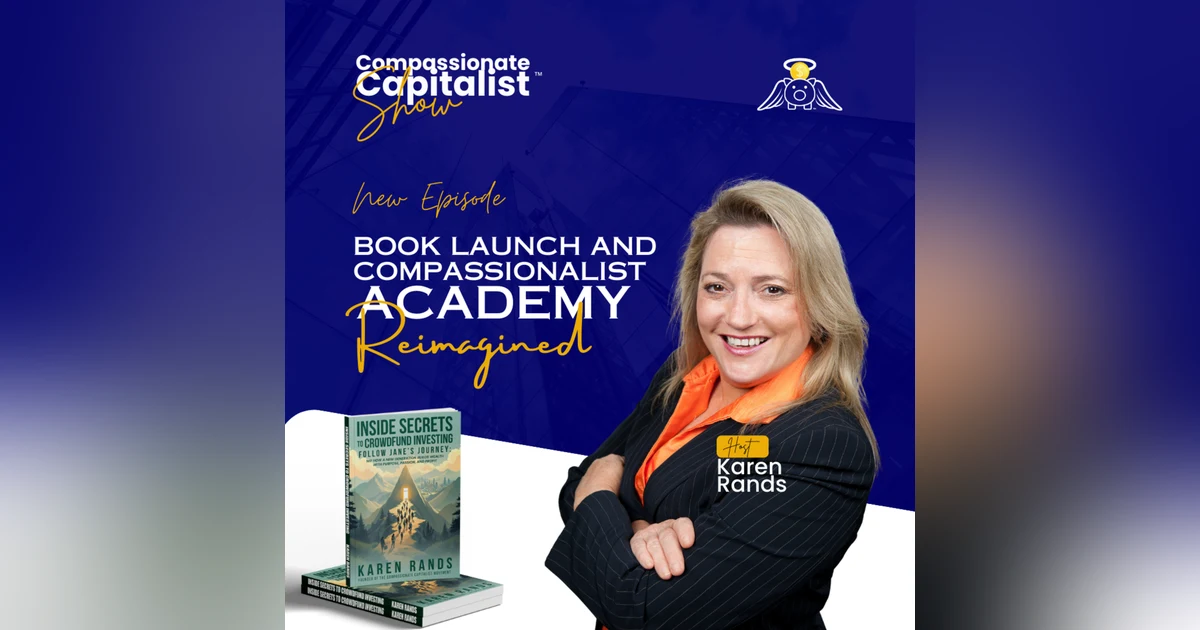
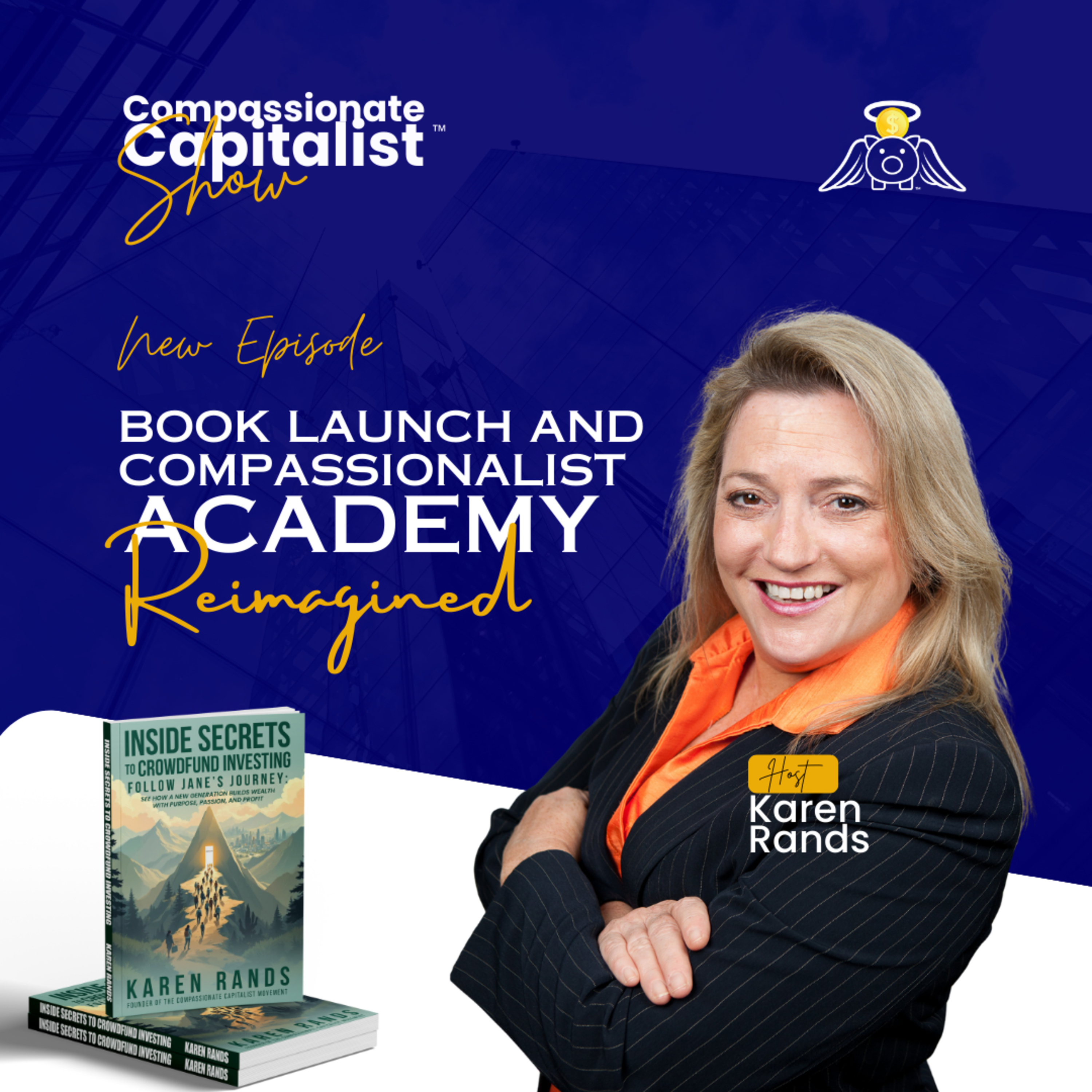


In this episode, I share how everyday people can grow wealth and create impact through equity crowdfunding. Drawing from my new book Inside Secrets to Crowdfund Investing: Follow Jane’s Journey, I break down the myths that hold people back from angel investing and show how a diversified, consistent approach can build generational wealth.
You’ll meet “Jane,” a relatable mid-career professional who discovers how to shift from risky real estate to smart startup investing. I also introduce the Compassionate Capitalist Academy, which provides a roadmap for anyone ready to turn passion and purpose into profit.
If you’ve ever thought you’re too old, too busy, or don’t have enough money to invest in entrepreneurs, this conversation will change your perspective.
Key Takeaways
Equity crowdfunding makes angel investing accessible to everyone, starting with as little as $100.
Diversification and consistency are the keys to long-term portfolio success.
Common false beliefs, like “I don’t know enough,” “I don’t have time,” or “I don’t have enough money” are myths that hold people back.
You don’t need to quit your job to build wealth; you can start small and grow.
Real estate isn’t the only path; investing in entrepreneurs can often yield greater impact and returns.
The Compassionate Capitalist Academy and my books offer step-by-step frameworks for new investors.
Chapters
00:00 – Introduction: The power of compassionate capitalism
03:18 – Why invest in entrepreneurs instead of real estate
07:42 – Jane’s story: a mid-career professional’s path to angel investing
12:55 – The myths of investing: “I don’t know enough,” “I don’t have time,” “I don’t have money”
19:10 – Building wealth through diversification and consistency
23:37 – From false beliefs to proven frameworks: overcoming barriers
28:05 – How the Compassionate Capitalist Academy supports new investors
32:21 – Inside Secrets to Crowdfund Investing: making angel investing relatable
36:54 – Promo details: book launch, course discounts, and special codes
41:30 – Call to action: start small, start today, and build your wealth legacy
45:12 – Closing thoughts
About Karen Rands
I'm Karen Rands, founder of the Compassionate Capitalist Movement. I help entrepreneurs prepare to raise capital the smart way and guide investors in identifying startup opportunities that build wealth and make a difference. This show is your roadmap to funding success, from pitch deck to public offering.
📅 Want expert feedback on your pitch? Book a consult with me: bit.ly/KCHcalendar
🔗 Learn more: karenrands.co
🎧 Catch more episodes: thecompassionatecapitalistshow.com
📘 Free eBook: The 4 Ws of Crowdfund Investing: https://bit.ly/FreeCrowdfundInvestingBook
🎓 Join the Academy: bit.ly/CA-prelaunch
0:06 The Compassionate Capitalist Show empowers entrepreneurs and investors in life to create wealth with passion and purpose. Join Karen Rands, a best selling author, for insights on Angel investing, crowdfunding, business growth, and wealth creation. As a seasoned entrepreneur and investor herself, Karen engages in dynamic conversations with industry leaders, successful entrepreneurs, seasoned Angel investors, and venture capitalists as they share their proven strategies and lessons learned. Once you listen, you will understand why this podcast is ranked in the top 2 1/2% globally. Subscribe and share and be a catalyst for the compassionate capitalist movement. Just go get it up and go in back and you must keep an open mind and you try your best just to leave your track and do not fall too far behind.
1:00 Regret is for the Prince of heart. In the end, it's all the same. Take what the wise I've got to impart. These are the principles of the game. The principles of the game. Oh, these are the principles of the game. Hey, welcome listeners. Thank you for being part of the compassionate capitalist movement. This week is a big week for me. Release of my second book and the launch of the reimagined digital financial literacy platform, now called The Compassionalist Academy.
1:49 More on that later and how you can get a discount As being one of my followers and subscribers, I really appreciate you. You don't even know how much this show, The Compassionate Capitalist Show, has hit #20 on Apple Podcast for the subcategory of investing under investing under business. So business slash investing. I'm in the top 100 on business now on Apple. So you could be hearing me for the first time, you know, because I, and for those that are listening for, you know, the regulars, thank you so much. I could not do this without you. And you know, those that are listening for the first time, welcome.
2:31 Welcome and your perfect timing. Because today I want to take you a little bit behind the scenes of my journey, how I discover the secret world of Angel investing, the challenges I've seen and why I am so passionate about opening this opportunity up to everyone. If you've ever thought investing in startups isn't for me, you know, or I don't have the money, the smarts or the time, then this episode is for you. And stick around so you can hear how you get a discount on both the book inside secrets to Crowdfunding investing, which I'm going to the whole title, the whole title is, I'll share all of that in a minute because it's, it's, it's a, it's a departure from the first book inside Secrets to Angel investing in, in their style, in their content and their audience and the amazing compassionist capitalist compassionate list Academy, the compassionate list Academy, compassionate list.
3:34 I made-up that word. It's a new word. Hello everybody. And it is a mash up, a mash up of compassionate and capitalist compassionate list, right. I'll talk a little bit about how I, how I cultivated this idea of compassionate capitalist here in just a minute, But it's, you know, the compassionist Academy is a reimagined version of what I did a year and a half ago. The that was called the compassionate capitalist wealth maximizing system. That's a tongue twister, you know, quite there. But I, I wanted, I had a different vision and I needed to really enrich it in order to make it the kind of platform that it needed to be in order to have the real impact that I intend to have with these two books.
4:20 And the content went from being like 6 lessons to like 70, more than 70 lessons and more to come from beginning all the way to advanced. And, and you're going to hear more about that in the book. The book is amazing. It's a story of Jane and her journey to become an active and profitable investor and entrepreneurs. All right, so so we're, we're offering this course now and content for investors from the very beginning of their journey with a foundation to grow and build their financial investing empire, all the way to advanced training in Angel and crowdfund investing to get those that have been dabbling in it or maybe are just disappointed in what's out there because there's really not a lot out there. And I'm going to talk about that too. So let's first of all, this is my back story. I want you to understand because I've been on this journey of really like 20 years, 20 years of, you know, uncovering this, right?
5:22 And and so before I became famous for my prowess of educating on angels and best practices to create wealth, investing in entrepreneurs and entrepreneurs learning how to raise capital or getting better at raising capital and to actually get the capital because they make a lot of mistakes because they just don't know what they don't know, but what they need to launch and grow. I worked for IBM on teams that were bringing innovations to market ranging from the launch of PS2 and OS2. Some of y'all remember that and mobile and wireless and pin based. Now we take it for granted, but back in the day, pin technology was pretty new and I was creating whole new marketplaces with automating the last mile right of, of being able to capture what people were putting on thin and paper and, and putting that together in apps, working with partners.
6:16 And then mobile and wireless from all different, every kind of wireless you can think of what it was then to what it is now and every kind of hardened, you know, little small device to the big rugged devices you use in trucks and things like that. All of that under IBM's umbrella to resell it and package it in services. And I negotiated all the contracts for IBM to do that, generating over $30 million in the first year that we we got it launched. You know, would have been a pretty healthy startup had that been the case. And moved up the food chain to be what they called a complex opportunity business manager COBM. OK, that was the Latin acronym and with a mission to evaluate and if Dean Worthy on behalf of IBM work, invest resources and some cases money, equipment, things like that. Novel technology startups that were doing click and mortar to become e-commerce before e-commerce was a thing and the first version was now is considered SAS. All of this stuff was very new in 1999. And you know, they could, you know, they said that the idea was they would go out, it would be like IBM approved to go out and get venture capital and then come back and spend it with IBM. Because at the time IBM had started to realize that they were missing out on the Amazons and ebays of the world. Because once a company got equipment from some of these from, you know, some of these
7:46 companies came about compact EDS, you know, various HP, you know, that we're into mid range kind of stuff. It was standardized on it. It was very difficult to get them off and IBM wanted to get in earlier, right? And so they would get the end. And you know, that was they put a whole team together for that. And me as a COBMA lot of these, these people that were on these teams were really, really young reps. They didn't really know how to get things done. And so I was the person that would come in and and get the right resources and help them get things done. And and I teased that I was in my own little bubble. This is 1999 because I had this client, it was revolutionizing digital imagery in the healthcare industry. And I had he had traveled with through me by different divisions and things and kept working with me and I could get him to do what I needed to do.
8:38 And he and I decided I wanted to be in that parade and not watch the parade goodbye. It was so exciting and I wanted to help him go to market, get the funding they needed because I thought that I knew about that. So two things about my bubble and I dug. I joke about this is that have you ever seen the Animal House movie? And they're going down the and they the parade goes down. I want to be in that parade. Well, then they turn and go in the alleyway and they're all banging into the wall. Well, that was the parade I got into because I left IBM in January of 2000 and lot of y'all know what that meant. Some of the younger ones don't. But that was just the beginning of the.com bubble burst and, and, and I didn't even know. I like here's how much I was in a bubble. I didn't know there was a bubble. And the second thing I didn't know about was that I and I did not know about Angel investors.
9:33 I had never even heard that word. There's 2 words. And and it wasn't really until much later that I figured out that I didn't know it when I was this mid level executive leaving IBM to go be a part of a startup. But I got invited to this, the network of business angels and investors meeting with a friend of mine that was doing a, a software product for the real estate industry. And I wanted to go check it out for this guy that I was now working for. And I was also doing other things. You know, I often times have, you know, a lot of pokers in different fires. But, and here's my very first impression, and I didn't really understand this too, until later on, but I knew that I was in some place that I was meant to be right that door. When the door closed on my career at IBM, the door opened in this journey that I am and that I'm on now. And it completely changed the trajectory of my life. And I really still remember the feeling when I walked out of that first meeting and I'm going through the, the, the parking deck and just feeling goose pimples because I was like, this was all of the work that I had done in IBM, all the aspirations that I had had as an entrepreneur. You know, my dad had been an entrepreneur. There's a podcast on that and his influence on me. And, and there's some more in this story in a minute. And I had, you know, realized that it was this, that this was, this was like I felt it was my
11:07 calling. But the other thing that I experienced then that I didn't truly understand until later when I was trying to figure out why there weren't more investors for all the entrepreneurs, why so many people didn't know about Angel investing, why so many people that they knew about it had a negative attitude about it. And so it was like I had stumbled into the secret Society of Angel investing when I I walked in to this room and here were these people, quite frankly, mostly middle-aged white men at the table looking at these entrepreneurs that were desperately trying to raise capital, bring their vision to market. And they were picking and choosing who got to get the money.
12:00 They were the market makers. They were the ones that yes or no, they were the kingmakers, right? And that was that was exciting when I was in the middle of it because now I was in the middle of it. But in hindsight, when I finally learned figure this out, even after I wrote the book why that was, I realized that there needed to be changed, right? And I realized that only the most wealthy were getting to see and invest in the next big thing, right? And it, and the secret was why it was a secret was because of the laws that prohibited entrepreneurs being able to solicit capital from anybody but a millionaire that they already knew or they had to go through a broker dealer. And there's a whole lot of issues with with that. But you think about it, if you have to already know a millionaire, well then you kind of already are sort of in this special group, right?
12:55 You know, you're a kid of a millionaire or you went to school with millionaires or something like that. But there's all a lot of other people out there that didn't and we would took it so seriously about this, this non general solicitation. So listening to people you didn't know as millionaires that they had the closed doors, right? We actually closed the doors of when I took it over and I started running these events, we closed the door. So no random person would accidentally hear about this opportunity when they walked by in that kind of amazing, right that we took to that extreme. And you think about how people talk about deals now they're on the Internet on pitch events and things like that. But I quickly realized that the stat, the process was stacked against entrepreneurs, even those with great tech that were charismatic, that were not charismatic, right?
13:44 They had great technology and great solutions. They were solving A fundamental problem in the marketplace that would make great money for those that invested. But they were a technology guy or they didn't talk or look like most of the people in the room, the white middle-aged men in the room. And they, you know, they, they. And so if they didn't connect, they would choose one that did. And I, you know, at the time, I thought all capital was green. But I came to find out that no, they're everybody brings a bias into the process of discerning these, these deals, just like you do with so many other things that you do in life.
14:25 The founder Jerry Martin blessed my life, blessed me by taking me under his wing initially and to be his second hand for organizing the, and the organizing the meetings, screening the companies, managing the follow-ups, you know, putting these things. And I learned really almost everything that I knew about running events, doing stuffs, you know, due diligence, all that stuff. And part of it was, you know, after the meeting, I would talk to these angels and I would say, well, why did you invest in this deal or not that deal? What did you like? What you don't like? And I learned this, I, we're interviewing angels, investors every, you know, every month talking about deals. And, and then, you know, as I progressed and launched the podcast, various things like that, you know, I've interviewed hundreds of Angel investors for my book too. I, I interviewed people, sent surveys, had surveys when I, when I was so, so I took over this group. He wanted to retire.
15:27 We worked out and earn out. And I quickly discovered that the group needed new blood, right. We had a lot of what I call empty suits. They were showing up for the entertainment of the of the pitches and the free food and drink, but they really weren't investing. And if I was going to be true to the purpose, I had to bring people in that wanted to invest. But guess what? As I learned, most people don't know about it. So how do you know about it? And if you haven't read the first book, and if you get into the course, there's a whole story about the making of a compassionate capitalist and the story of Jack and, and this guy that became part of the Angel group and how we met and how he learned about it. But you know, as you know, this, I, I realized that I need a new blood and it needed a lot of TLC. And, and this group was a little bit different because of what they invested in and how they invested. And the compassionate capitalist concept was born, right? That and that is people that investors or people that invest time, money, knowledge, resources into entrepreneur endeavors to bring innovation to market, create jobs and create wealth for all those evolved.
16:46 That was my long definition, right? And then eventually I, I modified it to be not so long to, you know, basically that was because I, when I had met these angels initially, I'd say, well, how'd you learn how to be an Angel investor? And they said, oh, well, I invested in my first 3 deals and I lost money. And then I just, you know, finally eventually figured it out. I was like, well, that's a horrible way to learn by losing. You learn by losing. There's nobody teaching this stuff. And in fact, a wealth manager that was one of my investors came to me and said, hey, Karen, I can't tell my clients. I can't talk to them about Angel investing and investing entrepreneurs because I could lose my license.
17:28 So anybody that I discovered, and this was something that I unpacked later, I discovered that anybody that had enough money to have a financial planner or wealth manager and they would go to him because a friend was doing a business or they were at a pitch event or anything like that. And they would say, hey, how much can I afford to invest in this deal? I really like it. Can you help me with it? That financial planner would say, oh, you know what? Don't do that. That's gam like gambling. You'll lose your money if you invest in that company, regardless of what the company was doing. You will lose your money if you invest in that because it's like gambling. What we talked about, we talked about how much you could invest in real estate and we've set aside that and you know, and I can, you know, help you a little bit with that, but you know, I'll give you my opinion or get you in touch with people, but you know, you really need to. These are the products my company sells. And the reason why wasn't because it was gambling. I mean, yeah, there's risk.
18:22 It wasn't because it was gambling. It was because of the fear of losing their license because the rules weren't. Still to this day, unless they're not on Commission, they're a registered investment advisor, they cannot advise on. Technically they can, but the rule of thumb in the industry and nobody wants to break it is that if they advise on a private equity transaction that the broker could get a Commission on, then they will lose their license. They will take their license away in their livelihood. So they don't. And so over, if you think about it, 80 years that this was illegal. They're planting seeds in people's brain that investing in entrepreneurs is like gambling and they'll lose their money. So word of mouth, if somebody said to them, hey, I'm thinking about, you ever think about investing in entrepreneurs? I'm thinking about doing it.
19:11 What do you know about it? They would say, oh, no, no, no. My financial planner told me it's gambling, don't do it. You'll lose your money, right? I talk to people, they'll show up at network events with entrepreneurs and I'll say, yeah, I'm doing this stuff where I'm teaching about Angel investing. And they'll go like, oh, I go, do you ever think about it? And they're somebody that's a millionaire or, you know, at least a, an accredited investor. They're like, oh, no, no, no, I've heard about that. That's, that's like Angel, that's like, that's really risky. I'm like, why is it really risky? You just have to know how to do it. Every every asset class is really is as an element of risk, right? But that's how compassionate capitalist was born and how I adopted that and have now and trademarked it.
19:52 OK, so, so this wealth manager asked me about it. I looked around. There was no training out there at that time. There was a couple of books. David Rose, the founder of New York Angel and Angel List. He had written a book. And it was really just for angels and his crew to be better angels. Kauffman was doing some training for the Angel Capital Association. But it really wasn't. It was kind of like you get a workbook and somebody you know, talked about it in a panel, but there was really no on demand training. And now they offer some stuff that's really just like my podcast and somebody talking to somebody else and asking them questions. It's not really an instruction like an, like a, you would expect for some kind of distance learning type of curriculum, right? And so I created a series of ebooks that were a how to that were the precursor to this.
20:44 And it was called How to be an Angel investor. And back when ebooks were just PDFs, you sit around and I ended up having about 500 people really actually about 1500 people, but 500 filled out my form around the country to get information about my companies that were coming through our stuff. And they would tell me what they invested in and how they invested, what kind of things that they had. So that continued that data continued to frame my knowledge of how Angel investors work, right. And the first books gave me the juice to grow that book. It became, I mean, grow that group, the network of business Angel investors became one of the most active in the Southeast and the top 50 in the United States in just a couple of years that I was running it. And, and, but here's the other thing that I learned about that.
21:25 And This is why might we're a part of my heart, of my passion to solving this problem. This giant gap came because entrepreneurs had to run a gauntlet, you know, to get in front of these investors and and most great ideas never make it. And it's and in my experience, a deal didn't make it the cut, not necessarily because they weren't good enough. They just weren't entertaining or the right for this particular group or this audience. You know, and, and you know, the way the Angel funnel works, you know, 1020 companies might apply in that month. They can only, they only have time for three or four. So the the they narrow it down and 10 of them could be doing something.
22:08 They just need to be tweaked. But a lot of times as entrepreneurs won't come back. They just take the rejection and move on. And then, you know, out of, you know, the six that kind of make the final cut 3 get to pitch, the other three are just as good. They just didn't didn't meet the criteria, the timeline of what would be interesting to the Angels that month. But if you're in a small town, like we're in Atlanta or, you know, relative, like we're not in a small town, but we only have two at the time, we only had two Angel groups and we really barely have more than that now. I mean, we kind of sort of do, but the, the most official ones are really only two and a third one that, you know, they don't hold meetings. They just, you know, there's one groups that get together and just make decisions.
22:52 But if you got dinged on one reputation spread and the other group wouldn't look at you because the first group didn't like you. They didn't bother to say why didn't you like them? Oh, they were good. They just didn't fit our cut, you know, and then next month there's another 20. So they would say come back, you know, and maybe somebody that took a liking to them would encourage them and mentor them. But it just, that's just the nature of the beast. So a lot of companies would get shut out of getting funded. I, you know, and it was really heartbreaking to me. And even then when they get into the group, you have 30-40 people in a room. They don't all invest in everyone. They kind of pick one that they coalesce around and they group their money to that. So even then, the two that didn't get funding wasn't that they weren't, they weren't fundable. It was that the majority like this deal better than the other one.
23:46 And so it, you know, this was just, I, it was really heartbreaking to see innovation that are the market really needed not get out into the market. And I saw this, this imbalance between innovators starving for capital and you know, this, that they just couldn't get it because there was such a gap. And there's still such a gap. So many more entrepreneurs that are qualified through incubators and accelerators that don't get the capital that they need and struggle and struggle and struggle and everyday people. Here's the other part of it, locked out of creating these wealth building opportunities. And it was the birth, my belief, this is where my belief came. If we could open up capital raising to anyone and investors invent and investors people, anyone could invest in them. Talk about a win, win for entrepreneurs and the investors. It wasn't just limited to millionaires and the most charismatic entrepreneurs that looked like the people in the room and so, you know, could look like an act like the talk, like the people in the room.
24:54 So it was a great thing. And then the Great Recession hit and it hit me hard for a lot of different reasons. And I had another aha moment, right about corporate America, time and money, because my group was really not people that had had tech exits and were independently wealthy. They were people that had ran their own businesses, had the money as accredited or they were executives and businesses. They were partners in a law firm, things like that. So when the Great Recession happened, their time spent, they had the money, but they couldn't spend the time in the way we were structured because a lot of Angel groups require the, the members to do a lot of the work screening and follow up and due diligence. And if they don't have the time to do that, they just don't invest.
25:42 And so it, we needed to change. It was too late to pivot the model and and I sunset the group and and the JOBS Act was on the horizon. That was a JOBS Act in 2012 and it truly was it intended to be this great equalizer both sides of the table, democratization of the capital markets. That's the term we threw around all the time back then because reward base had proven that it worked to raise capital. But because of the laws of general solicitation they were at that were set up in 1933. It was out of sync with how people communicated what was the Internet was doing, the openness of emails and social media and all that kind of stuff, right?
26:26 And so you know, it was one of those things where things that we take for granted now smartwatches, drones, 3D printers, even the physic fidget widget if you're not, if you're watching the video, if you're on Spotify, flip over to the video got got toys. The fidget widget all came to market because and even Oculus headset, right, it came to market because of people putting money in to get the product earlier than it was available in the store. A reward was they got a product, early adopters, and they figured out that Fast forward a couple years later, those companies would go to market. They'd take raise millions of dollars to develop their product to get it manufactured and prove that they had a marketplace. And then a big, big angels and VCs would step in, give them the growth capital and they would go on to sell the company or whatever.
27:18 Like an Oculus case. They raised millions of dollars through reward based, raised a small VC round until Facebook bought them for 8:00, $100 million. And so you had to say to yourself, if somebody had $1000 to buy this headset that that not been ever in the marketplace before 510, seven years later, I don't remember exactly how long it was and they they were bought for $800 million. What would that $1000 in equity be right now? They had an obsolete piece of equipment worth nothing, right? If they had $1000 in equity, would have been $8000.
27:58 Would it have been $16,000? Would it have been $80,000? We don't know because they weren't allowed to, you know, and the, and the barrier wasn't knowledge of of, you know. Do you have what it takes to do this? Are you willing to do things that are risky? You know, because we weren't limiting people's ability to go out and spend $500 a month on a lottery ticket or go to Atlantic City or Vegas and throw $20,000 on the crap tables. So why are we telling them they're not allowed to invest in entrepreneurs? That they're passionate about the problem that they're solving or they think they're doing something really cool? Why are we judging them as being lesser than? Because they don't make $250,000 a year or $200,000 a year and a half, $1,000,000 in in net worth, right? What we know, but there's plenty of millionaires out there. You know, people that win the lottery that technically can be an accredited investor.
28:56 They have no idea how to actually invest. I see it all the time of companies that have exits and all of a sudden these instant millionaires in there and all they really know is the code, but they want to become an Angel investor. They got no idea and they, they follow that thing of losing on their first 3 because they invest on emotion. And I digress because that's what's in the course. And I'm happy if you are still listening cuz you got to get the code here, right. So how did I get, how did I decide that I needed to do this? I was, I'll tell you, I was licking my wounds. I was really not in a good place after the Great Recession. I'd had huge dreams on building a really big national network of Angel group Angel investors. Being able to kind of like the Kretsu forum was my vision. I was, I was doing this thing, all of that. And it just, and so, you know, we have that kind of disappointment.
29:55 It's somehow sometimes it's hard to pick yourself up by the bootstraps and and you know, get going on this right. And so do it again because I didn't want to fail again, right? And so my dad was dying. He had been a highly successful entrepreneur in his own right. He had invented something that wasn't and that changed the whole industry. He was the guy that invented the ability to to put five colors on a T-shirt. We take that for granted now, but prior to that there was only two colors that people would put on AT shirt. And he invented it. He was an engineer and it's a, it's a registration thing and a few other things. But he invented that and became the godfather of the screen printing industry and made some money in that regard.
30:43 And then I realized that he didn't even do that till he was 50. And so I was like, oh, my life's not over. I can do this. I'm passionate about it. Nobody else is passionate about it. Most people, the existing angels, hedge, you know, brokered private equity funds, people that kind of in the space, they would all look at me like I had a third eye when I talked about the need for more angels or how people don't know how to do it. And it was almost like, it's to this day, people almost think like, oh, you know, like sprinkle some water out there and like Pixie dust you grow angels like those little monkeys in the water that you get at a novelty roadside stand or something, right? That, you know, it's, it's a, they just think that they, they just come, they don't know how to cultivate. I had cultivated a whole new group of them to, in order to get NBA and I to be as ranked as it was. I just didn't have an operational structure that could sustain through the Great Recession because I needed to learn a few things too.
31:57 And so, you know, I said to myself, the world needs this message. They need this message of financial empowerment and it's not a secret if it really shouldn't be a secret, that the second greatest way to create wealth is to be an an investor in a successful entrepreneur. If you think about it, if you just like break back the curtains that blind you on this idea that Angel investing or and now crowdfund investing is something that is bad. Well, millionaires have been doing it for 80 years and they can invest in anything they want.
32:40 And if it was something they expected to lose their money on, they they wouldn't do it. The reason why they do it is that it's three times more profitable than real estate and stocks. Google it. OK, you know, and there's a reason if you know how to do it now, if you don't know how to do it, you do it once you do it just three times, odds are you'll lose your money. And you're the ones that drag down the averages. If people actually knew how to do it, if they took my course, they would it would grow. It would probably be four or five times as profitable. It's, it's currently, if you just do the basic math and I put it in the book and the book Inside Secrets to crowdfund Investing Jane's Journey, I talk about it there. I talk about it in the course.
33:25 It is 7 times more profitable than investing in your 401K. But everybody says invest in your 401K when you start a job and and that's old school. That's so boomer, right? And so I have, you know, it and, and I, I'm not doing the math on here, but you know, I had to start a movement if I was going to leave my thumbprint on the world. This is what I wanted it to be. I wanted to be the person that revolutionized, that disrupted an industry and solved A fundamental problem that brought more capital into the market to fund the innovation. And ultimately, if I'm, when I'm successful at this and you help me be this because you join, you spread the word, right? All the organizations that I'm working with and the things that I'm planting that when this happens, the economy of the United States will be so dominant on innovation that we will be unstoppable in everything you can even possibly not even think of, you can't even imagine yet. Because when it's solving problems of, of disease or, or agricultural issues or environmental issues or housing issues, or, you know, efficiency issues, everything, nothing in the marketplace that you take
34:56 advantage of as an innovation came to the market without some help, financial help. And, and Microsoft wouldn't be Microsoft, Amazon wouldn't be Amazon. You know, Apple wouldn't exist. You wouldn't even have Apple. You wouldn't even have an Apple iPhone had there not been people that put money into that company when it was still in the garage and then went from the garage to, you know, the next days in the next stage, in the next stage. So those billionaires that you admire or hate, whatever it is, they did it on on the shoulders of a hundred, 1000 thousands, whatever investors that put their money together to back that technology back that founder and give them what they didn't have. They had the inspiration, they had the know how, but they didn't have the money.
35:57 And they solve that problem for them. And then they ride their coattails all the way to the moon and share in their success. And in the process of doing that might become a go from 100,000 air to a millionaire, right? They might go, they might become a millionaire to a a quadrillionaire or something. I don't know, you know what I mean. You see what I'm saying? Even Home Depot had Angel investors, new concept, right? Every big, big and big money person that does big things in your town with a big business, they did not do that on credit card debt and a mortgage on their house.
36:40 They did it with investors. And I'm offering a pathway for anybody to participate in that, that that wealth creation strategy and leap the wealth gap for those that are in the sectors that have been left behind. And I'll be quite frank, women and people of color, because the laws were stacked against them that they could not borrow money to buy a house to start a business, to get any money on a business, even get a credit card like women until 1984 with the when the Equal Opportunity Credit Card Act, whatever was passed, but it was a Supreme Court decision almost a year a decade before that, before it became legislated, they had to have a man sign cosign for them. Husband, brother, son, dad, uncle, didn't matter as long as they Co signed for the woman.
37:43 So the woman can do it right. And and there were even laws that didn't allow women to own companies too at the time. So you have a whole sector of the population that didn't start doing the things that most everybody started back in in the end of World War 2 create and even back further in the industrial age that you people were able to participate. So there's a gap and this is the way to leap the wealth gap better than stocks that are just as volatile as anything else. And we've seen it in the Great Recession. People lost their entire retirement because of the downturn in the real estate that took a decade to come back and stock market crashed. It took a decade to come back and now you know, you can, you can have impact and you can control your destiny in such a large way by learning how to do this kind of investment. So if you're going to start a movement, the compassion capitalist movement, what do you got to do? You know, I'd use that term for a long time. I need, we needed to move the barriers that was that was happening with the JOBS Act.
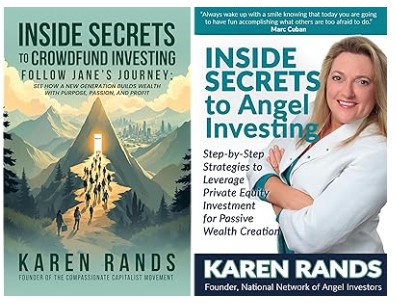
38:54 And if not for me, then who? Who would start a movement? Who would change the world? Who had enough heart and gumption to work on it, to punch up for a decade on this right? And and you know, but me. So I wrote my first book, Inside Secrets to Angel Investing, right here. They're watching it's the step by step strategies to leverage private equity investment for passive wealth creation. What a mouthful. But you know what I didn't know? I didn't know that people were were not going to be looking for a book on Angel investing. I thought with the crowdfunding crowdfunding act, you know, everybody would be like, Oh my God, I had no idea I could invest in entrepreneurs.
39:36 I better go learn how to do it. And I wanted to make sure that it that investing in entrepreneurs didn't get a further black eye because people invested on emotion because of a cool video. And then all of a sudden, they lost their money. And they would go, yeah, that financial planner was right. My my neighbor was right. I shouldn't have done it. And and then they would tell more people and more people would tell more people. And then we would really be sunk. And entrepreneurs would really be Sol when it came to getting access to more capital, right. So I wrote this book and it is a deep serious. I mean, I do have cartoons in here that I had created. I do have some artwork in here. And so I think I mean, and I do have, you know, I have like little quotes. I got stuff.
40:19 I talk about the story of Oculus. I got, you know, I talk about the story of of, you know, they've been a Jerry that raised money in a unbelievable kind of way in Vermont through Angel local Angel investors, kind of like the original community based finance, right. So I wrote the book. That's the first thing you got to do. You got to write a book, right. And I knew this I had started, but you know, it, it was I was also intimidated by the whole process. And it took me a while to finally get it out from when I started writing it. And then I relaunched my podcast, the compassionate Capitalist show. It had been primarily a way to promote the companies that had been in our pitch events to my larger network because nobody really listened to podcasts back in, you know, 2000 and 2000.
41:03 What was it, 2005? Nobody really listened to podcast back then. But it was a way to get that 500, that group of 500 investors around the country to see the deals and stay within laws of general solicitation because they were my network, right? And I needed to have a platform that I could get into the earbuds. You, you that are listening now to share this message. And that's what I do about the Compassionate Capitalist show talks all about creating wealth as a successful entrepreneur and investor, as an entrepreneur and best practices for that. And then I spent 20 years now building content, advising entrepreneurs and guiding investors. And I realized something was missing. The book was 1 dimensional. There's a reality about people in books. They'll best laid intentions.
41:47 They will open it up, read the first 100 pages and then it sits on a shelf. And I had step by step and everything and this vast resource portal that I had built that had samples of safe agreements and convertible notes and private placement and investor questionnaires and worksheets to figure out how much you can invest evaluation capital, you know, calculators and cap table examples and and all this stuff. So that the first time investor would know about these things and it wouldn't be unfamiliar with them when they started to and for Angel groups to be able to use it to bring new members up to speed. And you know, it was, but it was quite evident that people just didn't know about it, right. I mean, I network were so the truth about wealth creation, right?
42:36 And this is my big discovery really. Too many main ways to create wealth. I kind of hit it on before be a successful entrepreneur or invest in entrepreneurs. The wealthy have always done both. Most people think they have to quit their job, risk everything and start a business to get wealthy. But not everybody's got a great idea. Not everybody really wants to do the work that it takes to be a successful entrepreneur. Not everybody can build a multi $1,000,000 business that investors have to have in order to get their multiple on the money, right? They're looking for 10X, they settle for 5X. They don't want to do one that's going to do 1X unless they're like a real estate investor and they and it's packaged like that and it's a revenue share, which is part of the training is building your Angel profitability blueprint with near term income, mid range exits and long term big wins. So, you know, if you're going to create generational wealth, you have to be able to create a very big business. And it gets harder and harder, you know, all along the way. And if you can't raise capital, it's virtually impossible or it takes 2030 years to do it with the second generation taking over.
43:54 And I figured out, you know, with, with entrepreneurs, they might build a successful company, but they do one or two, maybe 3. A lot of times the ones that are really successful have had base hits beforehand. Not really big hit it out of the parks. And I realize there's another way you can keep your day job and benefits and financial security, you know, right now very what's going to happen with, you know, benefits and getting insurance if you're not on somebody's plan and they're changing all around 4 O1 KS and probably not going to even have matching funds. And most companies don't. Most people don't even stay in a business more than five years. And so side gigs instead of doing a side gig that just you were working time, putting time into making money, more time.
44:43 And to make money, you got your 9:00 to 5:00 and then from 5:00 to 9:00 you're doing something else. Instead, learn how to invest. Start with crowdfund investing and have fun in your in your 5 to 9. Put your money to work backing those entrepreneurs that are doing something really cool and amazing and are and are on to something that can scale. And you are really passionate about the problem they're solving and you love watching them grow. The impact you have, the contribution you're having to society, the legacy that you're going to create when that company is successful, right?
45:23 And Jane in my book Inside Secrets to Crowdfund Investing, follow follow Jane's journey. See how new the next generation builds wealth or the new generation. I don't even know the name of a book. Find out how the new generation builds wealth with purpose, passion, and profit. Because it's not A next generation. It's, it's you this generation, but it's a new generation in the way that they're doing it, right? It's not, we're not waiting for the next. This is something ideal for millennials, Gen. Xers, Gen. Z's because they're up and coming and even, you know, maybe people on the on the borderline of boomerism, right?
46:10 Just depends on where you are, your level of capital, your gumption, how much you want to do this. Did you miss out on building up a retirement fund? In the book Jane is like a 50 year old nurse, mid mid tier mid management nurse grown kids out of college had saved up for investing in real estate, saw how her parents lost their much of the retirement when they're they couldn't afford the additional mortgages on those property. That's a myth by the way. The bank, no, the bank owns it, not you. You're just making payments on that loan. You know that you can lose all of that your down payment, all those payments, all the repairs you did out the window. Talk about a big risk.
46:59 That's a big risk, OK. And it happened in more and more these days it's just an insurance pay an insurance tick up or a property tax tick up that and property taxes are going up. You know, if that might put you underwater on that. So you know, there's, there's myths out there that set the stage because of these regulations and crowdfunding real estate became the thing because all those financial planners said you could do it. And you get a postcard that with a teaching how to do it. You know, you could go to a conference and get ACD on how to do it. But nobody teaches about Angel investing, right? So keep your day job, learn how to invest in entrepreneurs and let's shift this this this power and influence that you know it has.
47:51 You've got to be a entrepreneur to create wealth. And let's show people that you can create wealth by investing in entrepreneurs. So if you aren't in that community that struggles to find investors that those would likely invest with, they want to invest in in, I'm sorry, they want to invest it with impact to contribute to the growth in their community. The reason why those those first investors that learned by losing, they did and they became a compassionate capitalist is because they knew that they were having an impact. Yes, they were picking the next big thing, but it was the next big thing that was solving a problem that they cared about. That's why they were willing to do that and build a large portfolio that ultimately if it's diversified. And I gave the example of four O 1K, 60 companies, $500 a month for five years, 60 companies, 18 of them go out of business just like and you still make 7 times the amount you would make on a four O 1K with a in the money market. So all of that, right?
49:02 So the key is strategies, diversification and consistency. That's how portfolios are built and wealth is grown. And so I've kept hitting a wall. I've been doing this for 10 years longer in in talking about this and and I took a lot of analysis on the belief patterns, the emotional elements of it, all of that stuff to break the code to figure it out and I have figured it out. So let's look at the false beliefs, right real quick. There are these are the lies that that people tell themselves about why they can't invest that I overcome with the training and in Jane's story, not in this book, but in the in the new book.
49:46 OK, that will be released. OK, I'm running a promo this week through Labor Day. OK, put your money to work. Start your hard earned money to work working for you by getting the course and by getting the book 50% off if you do it before Labor Day when you hear this, if you're missing this after Labor Day, the code in the show notes will get get to 25% off. I'll go ahead and tell you now, it's CA-25 and Jane 25, five chapter for Compassion Analyst Academy and California 25, but it's in the show notes. Here's the false beliefs. I don't know enough. You don't need an MBA.
50:27 You need a framework. That's what my books and my books and Academy provide. I don't have the time. Learning doesn't require hours every day. It's a step by step system. That means you learn as you go and you can do a lot of it. You can do it on a Saturday, you can do it at night, you can do whatever to learn the system. And then when you start to build your portfolio, Jane, Jane fit like, you know, she stops scrolling and looking at reels on cats or political fighting or this, that, or the other thing and starts looking at exciting things that are happening that she's juiced about that She's like, Oh my God, like, because she's watching the videos of these entrepreneurs that are doing crazy, crazy exciting things.
51:10 Right. I don't have enough money. Crowdfund investing allows you to start with as little as $100. Now you know that that you aren't going to build, you know, $100 ain't going to get you $100,000. You might get you $1000 on a big exit, but it's OK to start because it's OK. It's not that much to lose. So you can figure it out. And that's that idea about the 500 a month came from Jason Kakanis when he talked about what he would do if he could go back and talk to his 20 year old self and do and and start investing in entrepreneurs on crowdfunding rather than starting his first business, right. And so, you know, he said he would join a company, learn the insurance and outs of corporations so he could build a company successfully himself.
51:54 What worked? What didn't work, you know, instead of failing his way to figuring that out. And he would get paid while he did it and he would, you know, have benefits and he would invest. OK, Yeah, I'm not smart enough. Well, you know, with the right guidance, you don't need to be a financial wizard. You just need to follow the proven principles that work for people that are evaluating the entrepreneur opportunities and learning discernment and and following their own thing. They don't digress, you know. And in the course I talked all about the mistakes and entrepreneurs that investors make. So you don't have to make those mistakes. You won't if you follow it.
52:36 I'm too old to start. It's never too late to diversify your wealth strategy. Everyone, every single smart investment can create generational impact, right? As long as you, you can even invest in the ones just you just change your portfolio. And I talk about that in the book, how depending on your risk tolerance, how you structure, you know your, your 10 initial investments. So what's the solution? Knowing all this, the book, the first one, open the door with all the resources that I talked about, The second book, inside secrets to crowdfund investing. Follow Jane's journey, see how a new generation is creating.
53:24 Well, it builds wealth with therapist passion and profit, right? Making it relatable and accessible for everyone. That book too, right, Because it needed to be this other one was it was dry. It's hard. It's like it, you got to be really, you know, it's not an easy read and it's dense if people come back to it, if they're really loyal to it, but they really needed a way to bring it in life. And that's the compassion Alist Academy, beginning and advanced training all the way through, plus a vast resource portal to guide you step by step. And guess what? If you buy the first course, if you buy a course in there and then it's not cheap because there's literally 70 plus lessons in there. You get the books, they come with it. So you can buy a book for 20 some odd dollars, right, and get a discount code, or you can buy the course and get both digital versions of them.
54:23 So whether you want to dip your toe in or build a full port to foil portfolio with strategy. Now there is a road map, right? Getting started everything that you need. And at the very least, you should take the the basics. So you can decide if even if this asset class is right for me. Do you want to commit the time and money to be successful at it, to build your own financial legacy and bring it all full circle from secret society to open opportunity, from barriers to accessible tools? I believe that the next great wealth movement is this. They've been talking about this great like the the transfer of assets, you know, this generational transfer of assets.
55:07 So if you're one of those that is getting those assets, you know, even if they like you get a piece of property that you don't want to deal with the property management, you don't make that much money on it, sell it and put that money into companies. 20 grand won't buy you a a piece of property, but 20 grand will build you a 10 company portfolio, right? You know, or more. And then as you make money, you get something that you do just like you would be putting $1000 into a piece of property if you owned it or $2000 on your mortgage payment if you got the cash to do that. Put that into a company and build a portfolio of 60.
55:50 Oh my God, the wealth you would create with 60 investments and doesn't happen overnight. It takes time and patience, but it'll happen. I, you know, just anyway. So I am inviting you to buy the new book. Let's see if I get it right. Inside Secrets to Crowdfund investing. Follow Jane's journey. See how the new generation builds wealth with purpose, passion and profit. You get it. But kind of like for us old school people that used to do used to read the The Reading Primer, follow see Dick and Jane run. So follow Jane's journey, see a new generation, right? It's the best starting place.
56:34 If you're not really certain, if this is for you, not ready to commit the time and money for a course, then get the book. Kindle's going to be like 10 bucks and paperbacks like 20-5 something like that and use the discount. Get it during the pre launch. Help me become a bestseller author so more people know about it. And we and I want just want you to know that you can create wealth. You don't need to quit your job. You don't need to have millions. You just need to start. Start with this knowledge step with start with one step. Start today and use the code CA-25 to take 25% off your first purchase of the codes or get both books and or get the book of the pre launch 50% off if you just go to the pre launch on Amazon in the first before Labor Day.
57:25 And if you missed that then use the code and get a discount on that too. And with that, I'm going to say onwards and upwards. Have a great day. Thank you for listening to this podcast, The Compassionate Capitalist Show, brought to you by Cougar and Capital Holdings with Karen Brands as host. You are encouraged to visit the website cougarand.com to learn more about how Karen and her team help investors and Angel groups make money by avoiding investing in deals that suck, and how the Cougar and Capital companies and partners help entrepreneurs breakthrough their barriers to capital and live their dream by building companies that can scale and create generational wealth for their founders and investors. If your business could benefit from exposure to our audience of business executives, entrepreneurs, and investors, we are seeking financial partners and sponsors for The Compassionate Capitalist Show to help us take this podcast beyond our 150,000 listeners and amplify the message of the compassionate capitalist movement by making this a Top 50 business podcast.
58:39 The Compassionate Capitalist Show is available on YouTube, Apple podcast, iTunes, TuneIn, Stitcher, Spotify, Pandora, and Google podcast. Contact us at karenrand.co to learn more. And as a listener, you can do your part of the Compassionate Capitalist movement by subscribing wherever you listen to podcasts and sharing this show with your friends and colleagues. Be sure to pick up your copy of Karen's bestseller that launched the Compassionate Capitalist movement. Inside secrets to Angel investing. A step by step strategies to leverage private equity investment for passive wealth creation.
59:19 Thank you for listening.