Think Like an Owner: Building Wealth Through Real Estate, Angel & Crowdfund Investing


What does it really mean to "think like an owner" when building wealth?
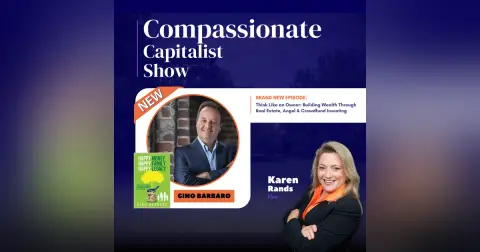
On this episode of The Compassionate Capitalist Show™, host Karen Rands sits down with Gino Barbaro—an entrepreneur, Certified Money Coach®, and real estate investor managing $450 million in assets. Together, they explore the ultimate fundamentals of sustainable wealth creation.
🏢 Real Estate vs. Business InvestingGino explains that buying an apartment building isn't just buying property; you are buying a future stream of revenue and an operating business. This ownership mindset bridges the gap between real estate and private business investing. Both require a straightforward, disciplined framework:
- Buy right: Establishing strict criteria for what you purchase.
- Operate efficiently: Understanding how the asset will be managed to create value.
- Exit strategically: Having a clear plan to eventually realize and capture that value.
- Foundation (Financial education)
- Framing (Cash-management skills)
- Protection (Emergency reserves and safeguards)
- Wealth Creation (Active investing and scaling)
- Legacy (Preserving and passing down wealth)
🧠 Money Psychology & Emotional TrapsInvestment analysis extends far beyond spreadsheets. Sharing a personal mistake where excitement bypassed his due diligence, Gino warns against emotional decision-making.
🏗️ The 5 Stages of Wealth BuildingGino introduces a structural analogy for long-term financial success, comparing wealth building to constructing a house across five distinct phases:The core lesson for beginners is clear: do not rush to wealth creation before the foundation, framing, and protection stages are firmly established.
💡 The Ultimate Takeaway: Revenue is vanity, profit margin is sanity, and cash is king. True financial independence does not come from simply getting bigger or adding more units; it depends on profitability, sustainable cash flow, and the disciplined ability to preserve and redeploy capital.
Through Barbaro 360, Gino focuses on helping families build lasting legacies by strengthening their relationship with money, family, finance and values. His work combines practical wealth-building experience with the belief that financial success should support a meaningful life and legacy.
Barbaro360 helps families strengthen marriage, steward money well, lead with faith, and build a legacy.
Website: https://barbaro360.com
https://www.linkedin.com/in/gino-barbaro-03973b4b
What is your money pattern trying to tell you? Money conversations are rarely just about numbers. They carry pressure, hope, fear, generosity, control, sacrifice, faith, and the future you want to build at home.Take the Money Quiz: https://turn.barbaro360.com/the-money-archetype-quiz
Gino and his wife Julia host The Julia and Gino Show, exploring marriage, parenting, family and legacy.
Gino also hosts The Happy Money Podcast with his son, bringing two generations together to discuss money, wealth and legacy.
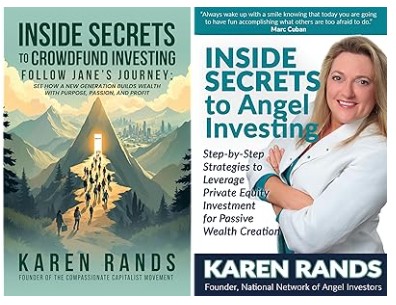
Karen Rands is the founder of the Compassionate Capitalist Movement™ and bestselling author of the Inside Secrets series, including Inside Secrets to Angel Investing and Inside Secrets to Crowdfund Investing.
For more than two decades, Karen has worked to expand access to private investing and provide a pathway for everyday people to learn how to become informed angel and crowdfund investors — putting their money to work in entrepreneurs and innovation with the potential to build wealth and participate in the prosperity their investment capital helps create.
Get Karen's FREE ebook and explainer videos for the 12 Secrets of Wealth:https://bit.ly/12-secrets-of-wealth
Learn more about Karen, book a meeting, and get her books:http://compassionatecapitalist.me
Want to learn if Crowdfund & Angel Investing is right for you in this economy?
Register and watch the webinar — it's free:https://bit.ly/angel101webinar
Karen Rands (00:04.131)
Gino, you've built serious wealth through multifamily real estate, which investors understand is ownership, cash flow, long term value, but many people still treat investing in private businesses as if it is either charity, gambling, or only for insiders. From your perspective as an investor and money coach, what has to change in how people think about ownership if they want to build wealth from both profit and purpose?
Gino (00:27.968)
That's a great question, Karen. Thanks for having me on. I think for me, when I first started investing in real estate, I didn't look at it as a business. I just thought, hey, I'm buying a building. This is great. What I was literally buying, whether you're buying a single family home, whether you're buying a mobile home park, or you're buying an apartment complex, you're buying a future stream of revenue. That's what you're buying. And if you don't understand income, not gross, net, over expenses, and what's left over.
And the most mind-blowing thing is most people don't understand the cash part of it. Accrual accounting is important, but cash is what's left over. That's the that's the reality. You have to live in the reality of business. And I was just talking to my business partner this morning about it. Like, let's teach people how to work in the cash world. Like, what's actually left over? For for us, this last market cycle sucked because people were buying these apartment complexes with.
really low cost of capital and they were turning them over. They weren't operating businesses. They were just flipping apartment complexes. When the music stopped, crap, I've got to operate a business now. Yeah, that's the problem. And that's what we've seen over the last couple of years, the shift from flipping to now let's get back to operating a business.
Karen Rands (01:31.43)
Yeah.
Karen Rands (01:39.546)
Yep, yep, spot on there. Okay. Welcome to the Compassionate Capitalist Show, where we explore how entrepreneurs, investors, wealth builders use capital to create financial success, expand opportunity, and make a meaningful impact. I'm your host, Karen Rands, and today we are talking about something that sits in the heart of compassionate cap the compassionate capitalist philosophy. How to build wealth intentionally, how to align your money with your values.
And how to think like an owner, whether that ownership is in real estate, a private business, or another asset that creates long-term values. The Compassionate Capitalist is live, fully, that's the full intro level to the advanced topics for you to confident and competently you to build your portfolio, learn how to be an angel investor or a crowdfund investor, and build a portfolio that is b is based on profit as well as short-term and long-term return on investment. And and
To see if this type of asset is investing is interesting to you and ribe for you in this economy, we have a free webinar. It is the Angel and Crowdfund Investing. Is it your next wealth building move? To get to that, you just go to Angelinvesting101.com. My guest today is Gino Barbaro. Gino is an investor, certified money coach, entrepreneur, podcast host, and best selling author of Happy Money, Happy Family, Happy Legacy.
He has grown a multifamily real estate portfolio to more than get this now, 1,900 units and 450 million in assets under management. This guy can tell you was going to tell you some stuff today that you are gonna you're gonna be able to take away with you and be actionable on what you need to do to get in the right position so that you can build wealth as well. And through Barbaro.
Barbaro360, his work focuses on helping families build lasting legacies by restoring traditional values in family life, finance, and their relationship with money. That is why this conversation matters for founders, angel investors, crowdfund investors, and business owners, because wealth creation is not just about chasing the highest return, it's about understanding risk, choosing the right opportunities, managing money with discipline, building assets that produce value.
Karen Rands (04:04.997)
And deciding what kind of legacy your capital is helping to create. So today we're going to connect the dots between value-based investing, multifamily real estate, private business ownership, founder money mindset, and the role investors can play in building both wealth and impact. So, Gino, before we get into the framework and the investing conversation, I want listeners to understand the journey behind the message. You are not just teaching money theory, you have built real assets.
businesses and platform around your family and value legacy. So tell me how tell us a little bit about your journey to know all that you know right now.
Gino (04:43.842)
Well, you just said something pretty interesting that really made a profound impact on me right now. I don't know why. I was just thinking about that eight-year-old little boy who went to work with his dad at his dad's restaurant. And I was so proud to go to work with him. You know, he came from Italy. He didn't even finish high school. He opened up a restaurant in nineteen seventy-seven. I'm eight years old going to work with him. And I remember going to work in the kitchen with him. He'd throw me on the cooking line. He would show me how to, you know, fillet chicken cutlets. I would be cleaning the the
the the outside and I was just, I don't want to say maybe, maybe the word in awe. I was in awe of what he did because I could see how much he loved what he did. I could see that he was so proud of what he did. And I could see that he was sort of a mentor to his employees. Everybody looked up to him. Everybody loved Vito. And as I grew up in that environment and I went to college, I was like, I don't really like this college thing, Dad. We ended up opening up restaurant, you know, when when I got out of college a couple of years later.
And that's where my values started. So if you're listening to this right now, you need to understand what your values are. You're making decisions right now about everything what you're eating, what you're investing, who you're marrying, how you're raising your kids, what's that next deal look like. It's all unconsciously about your values. And the values, when I look back at that story, my dad taught me the value of integrity, hard work, responsibility, ha owning a small business, investing your money wisely.
Wanting to be a mentor, just treating people with respect and just wanting to do a great job and showing up every day. My dad was sick for a lot of his life, and he was an amazing role model to me. I never heard the guy complain about anything about being sick, but he went to work all the time. And I've sort of lived by those values as well. And I've made a lot of mistakes in business. And when I do make a mistake in a business deal, whether it's choosing a partner, I've chosen so many terrible partners, I look back and I'm like,
Karen Rands (06:34.234)
Yeah.
Gino (06:36.408)
Well, they didn't align with my values. I mean, it's their fault, but it's also my fault. And I have to understand that. So if you're listening to this, the first thing that you need to do is if you don't know really truly what your values are, figure them out. Why did I choose multifamily? Multifamily is all about control. It's all about responsibility. It's all about building wealth. It's all about, for me, building a business. And there's they can be small businesses. We started out with a 25 unit, then a 36 unit. I've got duplexes and quads as well.
So for me, it's sort of became clear of looking back at the past and see what the values are. And then from this day forward, make decisions based on values. And the last thing I'll say is you know when you've made a bad decision. That feeling in your stomach, you're like, I don't really know. It's usually when you go against your core value belief system.
Karen Rands (07:25.101)
yeah, man, I don't wanna jump ahead, but we're gonna come back to that because a big part of of what I teach as well is the difference between subjective and objective when you're doing evaluations and the and the and the and the the way emotion can get in the way of stuff. And that goes to, you know, part of our earlier conversation on on w how you were brought up thinking about money as well. So
Well let's go what do people misunderstand when they they think wealth is only about making money?
Gino (08:00.888)
the the thing that I hear the most, Karen, that drives me nuts because I've been through it as well is if I just make more money, I'll be okay. And that is like the farthest thing from the truth because if you're not a steward of that money, you're gonna lose it. I mean, 70% of people who win lottery tickets win the lottery, they go bankrupt. I mean, there that there's something, there's a correlation there. And you know, we're gonna go through the framework, but I I think for me,
Karen Rands (08:15.824)
Yeah.
Karen Rands (08:23.524)
Yeah.
Gino (08:26.86)
When you wanna build wealth, it's not something that's gonna happen overnight. I mean, unless my kids, I'm I'm gonna bequeath my kids my wealth. So they've got a step ahead, but they still need to be stewards about it and they're still not gonna get all the money. They're still gonna work within the system. But you really need to start understanding the framework around money. Money is a game like anything else. If you wanna play football, you're not gonna use a tennis racket.
To play football. You need to understand the rules of football and it's the same thing with money. There are rules in money to building wealth, to curating wealth, to growing wealth, and not only to grow it, to keep the wealth. There's two different things. One is to grow it, the next one is to also you have to keep it and continue to protect it as well.
Karen Rands (08:54.457)
Mm-hmm.
Karen Rands (09:09.379)
Yeah, absolutely. Absolutely. Yeah. So so you talk about values based decision making for an investor or a business owner listening to this show. What does that mean in practical terms?
Gino (09:23.424)
In practical terms, I can give you an example. I came down to St. Augustine in 2016 and I was doing multifamily, and I should have stuck with multifamily, but I met a guy down here and I was all excited, what you said about the brain, the emotions, right? There's three parts to the brain. I'm sure you go over it. Well, my neocortex is the rational, functioning.
Top level brain. Then you have the midbrain, right? The more the emotional, the limbic brain. And then you have the the the croc brain, that really primitive brain. Well, my croc brain heard vacation rentals, heard passive income, heard I could just have to fund the deal. I got excited. It didn't even go to my neocortex. I didn't even underwrite these deals. I didn't know how to underwrite a vacation rental. So my buddy says, I've got these two other buddies that they're gonna take care of the stuff. And I was like, okay, let's do it.
Karen Rands (10:03.641)
Yeah.
Gino (10:11.458)
Without any due diligence, without even vetting those partners, I got into a couple of vacation rentals actually in Hammock Dunes down here. And if I when I look back at it, my family was telling me, should you do this? And if it was in alignment with my values, looking back at that, those weren't the partners. Now, the one dude that brought me in, yes, great friend to this day. That's sort of why I went into partnership because really enjoyed him. I really liked him. But the two other guys, I look back at it, that's why that that decision went.
Poorly. And also I had no control. I really didn't have responsibility on the deal. That those are things that I crave. Did we have weekly level 10 meetings? Did we have budget discussions? Did we have projections? Did we have prof we didn't have any of that? So that's on me.
So that that that's what I'm saying. Those guys did not fit my values. And when I look back, I'm like, man, that was a no-brainer. What the hell was I thinking? But I was so emotional. It was cool. We're gonna build these 2,800 square foot vacation rentals. They're 500 feet from the beach. We're gonna have masterminds in there. There's five bedrooms. We're gonna rent them for three grand. I'm like, dude, really? And none of that came to fruition. That's why I was excited. But once again, I should have leaned into the values, into the just the excitement. Now I Karen, I want to say you need to have some type of excitement. I'm not saying you don't.
Karen Rands (10:56.465)
Yeah.
Karen Rands (11:06.523)
Yeah.
Gino (11:25.698)
But at least process it through the emotional part and let it get to the rational part of your brain and let it sit there for a little while and then you can go back to the emotions.
Karen Rands (11:35.994)
Yeah. So part of part of what I teach when I the Angel Profitability Blueprint, which is part of the Compassionalist Academy, is is identifying the the things that you want to impact, right? Like you want to whatever problems you want to see solved in the world, right? And that that are lined, you know, within I don't really put it within the context of value, but it's that
Gino (11:44.355)
Mm-hmm.
Gino (11:51.47)
Mm-hmm.
Karen Rands (12:03.563)
you know, that you're going to filter through that. So because to help avoid the emotion, because when you start looking at deals, I mean, you're like even on the real estate side. And as much as Airbnbs or those kind of vacation rentals have gotten flooded, and that's what's made it even harder. Everything that's a good idea that people can jump in on, then they jump in on and then it's it's not new anymore. It's not, you know, it's harder, right? But and so that way it helps to score to have an app
Gino (12:27.822)
Mm. Mm-hmm.
Karen Rands (12:33.037)
in there as well that helps people score a deal to see it to avoid the emotion side or if it flags it as emotion, they can say, Well, I'm I recognize that I'm going into this because I'm emotionally connected to the entrepreneur or the deal and you know or the problem they're solving. and but I'm just, you know, I you know, I I won't put as much in until I see they can do the stuff that they need to do to be worthy of more money, right? Kind of a thing. So
Gino (12:59.394)
Yes.
Karen Rands (13:00.603)
So how would based on your context of the story that you just told, or even with some of the examples you have in your your the the academic side of what you were doing for a while, how should investors use their values as a filter without becoming emotional or undisciplined in their investment decisions?
Gino (13:20.758)
Well, the first thing I would say is when you're looking at at a deal, I mean, what values do you espouse? Like I and everyone's different. So if you're gonna get into multifamily real estate, but your values and what you like are you like excitement, you like velocity of capital, you just love doing deals, those values are don't really align with multifamily because I only do a couple of deals a year. They're not sexy, they're not exciting.
Their operator. Like that's the thing. If you like excitement and sexy, maybe crypto is good for you. Maybe stocks are good for you. It's but but that's not good. That's not it. You could be a wholesaler. Like a wholesaler in real estate, there's a lot of fun in that. There's flipping deals. You could flip homes. I mean, I don't think it's as far as creating wealth, you're gonna, you know, create wealth by flipping homes. But I think when you're choosing the investments, you have to choose it based on your relationship with money. The way you look at money towards the way I look at it, it's totally different. And I think.
Karen Rands (13:51.185)
Yeah.
Gino (14:15.714)
The problem is as you get older, things will your mindset will start to change. You'll start to learn more. Cause you can get into real estate and go, I'm gonna start flipping homes. I love this. This is awesome. And you can get good at it. Then all of a sudden, two years from now, you're flipping 10 homes a month. And you're like, dude, this is like I'm on I'm on the rat race right now. I'm on a hamster wheel. And that's when you can say, Well, what what's the next iteration of myself? And that's what's great about life, because what you're doing two years ago.
You've got all of that experience leading up to today. And that's why you you need to continue to be on, you know, the Angel Investing101.com. You need to do these webinars because you need to continue to learn. Cause then all of a sudden the flipping can be one part of the business, but that's earned income. The whole idea is to get your earned income into something that's gonna be, I don't wanna say passive, but something where it's gonna start creating wealth. So don't quit one thing to go to the other. This is just a lever. And then at some point you may be able to make that transition full time. But I think when you
Talk about value as your question was I think you have to understand what your values are and then I guess find an investment that aligns with those values.
Karen Rands (15:18.811)
Yeah. And in and in some cases an investment class, or at least when you diversify across investment classes, there's some continuity in there, you know. my my efforts to create awareness about angel and crowdfund investing is just for people to look at as because they're probably investing in real estate and stocks already. So, you know, well, how do you is this right for you to diversify and add an asset class to your portfolio or take some of your
Gino (15:25.398)
Mm-hmm.
Yes.
Gino (15:40.014)
Mm-hmm.
Karen Rands (15:47.386)
your underperforming capital that's sitting on the sidelines or it's in something that's too volatile for you, you've taken it out and put it to work. And now because real estate has gotten so much more expensive to get involved in because of, you know, institutional money as well as interest rates, it's it's, you know, there's people that have been wanting to build like individual kind of rental properties for a portfolio and have been shut out of it. And so
Maybe put that to work, you know, in it because you can be income producing in angel investing and then, you know, you can get to a point of being able to buy real estate and not have as much obligation to a bank in it because that can put you in a precarious position. And, you know, it's good to be able to leverage and get in, but to get enough cash flow so you're not sitting at risk with a large liability on your ownership because of how you're, you know, if you don't have
income to cover all your mortgages, it can become it can become a little s sketchy. A little, I mean, that's really what led to the Great Recession and the bubble is that too many people were overleveraged with mortgages on properties, right? So okay, before we get into the five stages of wealth building, I want everybody to know the website for Gino is Barbero360, B-A-R-B-A-R-O 360.com.
Gino (16:53.72)
Mm-hmm.
Gino (16:59.554)
Mm-hmm, yep.
Karen Rands (17:13.497)
And and we'll come back to that a little bit later. But so in your content, you describe wealth as being built in stages, the building a house, foundation, framing, protection, wealth creation, and legacy. Walk us through those stages.
Gino (17:27.694)
I tried to create something for my children for them to understand. And I wanted to make something as visual as possible. I shared it with a marketer and she was flabbergasted. And she likes, You are a marketing genius. I'm like, all I'm trying to do is just try to teach my kids how not to lose money and like actually take their time. So if you're a contractor and you're building a home, there's stages to building a home. You need the foundation. If you don't have a foundation, everything's gonna crumble, especially when you're making money in an upmarket.
Everything's great, but if you have a weak foundation, when the market turns, when interest rates go up, when you go into recession, you've seen it. All of a sudden, the house crumbles. And why in 08 did a lot of houses crumble? But there were some that didn't crumble because those people had strong foundations. They had been through market cycles, they had reserves, they were had diversification, they had the mindset, they understood. So the first part, when you build a home, and this may take longer for people, it took me a long time in this stage.
I needed adequate reserves. I needed to understand the relationship that I had with money. I needed the education. So that first step may take a little while, but you need to dig. When you see skyscrapers go up, you don't see them go up. You see them go down real deep. So they can go up. That's the point. So when you're building a home as a contractor, you've got plans. Here's your scope of work. The first part is the foundation. The second part, well, what do you do? You start framing the house. You start seeing it go up.
Karen Rands (18:39.969)
Yeah.
Gino (18:54.626)
All of a sudden, two by fours and two by sixes and plywood. That is all about learning cash management. Profit loss statements, statements of cash with cash flows. All of a sudden, you're creating a budget for the home. You're looking at actual stocks, mutual funds. You're starting to dabble in the market and starting to learn the market. This is important because you're taking the knowledge from stage one.
And you're going into stage two. Now, those people who love to look forward, I'm not telling them at this stage not to look at LLCs, not to look at estate planning, not to look into businesses or agile investing. I think you can start learning about it. But in stage two, I'm sorry, you shouldn't be buying a business in stage two. You're just, you're just not ready yet. You just do not have enough experience. You don't have enough capital set aside yet. You don't understand business yet. You don't understand income and expenses. And I can say that because I've done that. I've made that mistake.
So take your time with stage two. The framing does take a little bit of time. Stage three is windows, doors, siding, and roof. That stage is important because now all of a sudden you're building up some assets. You need to understand the protection of the home, whether it's disability insurance, home insurance, obviously you have health insurance, but you're learning a lot more about it. Umbrella policies, general policies, life insurance. This this is where the stage where you're really diving into it and starting to build the moat.
And starting to learn how to build the mode around your assets. That's important. Because if you don't do that and you're buying businesses, but you're not you don't understand insurance, you're putting everything at risk. So if something does happen, the house falls. So stage four is where people get excited. All of a sudden you have the HVAC, you have the electrical, you have the plumbing. That's the interior of that home. This is where we talk about buying assets, paper assets, stocks, bonds, getting into it more. You're buying a business in this area, you're starting an e-com site.
Karen Rands (20:27.526)
Yeah.
Gino (20:46.488)
You're buying real estate. All of a sudden you may have some royalties. You're writing books. Here's where there's some kind of intellectual properties going on. This is an exciting stage, but you can't rush to this stage if you don't have the other four. I I mean you can and you can get lucky like a lot of us do. But the house will come down if you don't have proper funds, if you don't have the proper mindset, if you aren't locked into masterminds, if your assets aren't protected, if you don't know how to read an income statement or a balance sheet.
Karen Rands (21:01.976)
Right. Yeah.
Gino (21:15.446)
You it's you're gonna have a tough time in this stage. That's why you need to take your time while you're building the home. And the final stage is the stage that most people love. It's the finishing touches, it's the landscaping, it's the lighting, it's the granite. This is where we talk about estate planning. This is where we talk about legacy planning. This is where we talk about, you know, creating a will. This is where we talk about really tightening up tax prep and asset protection.
Now, as you're going through these stages, you should learn them, but there's no real reason to do asset protection when you're in stage two. You don't really have anything, right? But at stage five, you've started to accumulate this stuff and it is the finishing touches of the house. And this is where you should start focusing on it at that stage.
Karen Rands (21:55.322)
Yeah, so okay, that that was a I loved how you use that imagery of the contractor and even to the point of the skyrise with the deep foundation because that's so true. I went, that was my aha moment because that's the stuff that's on the inside and getting your you know, your your it together so that you can build and be and and have something that that will, you know, last.
Gino (22:16.526)
Mm-hmm.
Karen Rands (22:25.285)
Right. So where do people most often skip these steps? Is it because I get they they jump into some kind of of investing without the training, without understanding what their reserves are? Do they they, you know, sort of like day trade or something like that to like get into to thinking that they're creating wealth that then they can fix the other things? Is that kind of where you see it happen most often?
Gino (22:51.806)
Yeah, it's a great question. What I would say to you is if you ever ever heard somebody say, I've got ten thousand dollars, where do I invest it? So you've it's true, but I mean like I've heard that so many times. Like what asset should I pick? Where should I put my money? Well, that that's you've already skipped stage one and stage two and stage three, probably, because you're going right to stage four where you're investing stuff. It it it the problem is right now, Karen, it's very difficult in this Instagram.
Karen Rands (22:58.637)
Yeah.
Gino (23:17.462)
you know, world where everyone's closing deals, everyone's driving nice cars, everyone's looking flashy. And as you just say to yourself, what am I doing wrong here? Like I'm still stuck on stage two. I still don't know what's going on. I'm doing something wrong. You're not doing anything wrong. The average age for a millionaire is someone in their late 30s to early 40s. It does take time. Give yourself the grace to do that. That's the the important thing is to understand and to always ask yourself this question Am I working hard for my money?
And is my money working hard for me? As long as you're working hard for your money, then you need to transition into let it start working hard for me. Pick up the book, you know, The Richest Man in Babylon by George S. Clayson. If you do nothing else but read that book and come back to me in five years, your life will completely be revolutionized. You'll probably be at stage three, if not stage four, if you just follow those steps of putting 10% away.
Karen Rands (24:12.101)
Okay.
Gino (24:13.792)
Of actually of literally living within your means, of trying to build a future income, of investing with people who only have credibility. If you do what Arcad did in that book today and take that out and extrapolate that with the next five years, you'll become to me, within a decade, you'll become financially independent if you follow those simple steps in that book.
Karen Rands (24:34.841)
That is really profound. And that's an that's an oldie and goldy book. But you know, the the timeless truths, right? They're they they exist. So and I saw I was reading an article the other yesterday doing some of my research that I've the SEC had a a I guess a panel of research or some kind of a thing that they put out. and it was talking about like investor education and that
Gino (24:41.25)
Mm-hmm.
Gino (25:02.222)
Mm-hmm.
Karen Rands (25:04.045)
Like how to thwart or sort of stop the trend that says the twenty-five to thirty something, the twenty-five to thirty-five, a little less than thirty-five-year-old, the ones that are in their most formative stage of b building income, most anxious about building wealth in theory, right? That they get most of their financial advice off of Instagram. And over 50% of them would say that's where.
Gino (25:27.096)
Yeah.
Yeah.
Karen Rands (25:30.651)
Where there's no filter or no screening of whether the information is valid or real or worthy, right? You know, and in what, like little tiny segments versus, you know, c podcasts like your podcast and my podcast where we talk about this kind of stuff of building a a you know, a house that will not tumble. Right. So yeah.
Gino (25:35.998)
Mm-hmm. Yes.
Gino (25:51.383)
Mm-hmm. What I what I would say, Karen, to people is the way I started out was I was really frustrated at the restaurant, you know, in 08. I mean, contractors weren't the only ones who were losing money. I I was having a tough time, but I went back to the classics. And anybody who's on here right now, if you listen to the classics like Jim Rome, Zig Ziggler, Tony Robbins, I mean, there's so many out there. Though those those old school Napoleon Hills kind of, and you start just listening to those people and just
Let that in, that helped me so much because so all of a sudden my habits started to change. A book that I recommend to everybody is a book called Atomic Habits by James Clear, because it's all of a sudden, it's it's you're you're you know, you know, you're creating habits and you're creating goals and objectives. And there's a lot of value-based theory in there as well. But it ultimately comes down to the identity. I mean, if anyone wants to become a really good investor, all of a sudden you have to start.
Karen Rands (26:29.593)
Yes.
Gino (26:43.424)
thinking of yourself, you sort of have to start identifying as a as as a as a good investor. But to get to that point, you have to build those habits. And it it's just those little tiny habits. If you're not a reader, you read one page a day. And then all of a sudden in in a month, you're up to three pages a day. And then in six months you're up to ten pages a day. And we just quit cu because we overwhelm ourselves. Because like you see that Instagram, all of a sudden I need to get to a million dollars in the next two years. There's no race. You don't have to get to any specific point.
I would rather have a person be really knowledgeable, have, you know, some money set aside and have that analysis paralysis. That's fine. You can work on that. You can work in with the life coaching and with therapy and finance. You can work on that. But you've built some really great skills to get to that point. That's what I want people to focus on.
Karen Rands (27:30.873)
Yeah, absolutely. And yeah, that's I I mean I I I totally agree with everything that you just said because it's it's one of those things that we just that people we're so in a instant society these days, you know, with everything about it, you know, and it and it's
Gino (27:50.474)
Mm-hmm, mm-hmm.
Karen Rands (28:00.112)
And even, you know, with the rise of AI, it's it's like for me, I use it quite a bit now because I'm figuring out how to be more productive. But then what happens is my brain gets unleashed like, well, now I can do this and now I can do that. And I just pile more and more onto my plate, you know, in order because I have the potential to do something. And you know, and AI makes it possible.
Gino (28:04.766)
Mm-hmm.
Gino (28:21.633)
huh.
Gino (28:25.528)
Yes.
Karen Rands (28:29.349)
You know, because I can you know, and so it's just it's I think we're we will that was one of the things, you know, I I felt like the silver the little benefit that we got out of COVID at the time was the that the world took a collective pause. And people went outside, kids were you know what I mean? It was like we it was a collective pause as as st as
Gino (28:46.732)
Mm-hmm.
Gino (28:51.789)
Yeah.
Karen Rands (28:56.517)
Horrible as that whole experience was, the the appreciation of life and the people that are with you, that you're, you know, and learning how to, you know, I know one of the things that you do is with your wife and your podcast is communicating with each other. You had to learn how to communicate if you wanted to survive, you know, in your closed spaces at that point in time. I don't want to digress, digress on that, but yeah, I just, you know, think about that.
Gino (29:16.492)
Yes.
Karen Rands (29:24.719)
The taking the pause thing because you never know this the ziggy-the-zag that life is going to take you so through. So, all right. So multifamily real estate investors understand ownership, they understand buying an asset, evaluating the operator, looking at cash flow, managing risk, and expecting long-term value creation. Once they go through training and they know how to do that kind of thing, right? and a big part of
Gino (29:30.88)
Mm. I agree.
Karen Rands (29:54.042)
Some of the segments that have been or segments of the population that have been because of the way laws were written for so many years, haven't really had didn't have access to some of the same asset classes or the ways to accumulate assets. But it's all this renewed emphasis on asset ownership, right? So angel and crowdfund investors are also investing in ownership, but in private businesses, where do you see parallels?
Gino (30:08.462)
Mm-hmm.
Gino (30:14.54)
Yes.
Gino (30:23.19)
It's I love that question because we created a framework for multifamily investing. And when when I was going through it, I'm like, this is exactly how you buy a business. We call it the buy-right, the operate, and the exit. And when you look at it through the lens of buying a business or buying a multifamily property, when you're buying a multifamily, you need to have a buy-right criteria. You just can't say, I'm gonna buy a building. Well, where's the building located? What's the median income? How many units? What are the amenities?
What's the age of the vintage? What's the unit mix? Are there one bedroom, two bedrooms? So you need to have a clear, crisp criteria on what you're buying, obviously. And then with that is the financing involved. It's the same thing with the business. What kind of business are you buying? Are you buying a pizzeria? Are you buying a franchise? Whatever that is. So that's the buy-ray. The middle part is the operate. Well, someone has to operate that business. And that's that's that's where you make money in multifamily. It really comes down to the operations. And it's the same thing with the business. You need to operate the business.
And in the same token, the exit component is very important to multifamily because you need to exit this asset, whether through a refinance, we've refinanced tons of capital out of our deals and repurpose them. They're basically loans. Everyone's talking about how Elon Musk and Jeff Bezos they borrow on their assets. Well, guess what? Most multifamily investors do the same thing. It's basically you're loaning against your own equity and not paying any taxes today. If you sell the asset, you have to recoup those, those,
Those loans and pay taxes on it. But for the time being, we've probably refinanced out probably over 40 million dollars from our portfolio. Just and and those asks that loan comes back to us and goes back into the next deal. The exit's important when you're buying a business. What is the strategy for this business? Are you going to buy this business for the next five years and cash flow in it? Or are you going to buy this business and 10x it and exit it? Right? That's the important thing. But in multifamily, you need to crystallize that equity because that's where you make money. You make money with cash flow.
But at the end of the day, the goal, the objective is to refi it or sell it and then pull that capital out and get into a bigger deal.
Karen Rands (32:29.189)
Yeah. Well, and that's one of the guests I've had on my on my show, he's now a shark on Shark Tank. and but part of what he and he advises professional athletes on how to create long-term wealth after they've retired. And his thing is doing exactly what you talked about, but with b like buying cash flowing businesses that you buy.
Gino (32:49.334)
Yeah.
Gino (32:56.396)
Yes.
Karen Rands (32:58.085)
You pay it off, you pay, you pay it off, you leverage it to buy the next one, you leverage to buy the next one. And not sexy businesses. These are just, you know, like a a car wash or some, you know, you know, a laundromat, you know, things that are just that you can have a easy operator in. They don't they're just cash flowing. And so that's very similar. I think that's a and he will goes through in one of the podcasts, he goes through the whole like how millionaires think on
Gino (33:08.077)
Yeah.
Gino (33:16.567)
Yes.
Karen Rands (33:26.961)
asset accumulation and then using those assets to leverage and get and be to be able to purchase more assets.
Gino (33:32.909)
The idea though is it's important for that person with capital. And that's that's the understanding. When you get into business with somebody, you need to be able to provide value. If you don't have any money in real estate, that's okay. Don't complain. But if you understand the business and you can create value and you can go into partnership with somebody who does have capital, that's how Jake and I started out in our third deal. We didn't have, was it a million dollars as a down payment 15? I we didn't have it, but we had a business partner, Mike, who did.
He helped us with his balance sheet. He lent us some money on the deal. He diluted himself. And then from there, when we refired the property, he got his money back and we continue the partnership. So don't sit there going, well, I don't have any money. That's okay. You have to go through one, two, and three before you can get the four. So by the time you get to stage four, you know how to add value to a multifamily property. You know how to underwrite deals. You know how to do due diligence. You know how to do all of that.
Then you go out and find an angel investor or somebody who wants to invest in real estate and go, raise your hand and go, I know what I'm doing. You know, invest in me. That's how you can get started in real estate as well.
Karen Rands (34:37.923)
Yeah, yeah, absolutely. And so earlier we were talking about, you know, people's mental emotional relationship with money and how that drives their investment decision, how that drives, in my case, you know, their ability to raise capital because they'll pay money to pitch at an event, but because of fear of rejection or fear of not being worthy of this money or something like that, they won't follow through.
Gino (34:59.118)
Mm-hmm.
Karen Rands (35:07.729)
To you know, follow up with people that have you know expressed an interest, you know, to like see, you know, what questions do they have, right? And it's and it comes down to their relationship with money. So from your experience, how does a founder's relationship with money affect their ability to scale as well? and and how does founders' personal relationship with money become part of that investor's risk, even it, you know, when they're
Gino (35:26.626)
Mm-hmm.
Karen Rands (35:35.813)
buying the business like you're talking about, or in my case, your perspective on how that would influence an an angel investor looking at a business to try to want to understand that founder's relationship with money.
Gino (35:50.231)
That's that's a multifaceted question. I'm gonna start I'm gonna start off by that last part. Remind me of that last part with they can that's very important. But I'll start off by saying the great Jim Quick, his quote is your behaviors are belief driven. If you believe you can do it, then you can do it. The problem is most of us don't even know what we what we believe because it's buried in our subconscious. And I can share my story as an example. I had one restaurant for 20 years, and I thought
Karen Rands (35:52.301)
Yeah.
Gino (36:19.266)
I always heard in my life with my mom, my both parents were immigrants. Don't take too many risks. We have to stay small. You have to save money for a rainy day. Never for a sunny day, always for a rainy day. Didn't understand that. So I had a lot of scarcity. I had a lot of fear. And I had some shame around money. And at the time I had kids, I was always hearing, you gotta save money for the kids. I have six children. They're gonna get married. There's gonna be college. And I had a lot of fear. And and for me, getting into real estate was scary.
Karen Rands (36:30.875)
Yeah.
Karen Rands (36:49.392)
Okay.
Gino (36:49.496)
But the irony was our very first deal, all I heard was it takes money to make money. You need to be a millionaire. On our very first deal, me and Jake, we got an owner finance deal, got seller financing as part of a down payment, 10%. We needed to come up with $87,000 on a six hundred thousand dollar asset. We found my my my brother partnered up with us. So from there, I'm like, that's interesting. Okay. I started chipping away at my beliefs. Our second deal, like I said,
My business partner Mike shows up at the restaurant and goes, Hey, I'm buying these single family homes. I'm like, Mike, you're in luck, brother. I'm buying these apartments. I'm 3Xing rents at what you're doing at the same price point at what you're doing. He's like, okay, let's invest. So I found Mike. I'm like, holy crap. Within five years, Jake and I are at over a thousand units. So here's Gino. Here's old Gino, life before Jake, with one restaurant for so many years, stuck in the restaurant.
Karen Rands (37:37.371)
Wow.
Gino (37:46.233)
Hiding in the kitchen, right? Having that mindset, having the fixed mindset. And then all of a sudden, I go into this new business, I go into this real estate thing, and and I s I see business from a different perspective. I start thinking differently. I start hanging around different people. I start learning different things. And I'm like, wow, okay. So your behaviors, your attitudes absolutely will hold you back, especially if you don't even understand them or know.
What's going through your mind? Like I said, I unconsciously had all of those scripts. And then when I went to coaching school, I didn't want to become a life coach. I just heard Tony Robbins and I heard Ziggler talking about all the time. You need coaching. So I went and I'm like, holy crap, I'm I've got all of this baggage in my head. I've got what you said, all these voices in my head, which we all do, which we call life coaching, a gremlin. I'm not smart enough. I'm a pizza guy. I'm hiding out the kitchen.
Karen Rands (38:38.383)
Yeah.
Gino (38:43.02)
Who's gonna give me money? Well, if you come with that, no one's gonna give me money. No broker's gonna talk to me. No one's gonna wanna partner with me. And I did that exploration. And once I dove into that, I was like, holy crap, that makes all the difference in the world.
Karen Rands (38:46.927)
Yeah. Right.
Karen Rands (38:58.585)
Yeah. yeah. I love that. Yeah. right. Yeah, yeah, yeah. It was well, how does their relationship with money become part of the investor's risk?
Gino (39:02.06)
You had a second part a last part to that question. I can't remember what it was.
Gino (39:08.982)
great question. I love that. You know why? Because you if you have an old Gino and all of a sudden I'm a little afraid of money. I'm not willing to take on any debt. I am more of a preserver or a voider of money. And I'm gonna be a founder. And you're expecting me to grow a business and scale a business, but I'm afraid of debt. I'm afraid of risk. I'm probably not the horse you should be betting on, especially if you want to scale this 10X.
So you have to understand the founder psyche. I actually would let them take a behavioral investor type. What kind of investor are they? I mean, are they overconfident? Do they have fear on money? And it's okay to have fear on money, but there's money scripts, and there's four types of money scripts. There's the money avoidance, right? If you're a type of person who avoids money, you don't want that person as a founder. Then there's the money status, right? The money status is like, well, the more money I make,
better I'm gonna look. I don't know if I really want that type of person because all they're thinking about is making money. And wait, are they gonna start, you know, all of a sudden taking money that's not theirs, but they're so worried about their about the way they the way they present themselves. Then we have the the money worship kind, your status, your net worth is your network. That that that's what you're always focusing on. And then I think for me the other one was the one that I was talking about, whereas I was more of the vi vigilant one where I'm a little I was a little afraid of money. And I think they're
To have that as a founder, I I think it's okay, but you can have a real preponderance of that. If you're too much of a person who is that that type of protector of money, it's gonna be hard to have a company person scale that company because they see risk everywhere. They're gonna be afraid. And and on unfortunately, you need to take some type of debt to grow a business.
Karen Rands (40:51.557)
Yeah.
Karen Rands (40:58.297)
Yes, that's true. And no and and understand, I mean, part of it becomes a learning curve to understanding the responsible debt in a business, right? I I had a client wa at one point that was coming out with a consumer good and he had to get he had to get, you know, a lot of times when you're in manufacturing there's a big nut you have to do because they gotta build the line and do the prototy I forget the word for it, but they have to
Gino (41:06.656)
Yes, yes.
Gino (41:23.766)
Yes.
Karen Rands (41:27.099)
you know, build the models, the thing that they use for the manufacturing. And then you know then they can, you know, they switch it out and they can manufacture. And so we could get a little we could get if we got an order. The idea was we get an order, then he'll have the he can finance that order and then do this, get this piece done. It was like a hundred grand or whatever for the, you know, out of that. You know, and how, you know, I I teach companies about how to use
accounts receivable with you know investor money for escrow for your purchase order financing that is then tapped into the accounts receivable, right? So there's different places of debt that do that, but you've got to really understand your margins because you can get into a slippery slope that if you're growing and you're needing more and more money to demand handle your manufacturing or, you know, that kind of stuff, that it it starts to you
Gino (42:06.326)
It's just
Gino (42:16.951)
Yes.
Karen Rands (42:22.735)
you you got to be able to get to a point where you can just have cash that handles that you can take out one piece of that you may keep receivable, but you don't want to keep doing it for purchase order financing because it can add up even, you know, people get all concerned. It's like 29% a year or whatever it is. Well, in that 30 days or 60 days, it might be 6%, which is a big chunk of your margins sometimes, you know? And so it's really, you know, to really play the numbers all the way out.
Gino (42:26.913)
Yes.
Gino (42:42.486)
It's not exactly yes. Yes.
Karen Rands (42:50.757)
And when are you going to get to a cash flow that you can wean yourself off of that debt because then people get these lines of credits and they're all maxed out. And, you know, kind of to the personal thing you taught we were talking earlier about wealth, just because of a a paycheck doesn't really because people can just be broke at a higher level. You know what I mean? We have like there's lots of examples on that. Just because they're a millionaire on paper does not mean they have the money to be investing like a millionaire, you know? So
Gino (43:08.758)
Yes. Yes.
Gino (43:16.882)
Mm-hmm. Mm-hmm. So your example though, that's interesting example because even that investor, what's that investor's goal? Is this is it is it his goal to exit that company in three years?
Well, he's gonna continue to take on debt, continue to grow his base and continue to grow his his customers. That's what his goal is. But if you're saying to yourself, I want to buy this, hold on to this business for the next five or six years, then you're probably you you're probably ha gonna have to scale down the debt and worry about the margins and work more on a cash flow kind of basis. So there's no right or wrong answer. It's really what the person wants to do. I mean, some people are really into, you know, exiting companies and starting another one.
That's just not my flavor. I just don't want to do that. I've worked so hard to create this baby. Now, tech is a different thing. If you're in tech nowadays, I mean tech changes. So that's the whole goal. Get the users up, flip it to somebody bigger, and then you gotta go build another mousetrap. That just gets to be exhausting and tiring. And at some point, the taxable event, it's hard to build wealth long term. Now, if you take that exit, that capital, and then invest it in other investments, that's a different story. But I see a lot of these founders, they just build this business.
They exit it out, they get thirty or forty million bucks, and before you know it, they're bored, they don't know what the hell to do, and they go out and start it all over again. That's that to me is not a not a sustainable model for me.
Karen Rands (44:29.041)
Yeah.
So as we start, we get ready to wrap up here. so you know, you have a phrase that is bigger is not always better. Bigger's not bigger's not always better. So you know, stay focused and get clear on your goals, understanding your values as part of what we've been talking about today. that is to me, that's relevant to both founders and investors, right? And what so what do you mean by
Bigger is not always better. And how does a founder or in the case because real estate has lots of different segments within and on the type of real estate? We talked earlier about the wave of people getting involved in vacation homes and how that's kind of peaked. And you know, different states and municipalities are implementing laws that put
you know, ceilings on the number of those and things like that. So how does a f also so how does a founder know whether they're scaling from strength or scaling from ego? So bigger is not always better. The, you know, building a house that this is your wrap up moment, man. Your house that's that's not going to collapse, right? And doing something that is
Gino (45:50.37)
Mm-hmm.
Karen Rands (45:53.381)
has sustainability and not just the deal of the day.
Gino (45:59.523)
Wow. I would I would end it with the quote that one of my mentors shared with me a few years ago. He said, revenue is vanity, profit margin sanity, and cash is king. Now that's what I value. I don't value how much I'm grossing, I value how much I'm taking home. And that's what we've instituted in our portfolio. It's called profit per unit. When I talk to real estate investors, most of them are baffled by that number. What do you mean profit per unit? Yeah, I have a 10 unit apartment complex.
What is the profit per unit after all of my expenses? I don't care what NOI is. I want to know what net income is after my mortgage is paid as well. We shoot for between $250 and $350 in profit per unit. Now multiply that by 1900 units, you see the profitability. That's what our goal is.
That's what our KPI is. That's what we want to measure. When we buy a deal, we don't care what it's going to be worth, let's say three or four years from now. We want to know if we can cash flow and add value and generate that much income per unit. So for me, whether it's, you know, I'm not looking at adding another 3,000 units next year. I'm looking for really quality units that I can cash flow and that I can profit at that price per door. Another investor may say to themselves, well, you know what?
just want to buy as many doors as possible. I don't care about the profitability per unit. I'm looking to increase my equity. And you know, for example, if you're younger, that's probably a better strategy because when you're young, you don't have equity. You need to build equity and you need to crystallize equity and then you have your own equity and repurpose it. So for me, I bigger is not always better. And when you look at scale and growth, growing is actually adding expenses, adding infrastructure. Scaling is systems and processes and it doesn't really
Karen Rands (47:31.547)
Mm-hmm.
Gino (47:45.145)
Cost you that much. So there's a big difference between when people talk about scale and growth. Mike Mikalowitz, the guy who wrote Profit First, we've interviewed him. He's phenomenal when he talks about it. And it's really crystal clear. And I love his framework. You pay yourself first. What do you want to make? Right? It doesn't matter how much you're making, what do you want to have left over? Because you are in business and that's what the goal. The goal is to actually generate income for yourself. And then from there, you can start reverse engineering. So for me, I don't want to focus on
how big I get, I wanna focus on how much money we can make as a as a company.
Karen Rands (48:19.033)
Excellent, excellent. I and then you said something there that was so I didn't get it written down. You had the three things. Revenue is is e vanity. Vanity. Go on.
Gino (48:26.83)
Vanity. Profit margin is sanity. And cash is king. And it can you imagine if everyone ran their business like that? Wow. It would be the stewardship making sure that you're bringing enough revenue, but not just bringing in revenue just to pump up the numbers, right? You need the prop you need it to be profitable. And then all of a sudden you're doing the proper tax strategies.
Karen Rands (48:32.187)
Sanity.
Cash is king always.
Gino (48:55.49)
You're making sure that there's the cash that's left over. That's what we're trying to do with our portfolio. We're trying to focus not on just how much a two-bedroom apartment rents for, but how much profit is gonna be left over from that two-bedroom apartment.
Karen Rands (49:07.779)
Yeah. So okay, so I would like you to like you so tell I I haven't mentioned the name of your podcast. You have a couple podcasts, so tell the audience about your podcast and where they can find your books and if there's anything that you, you know, offer, you have a e bo whatever you're on your website so that people know where to go get all they need to know from Gino.
Gino (49:32.288)
I first and foremost, thanks for having me on. I loved I love these conversations. I could talk to you for the next three hours and I wouldn't even be breaking a sweat. If this resonates with anybody, if you want, and I hate using the word fix, but if the family's starting to drift apart, if the conversations with your spouse are a little bit more difficult, if you are having difficult conversations around money and you want to learn more, just go to barberow360.com.
We've got our podcast there. My wife and I do a podcast called the Julia and Gino Show. My son and I, who's tw my son's twenty-four, we do a podcast called the Happy Money Podcast. The perspective of a young adult talking about money versus someone who's been through the trenches. It's actually very interesting to see his mind working and to see what kind of young man he's grown into. That's my legacy right there. That's why I did that podcast. So his children can see grandpa and their dad talk about money and talk about legacy. And that's
You know, if you're gonna if you're gonna talk about legacy, I'll just leave with this. People always think of legacy as something that they leave behind. It's not something you leave you leave behind. It's something that you activate today. And that's if when you start looking at it from that perspective, building wealth starts today. If you wanna leave a legacy tomorrow, you need to start acting today.
Karen Rands (50:44.591)
Yes, absolutely. Thank you so much for joining me on the Compassionate Capitalist Show, Gino. This has been a delightful conversation. I really have yeah, I I you know, I always judge my use myself as the number one sort of if I think it was entertaining and I learned something, because you know, you know, as a podcast host, when you have lots of different types of guests, you learn lots of information, right? So if there's something that you learn new.
Gino (51:07.565)
Yeah.
Gino (51:11.544)
Mm-hmm.
Karen Rands (51:13.733)
golden nugget like that, then then the whole sh the show is worth that hour, 45 minutes or however long that that you spend on it. So thank you so very much for being on on the Capacit Capitalist show today. And I want to encourage folks to go out to if you're interested in this. Of course I have two books. You can go to Amazon and look up my name. It's the easiest way to get to them, Karen Rands and go to Angel Investing One one if you want to stick your toe in the water and see if angel investing is right for you in this economy. So
Gino (51:17.558)
Completely worth it.
Karen Rands (51:43.279)
With that, onwards and upwards, everybody have a great day.
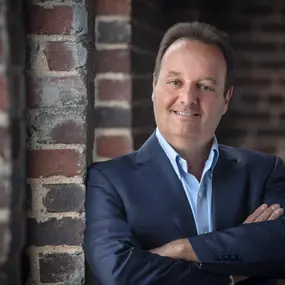
Investor/Father of Six
Gino Barbaro is an investor, Certified Money Coach®, entrepreneur & podcast host. As an entrepreneur, he has grown his real estate portfolio to over 1,900 multifamily units & $450,000,000 in Assets under management.
His mission, through Barbaro 360, is to empower families to build lasting legacies by focusing on restoring traditional values in family life, finance, and helping families create a healthier relationship with money.
Gino is the best-selling author of Happy Money Happy Family Happy Legacy. He resides with his beautiful wife Julia and their six children in St. Augustine, Florida.