Decoding Accredited Investor Rules with Erik Nelson


Who really gets to invest, and why does it matter?
In this episode, Erik Nelson and I unpack the evolving world of accredited investor definitions and investment rules. We explore how SEC regulations, income thresholds, and state policies shape access to private investments, crowdfunding, and capital raising opportunities.
Together, we look at the balance between investor protection and financial inclusion, and how some of today’s rules may unintentionally widen the wealth gap. We also share insights on practical investment strategies for building financial independence, especially through angel investing and crowdfund investing.
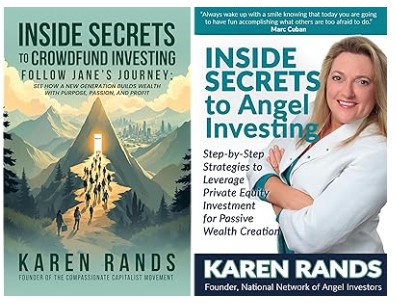
I also reflect on the mission behind my latest book, Inside Secrets to Crowdfund Investing: Follow Jane’s Journey, created to inspire and guide new investors to build wealth with purpose, passion, and confidence.
Key Takeaways:
The accredited investor rules limit investment opportunities based on income and net worth.
There is a push to change these rules to allow more individuals to invest in private companies.
Current regulations are inconsistent, allowing gambling yet restricting investing in entrepreneurs as an asset class.
Investing in businesses can yield higher returns than traditional stocks.
The SEC aims to balance investor protection with capital accessibility.
State regulations can complicate capital raising efforts for businesses.
A landmark lawsuit is challenging the SEC's accredited investor rules as unconstitutional.
The future may see tests for investor qualifications to assess knowledge rather than wealth.
Karen asserts that creating that type of test will be challenging because there are so many factors that can impact a company's success, and therefore contribute to the risk and decision process of investing in private companies, particularly as startups.
Diversifying investments across multiple companies, and as Karen teaches in her book, variations of investment by stage, industry, and structure of offering can improve the overall performance of an angel investor / crowdfund investor portfolio.
Investors should only invest in what they understand and no more than they can afford to lose.
Chapters
00:00 Understanding Accredited Investor Rules
10:13 Pros and Cons of Income-Based Investment Guidelines
25:13 Historical Context of Accredited Investor Regulations
27:57 Understanding Private Funds and Lawsuits
30:01 The Role of ICANN and Landmark Lawsuits
33:10 Challenging SEC Rules and Wealth Inequality
35:56 The Future of Investor Accreditation
40:06 Building a Diverse Investment Portfolio
44:09 The Math Behind Investment Strategies
49:57 Investing Smarter: Beyond Traditional 401(k)s.
About Erik Nelson
Erik Nelson is President of Coral Capital, Mountain Share Transfer, and Sterling Holdings. His teams specialize in helping private and public companies meet their compliance obligations and stay in good standing with regulatory agencies. Erik and I co-host the Capital Conversations podcast, where we unpack the strategies and realities of raising capital, going public, and managing investor relations.
🔗 Learn more about Erik: LinkedIn | coralcapital.com
About Karen Rands
Karen Rands, founder of the Compassionate Capitalist™ Movement, empowers everyday people to build wealth by investing in innovative entrepreneurs through angel and crowdfunding opportunities. Author of Inside Secrets to Angel Investing and Inside Secrets to Crowdfund Investing, she also hosts the top-ranked Compassionate Capitalist™ Show. Through The Compassionate Capitalist Academy™, Karen provides tools and education to help investors fund innovation with confidence.
Get my New Book: https://amzn.to/4gmUFyq
0:06 The Compassionate Capitalist Show empowers entrepreneurs and investors in life to create wealth with passion and purpose. Join Karen Rands, a best selling author, for insights on Angel investing, crowdfunding, business growth, and wealth creation. As a seasoned entrepreneur and investor herself, Karen engages in dynamic conversations with industry leaders, successful entrepreneurs, seasoned Angel investors, and venture capitalists as they share their proven strategies and lessons learned. Once you listen, you will understand why this podcast is ranked in the top 2 1/2% globally. Subscribe and share and be a catalyst for the compassionate capitalist movement. Just no, give it up.
0:51 Better go in the back. And you must keep an open mind. And you try your best just to leave your track and do not fall too far behind. Regret is for the Prince of heart. In the end, it's all the same. Take what the wise I've got to impart. These are the principles of the game. The principles of the game. Oh, these are the principles of the game. All right, welcome to Capital Conversations where we decode the financial world for smarter investing. I am Eric Nelson and today Karen Rands and I are tackling an important topic, the accredited investor rules, limits on investor autonomy based upon income, wealth and not necessarily knowledge and experience. There are lawsuits and historic legislation in the works that are they would have a far reaching impact on this and we're going to take a good look at it and find out why this is important, Karen.
1:59 OK. So Eric, you know, you have you have a lot of experience, you know how investment banks work and companies raising capital and novel ways lead to public's ability to invest with little to no restrictions on who can buy the stock once it's public. Why is there such an effort to change the accredited investor rules? You know why? Why is this effort you know that we're going to be talking about so historic and far reaching? Well, you know them. You know the history of the accredited investor rules that they defined who could be an accredited investor based upon net worth, income and some professional criteria that we'll get into later.
2:45 But what these new rules could do, the changes or this lawsuit that's in the works, is they could open up private investments to virtually everyone or anyone. And that will allow people to come in and potentially make an investment into the next Facebook or Google or some other investment that could take them from having little to no net worth to being very wealthy. So we're going to take a look at it and see what the changes are and if you know, and there's some good reason, reasons why these rules were originally put in place, how they're applied. But for example, cryptocurrencies, which are not securities are not covered by these rules. So once you're of legal age to own assets, you know, above the age of 18, you could buy your cryptocurrencies. But also, these rules are a little inconsistent when anybody can go gamble in Las Vegas, bet their life savings away with no no real restrictions, or, you know, spend money Willy nilly on online gambling or other items and the SEC and Congress just lets them go at.
3:51 So which is interesting, you know, get given that, you know, income level seems to be the way that they're trying to view the level of sophistication and the ability to discern risk from 1:00, you know, investment product from another investment product. They try to, we'll get into the crowdfunding rules and they try to, you know, sort of couch it, if you will, that, you know, if you don't have enough income, then you're limited in how much you can put into any given company depending if they're doing general solicitation or not. You know, that's sort of one of the big criteria is general soliciting, like being a public company and soliciting to the public, you know, carries a different set of rules than traditional stocks that are already out of the public because there is no limit to somebody being able to invest in a public company, right?
4:45 And so, you know, it's, it's interesting that it's geared as this knowledge level. Like if you're rich enough, then you must be smart enough to know how to make every kind of investment. And we all have seen examples of people that, you know, come into some money, whether it's inherited or it's one or whatever the case, yeah, win the lottery. And then they don't know how to manage their money. They don't know how to invest it wisely. And also sometimes they get bad advice from financial advice, right? That's the whole story behind all of the professional athletes that were getting blamed for, you know, being broke five years after they stopped playing. In reality, it was because they were getting financial advice from people that were, you know, looking at people that are 60 and only need to have their money for the next 20 years, not people that are 35 and need it for the next 45 years, right? And so, you know, investing in businesses rather than just stocks or these other things, right? That they could they that doesn't keep up with their income producing ability when they were when they were professional athletes making big salaries, but you know, investing in businesses produce the biggest returns, you know, as a scale, like you said in the in the the piece on on Facebook. But before we get too far down into it, let's jump in on on our disclaimer because we are talking finance stuff and we do offer our own opinion that as to
6:21 what, you know, what our thoughts are about invest in investing. And sometimes you and I don't always agree, which is the reason why I read the disclaimer, because everybody's on their own. All right, so here we go. The information provided in this podcast is for educational and informational purposes only and is not intended as financial advice. The views and The opinions expressed by the hosts and guests are their own and do not necessarily reflect the official policy or position of any financial institution or organization. You should always consult with a qualified financial advisor or conduct your own research before making any investment decisions. The content of this podcast may include forward-looking statements that are subject to risk and uncertainties. We do not guarantee the accuracy, completeness, or usefulness of any information discussed. By listening to this podcast, you agree not to hold the host, guests, or any affiliated party liable for any losses or damages that may arise from your reliance on the information provided.
7:25 And there you go there. You go and thank you for tuning in folks because you know this is we're going to be talking about the lawsuit that is accredited investor that had all the knowledge of the marketplace of the type of investment was just at the edge of it should have been able to invest based on her at level of expertise what was prohibited. And now there's a there's a nonprofit legal group that represents investors that is suing the SEC. And I and then, you know, we're going to get into some of the legislative action that's working its way through Washington right now at the House and Senate level that might address some of these issues with accredited.
8:06 And, you know, there's there's the people that have traditionally been the high net worth accredited people really don't want to play in the same sandbox as unaccredited investors. So there's pushback from that perspective as well. They like to have some exclusive deals. And it's not to say that a company that raises money from unaccredited investors could never be the next Facebook, because we've already seen that with Oculus headset that got bought by Facebook for $800 million, right? That's one of the ones I use a lot in my example. And like in my oh, here's my say my my new book, shameless plug for the new book.
8:50 This is a not for sale version. You can go buy on Amazon and get your hardback version very beautifully printed. All that stuff. Anyway, I talked about in the first book that's behind me here for those that are watching inside secrets to Angel investing and this one that part of the motivation for changing the laws when it came to general solicitation was the, the the elected leaders were forced to face the fact that they were limiting the people's ability to invest in these opportunities. But they could, they were not, you know, they could go out and put $1,000,000 towards bringing the Oculus headset to market. A guy in a garage probably about as risky as you could get brand new technology.
9:37 You know, it was very forward thinking. It was, you know, people have been trying to solve the a, the virtual virtual reality headset for a long time. This kid figured out a solution that people wanted. They paid thousand couple $1000 for getting a piece of gear before it it was ever public, I mean before it was ever available in a store or anything like that. And years later when they raised venture capital and they went on to get bought by by Facebook as part of the Meta environment. Now you get to see that in those those Ray Ban glasses so that you can meet in Meta with your Ray Ban prescription glasses.
10:18 The forwardness of technology. What if those people had, they had an obsolete piece of, of equipment that they couldn't do nothing for him. You know, a couple of years later had they had 1000 or $2000 in stock, which by the way, if you're not an accredited investor current, the limit is a maximum of $2000 in a crowdfunded company. They they could go ahead and that might be worth $8000.10 thousand dollars, 20,000 dollars, $80,000. We just don't know because it was illegal at the time. Now it's not see. So there is an opportunity which is what you know is my passionate is making people aware they have the ability to do that and they don't have to have $100,000 to get started. You can get started with a whole lot less. You just have to be consistent and persistent with building a portfolio.
11:05 So that's my little soapbox on that. But you know, let's let's talk about you were saying when you were first introducing, when you were first introducing the concept that there's some pros and cons with, you know, we'll get into sort of the nitty gritty of these other stuff. But let's talk about, you know, at a high level, what are the pros and cons of having a guideline that says based on income rather than knowledge that people, certain people can invest in certain things? Well, then the pro on that is, you know, the SEC originally when they came up with these rules decided that your income level and your net worth was somewhat of a gauge of your level of sophistication.
11:53 You would not get to that level of income or net worth if you were not somewhat smart and knowledgeable about finance and investing. The other thing is when it comes to the ability to shoulder the risk or bear the risk of a loss, the SEC looks at that and if you had a high net worth, then you could withstand losing a little bit of money in a in a very risky investment in the we don't. Know any millionaires that have gone bankrupt? Have Do we? I could think of a few, you know, but you know, additionally, private placements are riskier because they're harder to sell and it's just as simple as that right now, our private placements are riskier because you have a predetermined holding period by the SEC.
12:44 You know, under Rule 1 to 44, it's six months and if that's not available, it's a two year hold under the 4A2 exemption. Well, 4A1 legal opinion, but you know, they pass these rules, they refine them a little bit. So if you're knowledgeable, for example, say you are a young investment banker out of college and you don't meet the net worth requirement, you can say, well, I got the knowledge to do this and you can get in. But that also leaves a lot of other people out and that. That's a license thing. You can be licensed to be considered an, A sophisticated investor that is authorized to participate as an accredited investor, right.
13:29 But there is like for technically, I mean, I'm, I wouldn't next like put 25K into a company because I don't have that kind of liquidity sitting around. But technically I'm an accredited investor, you know, and, and it's a, but, you know, and I, but even if I wasn't, I'm definitely more knowledgeable than a lot of the investors that I know invest regularly in Angel investor deals, right? They just like, you see it all the time with I like, I, cuz you know, when I do my business plan review and I do my, our red flags, we talked about the red flag podcast a while back. These are the things that you should look at.
14:09 And they don't know how to read financial statements. They don't know how to assess a, a forward-looking statement on on do they have a pathway to profitability? And so they'll, they're, they make the same mistakes as somebody that's not accredited, that they invest based on the emotion and the charisma of the founder and the ability to put together good materials without looking at, you know, what's underneath the covers. Do they actually know who their competition is? Do they actually have a plan to get to market and scale? Do they the biggest mistake that they oftentimes accredited investors make when investing in private is that they don't, they don't account for the ability of the company to raise all the money that they need to actually go all the way through to an exit.
14:55 And so they those companies end up getting stuck after their first series of capital, their, their seat or their Series A and they don't raise their next round of capital. And so they just putter along what I call Midlands in the middle of a thing. And they never they don't get to scale to an exit. That's why we try to help companies with reggae plus right is trying to give them a pathway to get to an exit. And it's it's it's it's stunning to me how many sophisticated accredited investors routinely make these mistakes. And they'll tell me sometimes, yeah, you know, this company, I'm like going, I don't tell them because I don't want, I want them to like me. So I don't tell them. That was stupid.
15:36 But I'm like, man, I would have flagged that one right off, you know? Well, yeah, And I call those companies zombie companies because until they make some changes, they're they're going nowhere. Your money is kind of, you know, dead money walking, for lack of a better term. You know, the important thing is, you know, a lot of a lot of times you see a minimum investment of $25,000, but you could have a younger person who's sophisticated who or qualifies as accredited, who could put in a smaller amount, maybe pull it, pull it with some of their friends. They could qualify. Maybe it's not the next high tech growth company.
16:17 Maybe they want to form an LLC and invest in a new bank and and then for the hopes of the dividends down down the road. I mean, you know, our bank clients at Mount share transfer, you know, they're they're all making money and they're all doing well. And the other thing where this gets into play is if you can qualify as an accredited investor, then your ability to privately offer securities or raise money in different states changes because the states still limit the number of non accredited investors that can participate. So there's far are arranging ramifications for this and this is a big deal.
16:59 Yeah, let me, OK. So let me let's step back on that because that's what's sort of so if you're so, so at the federal level we're talking about. But then states themselves have a different definition of what qualifies as accredited. Well, normally they don't, but what they do is through their so-called blue sky laws, they limit the number of, you know, non accredited investors into a private placement before they require a more complex filing and. That that's under a but that now that was the right the original reggae. What is another? It's what it was another offering that qualified that requires a blue sky file.
17:45 Your offerings under Rule 506 of the 33 Act, the Securities Act of 33. 5O6B. So. That's because you file your private placement with the local state state Secretary of State. Yeah, yeah. That's. Considered the blue sky part of that, Yeah. Is that filing process? Yeah. Or if you do an offering under the 48 the the 482 exemption it's still accredited versus non accredited comes into play. Yeah. So this you know it, I don't want to get too far off into the weeds, but opening this up makes it easier for money to raise capital. And throughout my career, I've seen a lot of great companies and products that died because they just couldn't manage the capital raising process.
18:35 Well, to that end though, so I mean, I think they need to clean. There's a muddy water when it comes to the various equity crowdfunding, but there's mechanisms for companies that are struggling. Regular, regular. It's like in Georgia itself, we have the investor exemption. It's the ability for any company in Georgia to raise $5 million from accredited and unaccredited, you know, through general solicitation. They can pretty much raise capital any way they want. And it's a one page file or that they got to file with the state for about 500 bucks. It's about the simplest thing in the world, and I've been, you know, promoting it with the chamber down here and my whole framework for economic resilience that I'm passing around, you know, working a way up through the Georgia Office of Offices of Innovation.
19:23 And the idea there is that whether it's a business, imagine a business with all the stuff that's going on right now that that it's been manufacturing offshore for, you know, 20 years. Because when they first got started, they couldn't afford to build a plant and they couldn't, you know, even outsource it five days a week. It just made sense to go offshore and do part of a container. And then as it's grown, it was just convenient to continue doing that way. It's no longer, since COVID, it's gotten less and less convenient to manage your supply chain when you're coming in from offshore. And now the tariffs that are jacking up the prices is, you know, is causing heartburn for a lot of these businesses. And there's been tax incentives for a long time to do manufacturing in the United States. That's not something that's new.
20:09 I'm assuming they're still there. And, you know, the idea was they could qualify for, let's say they could qualify for $5 million from a bank loan, SBA for equipment facility, a building, things like that. But they need to manage inventory in between. As their transition, they need to hire up people and get them skilled on the on working these new in these new, you know, this new equipment. They need marketing. They might be putting out a, a new product and they could go raise $5 million from the other business owners in their chamber, the alumni from their frat or their sorority at, you know, Georgia Tech, let's say, or UGA.
20:50 They could go to their church, they could go to their Rotary. They could put out a postcard or mail it. They could advertise it on the radio. They could do whatever and raise the other $5,000,000, you know, with obviously a structured and qualified offering. And they would want to make sure that they were set up properly to raise capital from people like us. But they could raise that money and then and instead of doing it necessarily as a straight up equity where that company feels the need to try to find an exit in five years, they could be building this as a generation operational business. They can pay them a percentage of their revenue until double their money is paid back. Most people would love to get double their money in two or three years, you know, because you don't really find very many options to do that on the stock market. So, you know, it's there's so much that can be done through the programs that are already out there. If they if people won, understood they could raise capital that way and two people understood that they could invest that way.
21:46 But we I just, you know, I just want it to me, there's sometimes we don't have to reinvent the wheel. We just need to put a new rubber tube on it or something like that to make it roll better, you know? You know, and the important thing to keep in mind is with these Georgia exemptions, all the investors have to be Georgia residents. Right. Oh, I didn't say that. Yeah. So virtually every state has an exemption that says if you raise money solely from in state investors, say you're starting in a ethanol, ethanol plant up in the Lakota, Iowa and you're a farmer and putting that deal together and you go raise money from all farmers in Iowa, you've got an exemption on that and that that works. That's a true story that actually happened. It it's when the business owner thinks they don't know enough in state investors that they they pass on those those exemptions. Yeah, well, that's why it's same thing. Anybody raising capital on a national level on a reggae or Reg CF doesn't know everybody that's going to invest either. Your restaurant owner in Las Vegas and everybody loves your restaurant, but you're not sure you can find enough people in Nevada to give you the 5 million in each. Yeah, right.
23:04 And every state, just before Full disclosure, there's only about 34 states that still have an Interstate exemption on it. When it first came out, like 49 had something in the works, but some of them passed, some of them got rescinded. Some of them, you know, never passed. And the rules vary by state on the complexity, like Florida, for example. The reason why they've done none down there is that they require you to be on a portal and there are no portals licensed in the state. So you know. Yeah, because Georgia has a Georgia only portal, doesn't it? No, no, it's very open.
23:46 We've only, although even though it's been around for 10 years because we were the did it, we passed it before there was the JOBS Act for equity crowdfunding in in 2012, only maybe 105 a 110 companies have done it. And that one company start up a portal just for Georgia resident? They did. They went out of business because they're going up too slow to get adopted. And and my understanding I this is all hearsay, but the founders started muddy in the waters with how they were using their funds and things like that. Done. I can't ever do that. Look, you know, fundamentally it's important for the SEC to provide investor protection, but also enable access to the to the capital markets.
24:33 You know, the SEC has, you know, a certain level of a mandate to make capital accessible to businesses looking to grow. And they, they have a small business roundtable. It meets periodically. I've, I've never gone to it. I should go up there someday. And but there's a lot of small businesses that have come on to be life changing, leading investments. Let's not forget that you know Steve Jobs and you know Steve Wozniak. They started Apple Computer in a garage, you know. Not bad for a couple college dropouts.
25:13 Well, if you go to like I call the the the original granddaddy of brick and mortar, right would be Home Depot. Now, you know, that was a novel concept. We got a lot of cost associate. You know, that's one of those things where it's like what is the cost of goods and the cost of the money that has to go into generating each each revenue or return on revenue. Software companies are tend to be a whole lot less costly for generating revenue than something like a Home Depot. But that's two guys that, you know, decided this would be a novel concept and very selectively and with an investment banker put together a small group of private investors and a very similar to how you architects deals a strategic investor that would give them very friendly loan money. So they had a little bit of an equity and a loan money that would get paid out or maybe it got converted. There's not a lot of information about the original 5 million that went in there.
26:15 But I know that there was additional, you know, stuff that went after. I didn't, you know, of course, to build all the additional locations after that. But you know, they're still, they're still super duper wealthy as a result of that public offering eons ago, you know, so maybe it would be useful. You were starting to talk about the accredited investors and how you qualify for that. You know, part of that was people should understand it hasn't changed a lot since it was first put in place in response to the collapse of the stock market and the Great Recession. When they established the rules that said companies had to file and be transparent, you know, with so that they could, there wasn't any backroom deals and they put all these rules in place and they established the accredited investor rules.
27:05 Or actually, I guess they, they, they staff, I guess the credit investor rules weren't officially established, still 82, but they had had some kind of an exemption that the industrialists from back then wanted to continue to work in investing in each other's businesses, you know, without the SEC, you know, watching them because they weren't public companies. They were private. They wanted to keep it private. So, you know, there's been, there's, you know, that was where it first got and they cleared it up, I guess and established some more specific threshold in 1982 that still stands this day. Yeah. So what it is, is there's three main criteria that can three ways to qualify as an accredited investor. The first is to have a net worth that exceeds $1 million. Now that has to exclude your house, so you cannot have a, you know, an investment portfolio of $300,000 and a $800,000 house and say I'm worth 1.1.
28:03 So I'm accredited. So your, your residence is excluded from that calculation. The second way to qualify as an accredited investor is you individually must have net income over $200,000 a year for the past two years. Or if you're married, your spouse and yourself must have net income combined over $300,000 for the last couple of years. Now the other criteria that got it expanded upon is if you are professionally licensed. This was a rather kind of new change because when I got out of college and you know got my license a month later, tough luck. I could be licensed to sell securities that I couldn't invest in personally.
28:47 So they if you are have an investment professional license, a series 76582 or a bunch of others or you serve as a director or an executive officer of a company issuing securities, you can you're deemed to be knowledgeable and you can invest in those those securities. Now they've expanded that a little bit further. Say, for example, you are an employee of Mountain Share Transfer. You can claim you're sophisticated and you can make these investments, and whether you actually are not as well remains to be seen at times. Well, that's managing a private fund or something, right? Or that which is actually what the lawsuit was about, right. The lawsuit that that's on in the works right now. So it's a fund so like in that, you know, but it's, it's the so like a venture fund, people working for the venture fund could invest in the venture fund even if they weren't accredited. Yeah, there's that.
29:42 Stuff gets a little more complicated. Your your venture capital and your hedge funds, private equity, you know, they're all private investments. So. They're going. Yeah. Were you saying then like somebody that working at Merrill Lynch would be able to invest in the funds that only accredited investors that they're that they're, you know, offering could only invest in? So if I, for example, worked at Merrill Lynch, now Bank of America Securities, and I wanted to invest, you know, into Karen's, you know, hedge fund, I could claim I'm accredited. And Karen's attorneys may say, yeah, we'll take your money.
30:29 Or they may say we don't think so. You're not really accredited. And my guess is not having read too deeply into this lawsuit that the the attorneys decayed their the employees of the management company from investing into the fund. No, that, that, that, that he wasn't that. Here, let me get it. Let's get into that, OK? But anyhow, when you run a fund, you're governed under a series of exemptions as long as you're below a certain size. And if you are below 25,000,000 in assets, you don't need to have a registered investment advisor license. So.
31:10 But once you cross that threshold, you have to register with the SEC. Yeah. Because the only thing is you could run billions of dollars and do no reporting whatsoever up until just recently. Yeah. So the so basically what the situation is, is that this let's see this lady, I'm going to pull up the actual information, right. So it's, it's a, it's AI can, which if you're not familiar with I can, it's the investor choice advocates network, a non profit public interest law firm that really was getting started.
31:58 It, it, it works in the Gray in the, the sort of new areas of crowdfunding some crypto, the overreach of FINRA into broker dealers and how they're, how they will challenge broker dealers and cause undue harm, you know, different things. That's, that's pretty much where they fall. And it's so this is a landmark lawsuit case that's challenging. Well, they consider the unconstitutional barrier that blocks experts from investing in their own fields while reserving opportunity for the wealthy fewer few. So she wasn't she wasn't part of the fun, but they're using that 2020 rule that says that people can't that you know, that that it should it's too narrowly applied that she should have qualified for it. And it really, I guess it looks like it goes into two different plaintiffs as part of it that, you know, that there's this arbitrary wealth and income test harms both investors and the entrepreneurs.
32:59 So I gosh, her last name is Emily Kazoo. Are you good at this kind of Kev Zuka which? I'm not that good. Emily K Emily KA, seasoned healthcare leader with a master's degree in Applied Economics, is she's over trusted to oversee multi $1,000,000 budgets and guide life saving programs for the company that he worked from. So she sought to invest her own savings in the healthcare shares venture capital fund. So she was investing in a venture capital fund and she was told she wasn't qualified. Her net worth is $850,000, so just shy of the $1,000,000 cut off.
33:46 And she's qualified to serve as the CEO of a healthcare company, but isn't barred from investing in the very fund that she believes in. And so, oh, and the fund itself, OK, so the health, the fund itself is the second plaintiff in this. So it's the investor and the fund that are suing the SEC. It is as a public benefit Corp is dedicated to financing medical innovation, including research and new treatments and cures. Its leaders builds, built the fund not only to generate returns, but to tackle urgent challenges in American healthcare. Yet the SEC's rule prevents them from raising capital from experts in, like Emily, you want to contribute both financially and with their experience.
34:34 So, you know, they're standing up to this outdated rule, ones that blocks partnership, partnerships between innovators and the professionals that are best positioned to support them. So I can see, you know, good grounds. They're part of the common sense of this. And is the thing that is part of the legislative action that's working its way through the Senate and the House is that it divides America into two classes where the wealthy get access to the opportunities that can produce larger returns on investment while everybody else gets shut out on those. Even though back to the caveat that, you know, crowdfunding, you know, all the different platforms, other than the fact that you can only do $2000 into a company or $10,000 in a year unless you qualify as accredited.
35:24 It's just weird that, you know, that's a Gray area that they should, you know, could be able to address. But it, you know, there's when, like you said at the very beginning, you know, they don't keep anybody from going and throwing 20 grand into a crypto ICO that could lose all its value or going to truly gamble at on the the crap tables or putting, you know, $2000 a month into lottery tickets, right? So why would they? Why do they limit your ability to put your money at risk if that's what you want to do? Yeah, the the SEC kind of every now and then gets a little carried away. Well, I think that it's easier to not change something because accredited investors, you know, you think about the heartburn. Oh my God, the heartburn that people got over that over Reg CF and even to this day when I talked to accredited investors, I was talking to a, a, an Angel group that does BioMed And I, there's a company that I've invested in that has a treatment for cancer that is proven to work in animals. And they're raising the capital to finish the, the clinical testing on that.
36:49 So we can actually go to market as a, for animal solution while they work through FDA approval for human. But it is a, it is a targeted treatment to destroy cancer tumors. OK. And it's been proven in rats, cats, dogs, you know, all that stuff, right? And so I told him it's, you know, it's a BioMed biotech, this is, you know, game changer stuff. It's proven. And he was like, Oh no, they're raising capital on a Reg CF We would never touch that. And The thing is, is that, you know, the thing about Reg CF or most of these and even what you were describing, where people could come together, they don't want to put 25K into something, but they could come together.
37:31 They create special purpose investment vehicles, LLC's or LLP's that that do that service. And they have one voting bloc. They don't all individually vote. They vote together as a bloc and so, you know, as common shareholder shareholders. So it's, you know, that's just, that's the FUD that came out in 2012 that, you know, somebody put in 2550 K or an Angel group putting 250K in didn't want to have somebody that put $1000 in, you know, influencing this company that they put a bunch of money in. Yeah. Stock handle that. Yeah. You know, one of the things is the SEC is looking looking at loosening the rules requiring companies that raise capital from verifying accredited investor status. In situations like that, investors will not have to fill out the very long and detailed subscription agreement documents or questionnaires to verify that they are accredited investor. That's crazy.
38:35 Yeah, it's that hard. Anybody. It's easy. It's like really, really easy. Except for five O 6C, you know, that's the only one that requires any special hoops to jump through. Everything else, you just sign a check some boxes and sign a form. It's all self certified companies. Companies are only obligated to get to get this form signed, you know, and so it's weird because and I think the companies on Reg CF verify, you know, that whether they're accredited or unaccredited. And I think in that case, a lot of times it's self-serving as well. They don't do a, they don't do anything to try to get you to. I don't think they do anything to verify your income statements that says you're accredited or not when you're on Reg CF It's just are you accredited or not and if you don't want to go through the trouble of providing the paperwork then you just are limited in how much you can invest in the given company. Well, it's not like they make you to attach your bank or brokerage statement to these forms to prove it, right? Right, The only.
39:39 One is on The Reg AT-506-C now. I don't know about. I think reggae plus. Probably depends on if the company's going through a portal and I think it's also self self, you know, self certifying on that as well. If the investor lies, the investor lies the entrepreneur that their requirement. Yeah, that's the investor committing fraud. You know, the investor lies and the company should not be held liable, right. Although there's enterprise and attorneys that try to try to make that case. Look, we were talking briefly about what's called here the equal opportunity for all investors. Yeah, Act. The Senate or the House bill? That's the House bill.
40:23 It was that passed the House. It's, I think, have been sent to the Senate, but it was, I thought. Oh, did it pass out? Because I thought it was it just passed committee but it hadn't actually gone. Is it gone all the way through? Yes, I think it's going all the way through based upon what I read. It was bipartisan legislation led by Sarah McBride, Mike Flood, Mike Lawler and Cleo Fields, You know, both Republicans and Democrats there. We support this. It would also allow individual investors to take a test, pass a test and claim they're accredited. I support this. I've got, you know, family members, a big family, but you know, never gone to college, self educated on investing and analyzing financial statements.
41:16 And they're, they're smart. They know what they're talking about. They, they read that stuff, you know, they, they can discuss it with the best of them at times, you know, they, they can evaluate whether it's an appropriate investment for themselves or not. You know, it doesn't mean that they're going to go out there and get involved in the most complex transactions or try and understand, you know, defy and, and how blockchain technology and which cryptocurrency is going to benefit. But they can understand what they're being shown and decide whether it's acceptable or not for themselves. They're big, yeah. I thought, I wonder how they're they could ever create a test for that because, you know, when it comes to securities, there's, it's, it's like a yes and no.
41:57 It's very, you know, you, there are some calculations for your series 63 that you have to do. And when I was studying for that test, it was strange to me that I had to calculate all this international finance kind of stuff and, you know, things that I would never be involved in. But that, you know, because at the time we were when we were looking at being a part of that broken dealer, I was looking, you know, to get the license so that I could just do what wasn't allowed at the time, you know, what, what, what is now. OK. But back then, because we didn't have, you know, general solicitation and equity ground funding, you know, it was really hard to be able to solicit for capital.
42:43 And so it was that was the thing that I thought there was, you know, so much and like what you just described, you know, you, you can't, you will never be able to create a test that test people for their industry knowledge, their ability to discern engineering to, you know, will this work, you know, kind of things. There's just, there's no, because it's constantly changing. So there is no way to do a test on that. So unless it's just read, you know, understanding basic business principles of go to market intellectual property, how to read a financial statement, how to you know, you know, the IT seems like it's going to be really difficult to create a test. It's.
43:34 Going to be difficult to create a test on specific industry knowledge, but it will be very easy to create a lighter version of the series 79 or whatever the heck it was way back when. The for the general solicitation and and as someone who took those tests and passed them, I I can tell you you could easily construct a test that gets into the principles of bonds. When interest rates go up, what happens to the price of a bond? Very simple. It's the teeter totter effect. One goes up, the other goes down. You know, you can get, you could get a test out there that says, is the person soliciting the investment doing it right or doing it wrong? You know, what can they can and they can. What can they legally promise you and what can they legally not?
44:28 Not legally promised. I think the idea of proposing a test would be very beneficial whether the test ever got off the ground or not. Just the idea of getting the conversation going, you know, for the people would be like, I want to know this and get it out. There. Yeah. Well, that's the thing when building this Compassion List Academy as a training to teach people how to, you know, be smart about building a portfolio, whether it's crowdfunding or Angel investing of deals that you're investing in that are private or building a hybrid model, which is my, you know, what I advocate in the Angel profitability blueprint is company, you know, some portion of it, depending on your risk reward profile is, is, you know, income producing their their fixed term loan, their revenue share.
45:19 So, you know, you have income coming back in as a result of that makes you feel comfortable that your stuff, because one of the problems that a lot of people do when they get started in this kind of investing, they invest it's like 3 and done right. It's like this psychological says they can do 3IN a year. And so then they're going to be like, OK, let me see how they do right. And that's a kiss of death in my opinion, because you have to build a broad portfolio. The most successful Angel investors, like when we interviewed a signal, right? You know, what was it 90 companies or something, right? And so, you know, they're you can, you can handle the losses when you have big wins that make up for those, which is the premise behind, you know, venture capital, you know, 10 company thing, but and then later stage, right, different industries, different types of deals, convertible nodes, you know, reggae plus it's on its way to an exit strategy.
46:14 You know, you build a portfolio that's diverse in stage industry and type of deal and you, you would significantly increase your odds of success out the gate if you have a strategy to go after that way. And and so, you know, I'm watching it very closely because I want to make sure whatever I put into this training going forward maps to whatever they're talking about as being a part of this. So my course, the compassionless Academy can become a proven, you know, like here's a, you know, Betty Crocker seal SEC seal of approval, take this course, pass the test at the end. And you know, we'll be offering before they'll a certificate of completion. Make people feel good.
46:57 But you know, it's you know, that's the whole thing that, you know, I'm watching it because I think, you know, they're it. It could very well in that way. Here, here's the other thing. So when I come in from the corporate side hadn't advised inside a inside a company, one of the things I tell every client is always be prepared to raise capital. And one of the things that you and I have talked about consistently, particularly in our earlier podcast, we talked about the capital raising ladder. You know, you self fund friends and family, you're you're constantly widening that base and moving up what we call the capital raising ladder food chain, you know, Reg CF or reggae plus a crowdfunding. That may not be the be all end all of things, but it gets you to the next level.
47:48 And if you're always keep focused on that and you're aware that you have a larger pool of investors and you constantly be working towards a higher, you know, higher up that that ladder on the capital raise process, you dramatically increased the chances of your business succeeding. I know that personal experience. You know, one of my biggest winners was a company their original product somewhat failed and they came up with a stopgap product that kept the lights on until they developed a better product. And that company has done phenomenally well and they're probably going to do, you know, very well this year and have an even better record next year. I know we're getting a little short on time here, so. Yeah.
48:37 So I think this has been, I mean, it's watch this space, everybody that's out there, you know, listening to us today throw comments and all the things, send us a message on LinkedIn, whatever you've got ideas, questions that you see, something you see in the news that you want us to talk about. Happy to take that on. You know, Eric and I love talking about capital and helping companies get capital so that they can achieve all their hopes and dreams doing it the right way. And also for people to, you know, people that traditionally have been left out of a lot of these wealth creation strategies to be able to use them to leap the wealth gap and, you know, start to create financial independence and security for their retirement in ways that, you know, they're investing on the ground floor because these companies are using that money to build the next big thing.
49:30 Yes. And remember, if you're going to look at private companies and do these, these investments, you got to plan on being able to spread your money out over a good 11:50 companies, you're going to have a couple that fail. You're going to have a bunch to do so. So and out of 10 companies, you should have two that really, really make you all your money and, and make it all worth it. And if you're doing more than 20%, you're doing something really right. So yeah, success. If you got a success story, send it to me. I'd love to talk to you about it. Yep, we I actually did the math. It's it's I conclude this book inside secrets to crowdfund investing and I've done so a couple of podcasts or clips on it because I heard this first when Jason O'Connor, some of our audience will listen to that he wrote know who he is.
50:24 He's one of the he has a big podcast he wrote on the wings of angels about his experience investing in Uber and and he was interviewing the head of the founder of seed invest back years ago before it got bought and became start engine. And and he said, you know, if I could go back and talk to my 20 something self, I would tell myself, knowing what I know now, I wouldn't have started that first company right out of college. I would have gone and got a corporate gig and on their dollar learned what worked and didn't work in corporations instead of figuring it out by doing it wrong and missing and this kind of a stuff for my first five years. And even though they weren't going to and they they talk about, you know, matching MY4O1K, but I was going to be there five years.
51:17 So what I would do instead, instead of putting in a four O 1 Ki would put I would put $500 a month into a Reg CF company without thinking a lot about it. Just something I thought it was cool and neat and it looked like it looked good. They had some basics and stuff like that. And I would just I would just do that and I would be, you know, so far, so much further ahead than the four O 1 Ki was like, OK, what's that like? Let me see if I can do the math on that. So and see what he if he's talking about it. Well, it actually works out that it's it's actually listen, the number seven 6 * 48. It's seven times more profitable than a four O 1K to do invest in a Reg CF company, $500 a month, five years even with 18 companies failing. And I, I did that because you got, if you want to do the one, you want to hear the math, Eric.
52:06 I do want to hear the math. Okay, so if you do so it's 60 companies, 512 * 5 and out of that, so you got six sets of 10. So using the venture capital formula that one will do 10X2, will do 5X2, will do 2X3, will break even and three will go out of business. OK, So using that pretty acceptable by most people's standards that are in the space, right? The math comes out that if you got your 9% of what is the typical 4O1K, you're going to have 30 thousand $35,600, $35,900.
52:48 But if you do the math on that and of course it's not coming back in five years, but that's the general idea because of course you'll keep building. So it's actually gets bigger and bigger and bigger on a compounding effect. But you come back with $78,000. So it's a $48,000 add on to your $30,000 initial investment based on those numbers. So, you know, without, without a match about the fees of the four O 1K and blah, blah, blah, and all that other kind of stuff that might be factored in. So whatever it is just the math, you know, I teach, you know, this whole thing of being smart about it. But you could just do that. It'd be like you know better than buying a lottery ticket because odds are you put $30,000 into a lottery ticket over the five years you're not getting $48,000 back.
53:32 No, you're not. Right. So, yeah, so, you know, it's something to think about and something is just that people have no idea that this exists as an ability to invest. And to Eric's point, you cannot invest more than you're you can afford to lose when it comes to anything. You know, we don't want you freaking out as a day trader and going in and doing something crazy at, at A at a stoke, a broker dealer in Buckhead, you know, kind of a thing. He and I remember that and and you don't, you know, it's, it's one of those things that I have this calculator in the resources that came with the first book. And it's part of the course that helps you figure out how much money can you afford to invest over the next two years, right.
54:19 If you divide that up into things. So you have a two year plan and then you can see get to 10 companies in two years. How much does that work out with when it comes to investing? And that's that's what you do. Yep. And keep in mind, if you don't understand the investment, don't put money into it. I, I can't, I can't stress that enough. If you know if you know if you don't, if you don't understand what the investment is, don't put money into it. Warren Buffett, invest in what you know. Yeah, yeah. So. All right, I've enjoyed this conversation. What about you, Eric? This has been a good one. It's been good. We're gonna we're gonna get back on our production schedule. I have a new producer, so you're gonna see us posting a lot more from now on.
55:04 All right, terrific. With that, onwards and upwards. Thank you everybody for tuning in and we will see you next time on the other side. Yep, see you. Bye. Thank you for listening to this podcast, The Compassionate Capitalist Show, brought to you by Cougar and Capital Holdings with Karen Brands as host. You are encouraged to visit the website cougarand.com to learn more about how Karen and her team help investors and Angel groups make money by avoiding investing in deals that suck, and how the Cougar and Capital companies and partners help entrepreneurs breakthrough their barriers to capital and live their dream by building companies that can scale and create generational wealth for their founders and investors.
55:52 If your business could benefit from exposure to our audience of business executives, entrepreneurs, and investors, we are seeking financial partners and sponsors for the Compassionate Capitalist Show to help us take this podcast beyond our 150,000 listeners and amplify the message of the compassionate capitalist movement by making this a Top 50 business podcast. The Capacitor Capitalist Show is available on YouTube, Apple podcast, iTunes, TuneIn, Stitcher, Spotify, Pandora, and Google podcast. Contact us at karenrand.co to learn more. And as a listener, you can do your part of the compassionate Capitalist movement by subscribing wherever you listen to podcasts and sharing this show with your friends and colleagues. Be sure to pick up your copy of Karen's bestseller that launched the Compassionate Capitalist movement. Inside secrets to Angel investing. A step by step strategies to leverage private equity investment for passive wealth creation. Thank you for listening.