The Crowdfunding Mistake Founders Keep Making with Joey Hayes
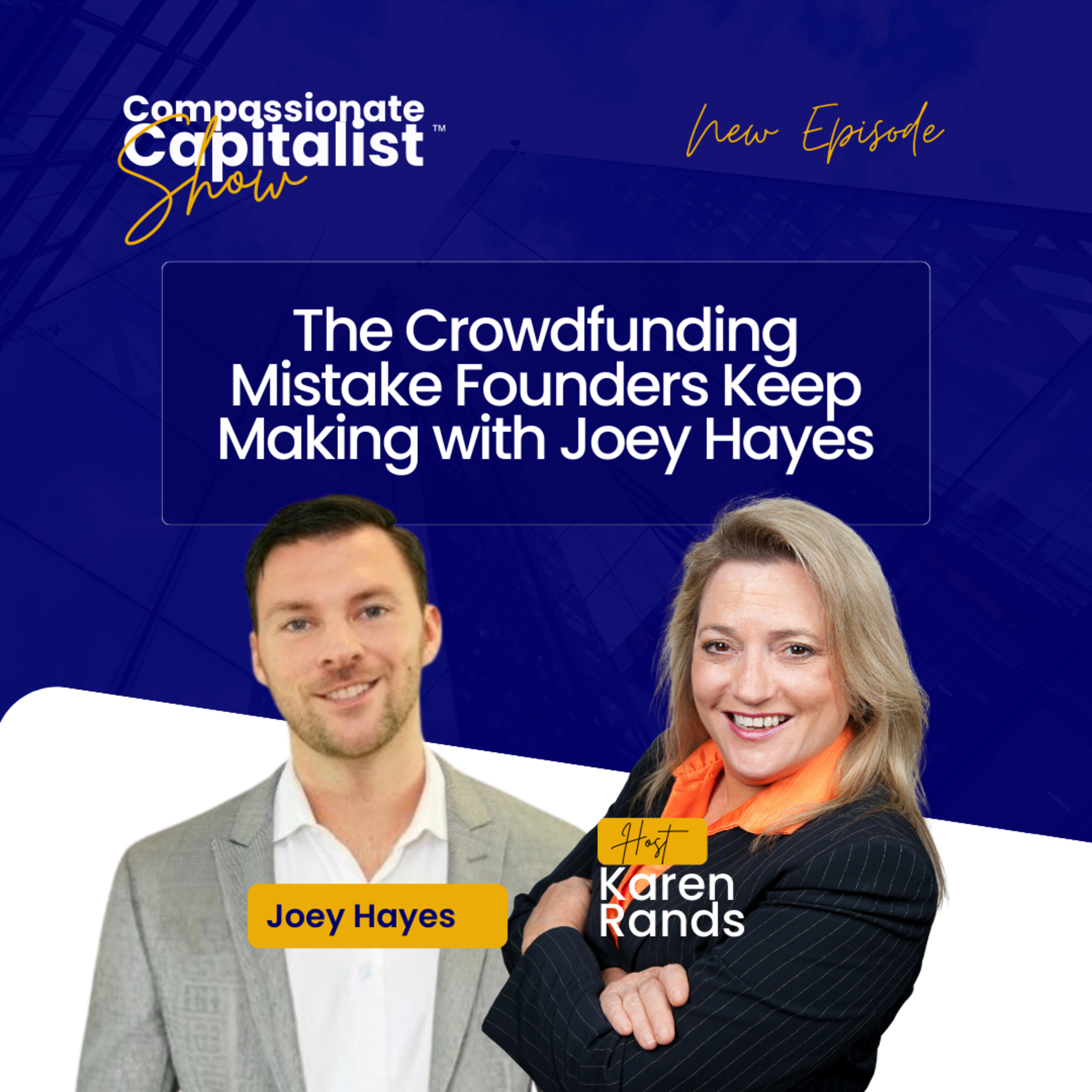


Many founders pour all their energy into running a successful crowdfunding campaign, but once the capital comes in, they make the same costly mistake: they stop engaging the very community they worked so hard to build.
In this episode, I sit down with Joey Hayes to unpack what really happens after the raise and why so many entrepreneurs lose momentum once the campaign closes. Joey shares insights from investing in more than 60 crowdfunded startups, breaking down why founders struggle with post-campaign strategy, how to activate their investor community, and the simple habits that make raising the next round dramatically easier.
If you have ever launched a crowdfunding campaign or plan to raise capital, this conversation will show you how to turn your crowd into a long-term strategic asset and not just a one-time source of money.
Takeaways
Post-campaign strategies are crucial for maintaining momentum.
Many founders fail to engage their investor community after a raise.
Investors want to help but often don't know how to engage.
Asking for help is a skill that can be developed over time.
Regular communication with investors can alleviate anxiety and build trust.
Founders should thank their investors and keep them informed.
Understanding investor dynamics can enhance future fundraising efforts.
Crowdfunding can serve as a powerful marketing tool for startups.
Building a sustainable investor community requires ongoing effort.
Service and communication are key to successful investor relations.
Chapters
00:00 The Importance of Post-Campaign Strategy
02:43 Identifying the Gap in Founder-Investor Engagement
05:33 Activating the Investor Community
10:50 Overcoming Emotional Barriers to Communication
14:14 Best Practices for Post-Raise Engagement
17:14 The Value of Crowdfunding in Capital Strategy
21:08 The Importance of Marketing in Capital Raising
22:24 Engaging Investors: Building Community and Trust
24:21 The Post-Raise Gap: Maintaining Investor Relationships
27:06 Setting Communication Expectations with Investors
29:04 Service and Hospitality: Enhancing Investor Experience
31:52 The Power of Consistent Communication
34:51 Best Practices for Entrepreneurs in Capital Raising
About Jooy Hayes
Joey Hayes brings over 15 years of global partnership and commercial growth experience, having worked with major brands like IHG, Hyatt, Hilton, and Booking.com. As an investor in more than 60 crowdfunded startups, he has a deep understanding of the crowdfunding ecosystem and what it really takes for founders to raise capital successfully. Through his company, Thru, Joey helps founders unlock the full value of their investor community and build long-term momentum beyond the initial raise.
To connect with Joey, email: joey at comethru.coLinkedIn: linkedin.com/in/joeyhayes1
About Karen Rands
I'm Karen Rands, founder of the Compassionate Capitalist Movement. I help entrepreneurs prepare to raise capital the smart way and guide investors in identifying startup opportunities that build wealth and make a difference. This show is your roadmap to funding success, from pitch deck to public offering.
📅 Want expert feedback on your pitch? Book a consult with me: bit.ly/KCHcalendar 🔗 Learn more: karenrands.co 🎧 Catch more episodes: thecompassionatecapitalistshow.com 📘 Free eBook: The 4 Ws of Crowdfund Investing: https://bit.ly/FreeCrowdfundInvestingBook 🎓 Join the Academy: bit.ly/CA-prelaunch
0:06 The Compassionate Capitalist Show empowers entrepreneurs and investors of life to create wealth with passion and purpose. Join Karen Rands, a best selling author, for insights on Angel investing, crowdfunding, business growth, and wealth creation. As a seasoned entrepreneur and investor herself, Karen engages in dynamic conversations with industry leaders, successful entrepreneurs, seasoned Angel investors, and venture capitalists as they share their proven strategies and lessons learned. Once you listen, you will understand why this podcast is ranked in the top 2 1/2% globally. Subscribe and share and be a catalyst for the compassionate capitalist movement. There's OK, welcome back to the Compassionate Capitalist show where we demystify startup investing and empower more people to participate in the wealth creation power of entrepreneur entrepreneurship. I'm your host Karen Rands,
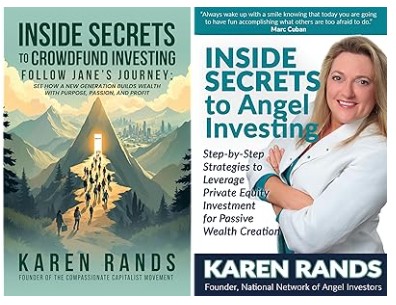
1:37 author of the new book Inside Secrets to Crowdfund Investing, long time advocate for democratizing capital and advisor to founders raising money across multiple rounds, including equity crowdfunding. One of the biggest challenges I see even with successful raises, whether it's traditional Angel to VC and definitely within the crowdfunding space, is what happens after the campaign closes. Companies celebrate the inflow of capital and then they instantly lose momentum because they don't have a strategy for nurturing the very investor community that they have worked so hard to build. Too often a founder ends up with a spreadsheet of hundreds of new supporters, but no playbook to engage them, activate them or turn them into that crowd for a lasting as a lasting strategic asset.
2:24 They oftentimes can't even think past this initial raise to what will they do next time around. And a lot of entrepreneurs just fall down when it comes to the idea that they they have to raise more capital. It's like pull it. They don't want to raise more capital. And there's actually, you know, with my guest, he's going to talk about how raising the next round can be a lot easier if you do just a few things. So my today's today's has made this problem his mission to solve. Joey Hayes brings more than 15 years of global partnership and commercial growth experience with brands like IHG, Hyatt, Hilton and booking.com. And as an investor in more than 60 crowdfund startups, he's seen first hand the power and the pitfalls of capital democratization.
3:09 And he noticed the same pattern I've warned founders about for years. And these are stats that he gave me that we're going to dig into. 81% of investors want not help, only want to help, but only 10% of the founders ask Joey is changing that with his company through in a platform that he'll be talking about that that in explaining more about it. Designed to help founders maintain post raise momentum by transforming their investors from passive backers into active brand advocates, referral partners and B2B connectors. In this conversation, we're going to dig deep into how founders can avoid the common post raise failures, why ongoing investor engagement is essential to long term success, and how trusting the crowd can unlock a powerful engine for growth in every stage of your capital journey.
4:00 Let's dive in. So welcome to the compassionate capitalist show, Joey. I'm so happy that you're my guest today. Yeah, thank you for having me, Karen. I've been reading your content for years, especially when I first started this whole investment journey of mine. So thank you for having me. It's a real honor. And, and thank you for all the support you've given me throughout the years. Absolutely, that's what we're here for. So so you now let's start with like you've invested in more than 60 crowdfunded startups. What was the moment when you realize founders were missing a critical opportunity after they raised and that did this untapped asset needed to needed? Yeah, so I always kind of thought it in the back of my head, but it was just never something that came to life for me until I was looking to to start a new business.
4:47 I wanted to do something where I was able to leverage my skills and what I enjoy doing, which is, you know, really networking and connecting people. And I was really focusing on more introverted entrepreneurs, as well as maybe more tech tech savvy Co founders, more tech founders that, you know, maybe don't have that kind of extroverted personality. So I was thinking about how I could help, how I could help these founders. So I started talking to a couple of founders, but realized that I'm just one person and I'm not really, it's not scalable for me to build a solution where I could just use myself, my own particular skills. But then I had a moment thinking what there needs to be is a network, a network that could really support founders. But where does this network come from?
5:29 Does it come from their customers, from their friends and family? Because it's a lot to ask. It's a lot to ask for someone to what founder to put their trust in a person and also for, you know, a person to be able to tell a founder story appropriately. So I was thinking about how do I build this network or how do I form this network? And then I had that light bulb moment like, Oh my God, crowdfunding, you know, this network already exists for a lot of founders that do crowdfunding. You know, they come out with hundreds or thousands of, of advocates of people who evangelize their message. So that's what I thought, OK, if you could find a way to activate this crowd, it could be super powerful. And then I started to think, wow, you know, this is a huge gap that I see in the founders that I've invested in, the startups I've invested in that really none of them were doing it well.
6:15 A couple of them were doing the engagement piece well where they were keeping that their investors engaged, whether it be through quarterly or monthly updates or webinars or. But none of them were doing a great job. And truly, truly none of them of the 65 plus that I've invested it to at this point, we're doing the activation part where they were really getting the getting the asks out to their investors and determining who of their investors could actually be the ones to help them out the most. So I started to interview some of the founders and, you know, and realize that there was a lot of friction for them. It was hard for them to prioritize this. It was hard for them to develop the skills to do this accurately and effectively. So that's when I knew that there was a gap in the market and it was ready to be filled. So let's kind of dig into this activation part because you mentioned something about they're engaging their community or their investors to be able to articulate the value proposition, I guess, to their friend of friends, right? So the word of mouth, which is really critical in the initial raising of capital is articulating it so that somebody will tell somebody about it because you can fill in the capital funnel, right?
7:25 You have to fill a funnel of investors just like you feel a funnel of customers and have this sort of strategy and try to create that word of mouth kind of of a piece of that. So I want I want to address and I think it's my tie into the question that I have that we're here, we talked about and you've met. You had told me 81% of the investors want to help, but only 10% ask. I found that sometimes entrepreneurs stop engaging and you you mentioned a good point, but we'll talk about on best practices of, you know, having a regular communication strategy. But sometimes they get embarrassed by their progress.
8:05 So they keep thinking that no good news is is no news at all or like that. Like if I don't have good news to tell, I better not say anything. When in fact it becomes a big red flag exactly for the investors that are in the deal. They start to be like they start to panic if they don't have the news. They'd rather know that you need help with something to your point of activating them even. Why do you think there's such a wide gap between that 81 and, and, and, and 10%? And you know, how do you, how do, how do you, how do entrepreneurs overcome their emotional barriers to doing this and recognizing the opportunity, whether it's a potential customer that they could engage with through that or setting up the next stage of capital? Because those investors want to reinvest in the next round and therefore want to tell the rest of their friends. Yeah, at the end of the day, asking for help as a skill, and it's a skill that a lot of founders just just don't have. It's a it's a skill that a lot of people don't have. So when it comes to asking for support in a time when you're really struggling, it compounds and all of a sudden, you know, there that becomes a negative experience where it should be a positive experience.
9:19 You know, you should feel lucky to have investors that have already believed in, you know, they gave you their money. That's really the hard part is getting people's money them to for support to help grow your business. That could be the easy part. But with any skill, it takes time. So if you're a founder and you're really struggling out there and you're not dating your investors, what you need to do is you need to start, then you need to start small. You need to develop it as a habit because you'll get better at it. You'll get better at the communication. The founders will see you more and be, and you'll be more top of mind and they'll be more comfortable with you. You'll be more comfortable with them. And therefore that skill of asking for help and, and the way that you do it will also evolve. You know, a lot of times I see investor updates and they you go to their challenges section and they're not really challenges because they're scared to actually put what their really true challenges are.
10:10 So it's a nice thing to poke at that and say, OK, this isn't a challenge. You know, you're a start up. You clearly have tons of challenges. So even changing your challenges section in your investor update to help needed or help wanted or support needed is a great step to do that. So really trying to take the stigmatization of asking for support out of the whole process and really trying to lead into it. Yeah. So one of the things that you know, I found when companies are filling up their funnel for cut for investor, they will interpret a non answer as a no rather than I say, you know, investors are big boys and girls, they know how to say no. And so they're just busy and, and so I can imagine. And so sometimes and they also, you know, there's a liquidity situation where investors, you know, may or may not be liquid at that moment, even though they're still scouting deals. And so they may not be as responsive until they become more liquid.
11:09 And, and during that time, part of moving them through a funnel is that they, if you're moving them through your funnel and when they come up for air, they're ready to invest. They look at you want to be the company that stayed in touch and is on the top of the stack because you've, you've given them the milestones of what you said you were going to do. And they're like, oh, this is less risky because they've continued to communicate. They've done this. This is sort of like a best practice for raising the capital as you're working them through your funnel. They're not a no until they're a no, but you get them off the fence because they trust you more. And it seems like from what you're talking about, and we're talking about here, that the, that the, they, they, they do almost the flip of that. These are people that said, yes, have potential for whatever issue they're not thinking about, They're not nurturing and cultivating that that group of investors that have already invested.
12:09 Is it, is it sort of the same thing that like what I said before, they're they're like, no, you know, bad news. I don't want to share bad news. So I don't share any news versus they like, you know, to the entrepreneurs listening out there, investors like to know you can solve a problem and they like to know that you're willing to ask for the help. So when you're coaching companies, do you have to work on that psychological switch of how they view themselves and how they view the investors that we're all in this together? Yeah, definitely. I think that if you're going to be communicating to your investors, obviously you don't want to just shout your challenges all the time and all the help you need if there's there's good and there's bad every single day as a founder. So really you want to take that balance of talk about what's going great, but don't only talk about what's going great because it's not always all great.
12:59 Try to talk about what's going great, but then at the end be like, hey, I'm having a real challenge here. If there's somebody out there that can help me, this would be great and I'd be very specific about your ass. I think that is one of the really good take away. Don't you say, hey, you know, we want to get more followers to our Instagram page. Be like no you. Know, right. Yeah, they're not going to do that. Someone I need someone specifically who is an expert in Instagram marketing that could help us bring more eyes over to our social media pages. So yeah, I think the specificity of the ass, one of the one of the most probably powerful things we do at through is that the first step is we really map the fountain, the investors. So we determine who they are, what their skills are, how involved they want to be, what their network is.
13:40 And then we are able to create personas. So you maybe you have four or five personas in your investor community and then you know who to reach out to specifically for who. And even beyond that, maybe you want to, you know, reduce direct marketing campaigns to them. Each persona, you could have different language in each persona that will resonate more with them. So these are very powerful things that you could do, but you have to learn about your investors first. The vast majority of crowdfunded founders just are sitting on a spreadsheet. I have absolutely no idea. They know their name and their phone number and their e-mail, but they haven't taken that step to learn that. Learn about them a lot more and you'll be surprised at how much they're willing to share with you because they want to be involved in the growth of your business.
14:21 They want to be involved in your success. OK, So what is that was really great because that is I like the the part about, you know, really truly understand the avatar. This is part of of you know how you seem like you do with a sale, it's sales for your customers. You figure that out and being very specific in the ask and understanding, just like along that avatar, if you've got people that are, you know, high net worth, odds are they're not even on Instagram Now. They might be able to get their daughter or their son to go and like your thing if you ask like that. But you know, there are going to be some of those investors that they build their business and their success by understanding digital media and stuff.
15:05 And that is understanding that. So is what is what is the best practices of like in the first thirty 6090 days after closing a campaign and for post raise and even as they're preparing to raise? You know, I talk about having a CRM in a way to engage that way, but are there using that or other mechanisms? What is something that they could do to increase their odds of success in the race, but then also within the 1st 6090 days that sets them up for the next capital raise all at the same time? The most simple thing you could do is thank them, you know, and that's something that people just forget, you know, send an e-mail thanking them and and kind of take them along the journey. Like, hey, this is where we started. You know, maybe their fundraiser was six months, seven months. This is kind of this is the journey we went on together. This is, you know, some of the challenges that we had. These are some of the surprises.
15:58 And now this is how I'm going to use your money and this is how we're going to grow this business together and, and just make them feel welcome, make them feel like part of the community. So the first step is, you know, is thanking them and then tell them what you're going to do. How are you going to reach out to them? How are you going to update them? I'm going to send a monthly updates or I'm going to send quarterly updates. I'm going to do 2:00 AM as a year, But make sure you do that, you know, don't just say it. That's that's another big piece. So I would say the first thing to do is thank them and the second thing to do is guys manage their expectations as their investors, like how you're going to engage with them. Are you thinking about raising another round? You know, is that that something you could already help prepare them for, you know, and then tell them how you're going to update them.
16:40 Are you going to send emails? Are you going to continue posting on the platform that they that they raised on? Are you going to do both, which I suggest. So these are all things, these are all things that you could do in the first thirty, 6090 days. And then, you know, obviously if you want help with that next step of mapping your investors and really determining who they are and how they can help, reach out to me. And then we can get the first survey going for you and really start creating an investor activation program. OK, so let's just take a moment while we do that and say how would be the best way to to reach out to you is because if it's LinkedIn, I'll just say the LinkedIn and the in the show notes. But is there a way? A way for people to find you? Yeah, yeah. So we're pretty new, so our website is still in development, but you could reach out to me on LinkedIn or it's just Joey, Joey at come through COMET, hru.co.co. So either one I'm around, you could reach out either way. And then we'll be happy to just book a discovery call just to see what's right for you.
17:36 Because what I'm finding with the founders I'm working with is some want to do a full like 6 month program. You know, they really want to do a whole full activation that they know how important their community is and they want to go all in because they see this as their Moat. Like this is their competitive advantage. This was their competitive advantage when it came to fundraising, but now this is their competitive advantage when it comes to crowdsourcing and growing their business. Some just want to do that first step, that first survey to really say, OK, I have, you know, 500 and so investors. I want to know who these people are, who's a customer, right? That's one thing that a lot of the founders didn't, don't know, which I was really surprised. They don't know who is a customer and who isn't based on their investors, especially if they're doing a community around.
18:16 So just getting those insights to understand. You're talking about an investor that is also a customer, an investor. Exactly. Yes. An investor, right? Yeah. So they, a lot of times they don't even know that because that's not part of the the process that the the platform has taken, taken that information. Yeah. So, yeah. So those are the ways. OK. So now is there is there a way that have you found that from a capital strategy standpoint, does a well activated crowd contribute to the valuation growth and investor confidence that's like an investor? No, I mean, and there's a lot of I guess sometimes friction within the market where traditional angels say they don't, some traditional angels don't understand the value of crowdfund investors. And it would be like, I don't want to be on a deal that's got crowdfund investors on the table not understanding they're all in an LLC on a special purpose vehicle. They don't all have little individual votes, you know, kind of a thing.
19:18 But have you found that as you've seen companies go through there, say there's seed round on Reg CF and then maybe raise other capital and might go through and different type of crowdfund does. Does it help with the valuation and investor confidence as part of knowing that they're going to be raising capital and how they're going to do? So I think crowdfunding has come a long way. I remember when I first started 6/5 or six years ago, sometimes it was seen as the companies who couldn't get and get institutional capital and it was maybe there was fraud in there as well. And I think a lot of the ecosystem, a lot of the platforms have done a phenomenal job. You know, Trail Blazers like yourself have really made crowd for funding a really legitimate platform. And we're seeing, you know, proper VC back startups. Go in there, raise around and I think people are starting to understand the power of a community to invest in your business.
20:10 Any you go to any single, you know, company and say I can bring on, you know, 5 to 500 to 1000 people to invest and be true evangelist of your brand. Anyone would want to do that. Also a lot of the regulation and the just the infrastructure crowdfunding has become a lot more streamlined and a lot more easier for founders. It wasn't always the easiest thing to do. And it's still, it's still quite a journey to do this. So you really have to take the time. But I believe especially as the democratization of capital is becoming more and more apparent and you know, the, the, you know, the general populace is getting behind it. They want to be able to invest in these private companies that they see every day. Yeah, I think that that they will be a value add on.
20:54 We're not seeing it specifically just yet. But I do believe that the more you see a lot of proper like VC backed startups or big, big software platforms that are raising these rounds, even if they're doing a small one, even though there's $1000 or something, but they are seeing the power of it. And I do believe that an equity crowdfunding round is going to be a higher advantage. Yeah, I have seen that as well with some like companies as you say are VC backed. And I looked at it as two motivations. One, they need more investors to fill out the cap table so they can be in a position to go public. Or two, they're trying to get more mass awareness up there and they figure if I'm going to spend a marketing advertising campaign, might as well raise some capital along the way that might self self fulfill paying for that marketing and branding campaign, right?
21:45 You know, I don't think I would know who Boxable was if it wasn't for their crowdfunding campaign, right? You know, you know the Boxable is right. Big. Like investor from 20/20, it was one of my first investments ever. Yeah. And then like now they're raising, I think they're doing a fight, see, but they're they've been raising capital. And it's like, you know, you want to get in on that. You know, you have to understand your role in the cap table because, you know, small investments are small roles. But it's, there's a number of them that I think it's like, I compare it to like, I would never know on Tuckett if they didn't do an advertising campaign on TV. So a lot of times entrepreneurs will quote me like, Oh yeah, we're going to create all this brand of brand awareness and we're going to do Facebook ads.
22:28 And The thing is, is that when it comes to straight up marketing, advertising on streaming or TV or whatever isn't dead, right? And there's so many people I can tell like just from promoting my book and this kind of stuff, breaking through the noise on social media is really, really, really hard. And so, you know, it is true marketing and sales and advertising that you have to do and that comes a lot into to raising capital. But understanding your cost of acquisition of an investor or a customer is a big part of that process, right? So it's, you know, I think there's lots of different motivations and the investors out there need to understand what is the motivation? Where, where they what kind of capital raise are they doing on crowdfunding?
23:15 What, where is what is the role of this stage of this company, where they are and the purpose of of recruiting the investors in there. And if you are company that is raising capital, that's a little bit further along and you are trying to get to a point, particularly under a reggae plus, where you're trying to create a market for your stock when it goes public, what you're doing, what you're talking about engaging with your community of investors is more important than ever at those later stages because they're the ones that are going to be like, like, you know, we joke that you don't ever get stock tips on crowdfunding and on on, you know, nobody's out there like at the brew at the brew pub going like, man, I just saw this great crowdfunding company.
23:58 But they will talk about a public stock. And if they have a company that they are been engaged with that is working towards a financial architecture to be exited out on like a reggae plus out on, they're going to be talking about it to everybody. Man, I invested in this company early on. They're so good. They communicate, they're financial like that. And you got to get their stock when they go public, right? That is that that's a successful. Biggest parts about the biggest, the most important part about understanding who your investors are, like who you see the spreadsheet and you don't know who's in there. Like we've had some incredible people just hidden in these spreadsheets that you wouldn't, you'd be really surprised. You'll even see people that work and investment capital firms that are retail investors, not accredited retail investors as well that you know, that come in there.
24:45 And then we establish relationships because they've invested as a the retail investor. We've had huge Instagram influencers that are just tucked away in there. So it's just, if you do nothing else, just do that exploratory phase of learning who these people are, who are on your cap table and how they want to help because there's no downside. Yeah, so is that, I mean, I know you offer this service and I want to give up your secret sauce here, but you know, if somebody it's that like taking the name and just, you know, going through LinkedIn, going through Instagram and just the different places and trying to find who they are. Yeah, you can absolutely do that and I and I definitely encourage it. What I've found though, when you're viewing the founders that I've worked with, is that they don't have time to do that.
25:27 Yeah, yeah, yeah. You know, and that's, that's really was the biggest take away is that the like the founders are like, we know this is important. This is actually one of the benefits that we discussed as a team to crowdfunding is this post race, this, this crowdsourcing of information, this community that we can create. But then it comes time and they never develop a plan for this. They never developed the day after plan and it just gets kicked down the road. And it's not, it's not malice, You know, they still think it's important, but they just don't have this the bandwidth or the to actually develop a proper day after plan. So that's why that's why I believe that there's this gap in the market. And that's why I think it's been so well received from not only from the founders, but I've talked to the platforms, I've talked to some of the big capital investment firms that also do some crowdfunding, that invest in crowdfunding companies.
26:16 And they're saying, you know, this, that post raise is the biggest gap. And because not a lot of consultants are doing it, I really couldn't find any because at the end of the day, this, it's the flywheel, you know, and then right now it's really taking a hard stop once the raise finishes. But it needs to continue for them to be able to get this institutional, get one to get the institutional capital later on. But also too, if they want to build, if they want to bring on another raise, you can't just ignore a group of people for a year and then come back and ask for money. It doesn't work that way. You know, obviously some people will, some people will still invest. But and it it doesn't take much. It takes, you know, a monthly, a monthly update. But the more you engage with them and the, the closer they feel to you and the more it comes up on, the more the times you come up in their e-mail or on their feed on we fund or our start engine or whatever, you know, the more that they will resonate with you and the more that they'll want to help. Yeah.
27:10 It's sometimes it, I think, you know, it's I know as myself, as an entrepreneur, you have, you know, my To Do List is this big and I'm really happy when I get the three of the things on the To Do List right. And so it, but you've got to, for everybody listening out there and, and I, and I, when I teach about Angel investing and stuff like that, I talk about making sure you have the right expectation from your conversation with the entrepreneur on how you're going to be communicated with. Because if you have an expectation, they're going to communicate every month and they communicate twice a year or you know, like that, that's creates the friction between there, right? So just know and set your own expectations and don't overestimate like they're not going to have because entrepreneurs sometimes be like, I only want people that are going to, you know, give me 100 grand because I don't want to be pestered by 1000 questions. Well, you set the expectation on your communication that says we're going to send out a status report every month. And then once a quarter, we're going to do a call that you can get on, we'll record it.
28:14 You can ask questions, right? Read the reports, ask the questions right. And then and you set the expectation, you're in charge, just like you set the terms of your offering, you set the terms of the communication. And, and as long as you set the expectation and then as you say, do what you say you're going to do, right? And then, then you're going to, you know, you'll have a happier group of investors out there. So let me ask this, because you've worked in hospitality for years, Joey, an industry built on service and customer experience. How has that shaped the way you think about this investor experience now that you're also on the other side of the table, right? Was it because you weren't getting communicated with that you said, this is where I want to be communicated. They're missing such an opportunity. Talk about give your experience and as an entrepreneur in the hospitality sector, influence what you're trying to do for founders today.
29:05 Yeah, absolutely. Yes. I think service and really being able to deliver and go beyond expectations has always been, you know, the forefront of what great hospitality is. So I think this also is true when it comes to when it comes to crowdfunding and when it comes to just entrepreneurship and the whole ecosystem. I think when you treat people well, when you keep them informed, you know they will treat you well and they will go to higher lengths to make sure that you're that you're successful. And I believe, and I think everyone out there now knows that founder mental health is, is a huge problem. You know, there's a lot of anxiety, there's a lot of stress. And I think some people believe, especially when when I discuss like Amas, like ask me anythings, I think these are so underutilized because a lot of times founders are worried about they're going to go on there and people are just going to try to call them out on, you know, this stat that they posted, you know, 10 years ago that thought that's not right.
30:03 And that's really, really not the case. People really admire founders, they admire entrepreneurs and all they want to do is they just want to be, they just want to be informed. So you know, you do and ask me anything and it's actually one of the easiest things you could do because then you could just speak directly to them and answer questions. And these these aren't gotcha questions. Nobody, nobody's reads. I'm not saying it will never happen, but it is especially won't happen if they're, if you're already keeping them informed. You know, if you just do it, ask me anything after a year, people going to be like, well, where the hell have you been for a year? That's going to be the first question. It's yes, I think service, service and hospitality has always been a background and it's it's what I try to give to the founders I work with. I really try to go above and beyond, but also this is new, right?
30:43 This is new because not nobody's really doing it. So I'm learning, the founders are learning. They're patient with me, you know, I'm patient with them. And we're just trying to overall just trying to make their business successful and make the investors successful since that's, that's at the end of the day, that's what we're all here to do. Yeah, and I, and I think it's great that you're, you know, really got rolling up your sleeves and getting into this process to figure out what are the best practices so that as you build your platform that you're going to be able to really deliver for these this the ecosystem at large that says, you know here, because I swear, one of the biggest reasons I believe that, well, it's two-part why entrepreneurs fail to raise the next round of capital. They they start too late.
31:34 They underestimate how much, how much revenue they're going to bring in with the money that they've raised. And they have a disconnect there. And so they have a shortfall and then they're like scrambling to try to raise another round of capital. And it, and it's really hard to start like if you don't continue the momentum that says, OK, I'm going to raise this amount now and then. And, and they feel like, oh, well, I don't want to go out and raise another round right away. But the stuff you're talking about, the communication and keeping the list of those that didn't invest that expressed an interest, particularly in a traditional raise, because they they're never, you know, they sometimes they're in that come back to me when you've done XYZ. Well, that could be legit, but you got to tell them when you've done X and then when you do Y and then when you do Z so that they will invest.
32:25 You know, if you don't have, you don't show up like you say, until a year later, they've moved on. They're looking at the new things. They may not be investing now, you know, all kinds of stuff, But if they they start to connect and feel emotionally connected to you, if they see you as a entrepreneur, that is, you know, working through the problems to achieve the objectives because their own passion is so strong. Yeah, another, another point there, Karen, though it's, it's an important one. You know, if you're if you're a founder out there and it's been a while since your raises and then it's been a while since you've reached out, don't throw in the towel. Another thing that a lot of these investors are is they're they're quite forgiving and they understand. So if you want to go in and try to reactivate this community and say, hey, listen, I know I've been gone for six months, but here's what's happened in the six months. It's been wild and there's no malice here. We're really just growing a business and I am really going to take my time to try to re engage you as a community and, and and do better as a founder.
33:23 That is something is very powerful as well. Yeah. So as we get ready to wrap up here, if every founder could follow just one rule for post raised success, what would that be, Joey? I would say communicate at least once a month to your investors. It could be 5 sentences, it could be two sentences. Just say something to them to make sure that they are that they feel like they're being noticed. It could be hey, listen, I'm really overwhelmed right now. Things are going well. I'm going to get back to you with a more formal update in a couple of weeks. It could be something like that. Just make sure you keep the lines of communication open and it's never too late to start and just understand yes and just understand that founders who engage their investors get 3 times more follow on capital.
34:13 So if you were. Getting. Here's a stat. Yeah, well, you were saving that now. I hope everybody stayed in because that was a good stat. 3 times? Yep. Three times more. So if you are thinking about raising another round and you want these people to reinvest and to keep to get them to reinvest and be 3 times more likely, keep the communication and the engagement going. Yeah, I worked with that. And that applies really for crowdfunding and everything else in a way too. I mean, I don't know 3X on the other stuff, but on traditional angels, but I had a client way back when I was running my Angel investor group that was doing an automation platform for general contractors, like on house build outs and things like that. He, he had been named like top 10 on Dells to watch thing. He was, you know, a real shaker.
35:01 But again, it's hard to raise capital. So he had managed through us and through a couple of other events that I got into to get this core group of actually big check writers. He had like, I don't know, maybe only 10 or 12 investors because they had all written 6 figure checks. And when it came time for him to have to pivot his business, right? And he taught me like he, he was a master of communicating and he did a like during the week, he would just like, here's what's happened, here's you know, and stuff like that. He would be accumulating. And now with AI, it's a lot easier to accumulate your notes of the week of what you've done and things like that. And he would send it out. And similarly, we talked about, you know, he would do it once a week and then a call hop on if you want once a month kind of a thing that was like an hour, right?
35:49 And and it was easier to manage because it wasn't that group of investors. But when he got to a point where he needed a pivot because his freemium model really wasn't to convert them to payment, wasn't really working. And he was going to change his platform from a pricing standpoint and a use of like how you were going to use it and that kind of stuff. And he needed money to be able to do that. And he was going to open it up and go out and get like a VC round because after all, he was like on top 10 Dell to watch, you know, up and coming, you know, startup companies. And his investors were like, no, we'll all come in. We, we, we'll all come in for another 6 figures. So you don't have to go out and bring other investors in and dilute us, right?
36:29 And they only did that. Totally selfless. Right. Well, they didn't want to be diluted, but then they were like, oh, we'll let this buddy of ours come in, right. But they didn't want other people coming out. And they gave, they gave him the money at the proper valuation that he would have raised to that. But it was them, you know, keeping their share of the company as it grew. So they reinvested, right? And it was only because of communication and, you know, follow up and follow through is being, you know, it, it works in sales and when you're selling equity, it works with your investors. So anything else you want to tap into Joey, before we say our goodbyes? Because I thought I think this has been really helpful for the entrepreneurs that are listening and even the potential investors that are listening out there right now on practices before, during and after.
37:19 Yeah, absolutely. And it's something that you're looking to explore or if you're looking to explore your first round, I've been doing this for a long time and I love talking about it. And I love educating founders on this source of capital because still a lot of people don't know about it. Yeah, I think I'm open to any conversation. But, you know, if you're a founder out there and you're about to finish your round or you finished your round a while ago or you just finished around, there's, like I said, there's no, there's no bad time to do this. Reach out and let's see how I can help you. OK, sounds great. That sounds great. So go head out to LinkedIn and connect up with Joey because he didn't have to. His e-mail will be in the show notes descended, but no spamming. So we're going to be putting it in where it's not an actual link, but you know, you know, it's the it's, it's, it's, was it joeycomethrough.co, Joey, Joey Hayes, Joey. Just Joey.
38:14 Just Joey, just Joey, just joeycomethrough.co. That's easy enough. And I, you know, my information is in the show notes, my company that you can get through me through Karen rands.co. If you familiar with Bitly links, my entire link tree is Little LINK Capital CCS. And, and with that I say onwards and upwards folks. Thank you for tuning in. Please share this podcast with anybody you know that is investing in crowdfunding companies, investing in general, and definitely those companies that are raising capital. This is an important, important information for them to know for their current success and future success. Thank you for everything you do for the community, Karen. It's been a, it's been a pleasure. Thank you so much.
38:57 Onwards and upwards everybody, have a great weekend. Thank you for listening to this podcast, The Compassionate Capitalist Show, brought to you by Cougar and Capital Holdings with Care Brands as host. You are encouraged to visit the website kugarand.com to learn more about how Karen and her team help investors and Angel groups make money by avoiding investing in deals that suck. And how the Kugarand Capital companies and partners help entrepreneurs breakthrough their barriers to capital and live their dream by building companies that can scale and create generational wealth for their founders and investors. If your business could benefit from exposure to our audience of business executives, entrepreneurs, and investors, we are seeking financial partners and sponsors for the Compassionate Capitalist Show to help us take this podcast beyond our 150,000 listeners and amplify the message of the Compassionate capitalist movement by making this a Top 50 Business podcast.
40:03 The Capacity Capitalist show is available on YouTube, ALE podcast, iTunes, TuneIn, Stitchers, Spotify, Pandora and Google Podcast. Contact us at karenrands.co to learn more. And as a listener, you can do your part of the Compassionate Capitalist Movement by subscribing wherever you listen to podcasts and sharing this show with your friends and colleagues. Be sure to pick up your copy of Karen's bestseller that launched the Compassionate Capitalist movement. Inside secrets to Angel investing. A step by step strategies to leverage private equity investment for passive wealth creation. Thank you for listening.