Media Tech Entrepreneur turned Venture Capitalist with Shachar Oren of Sound Media Ventures
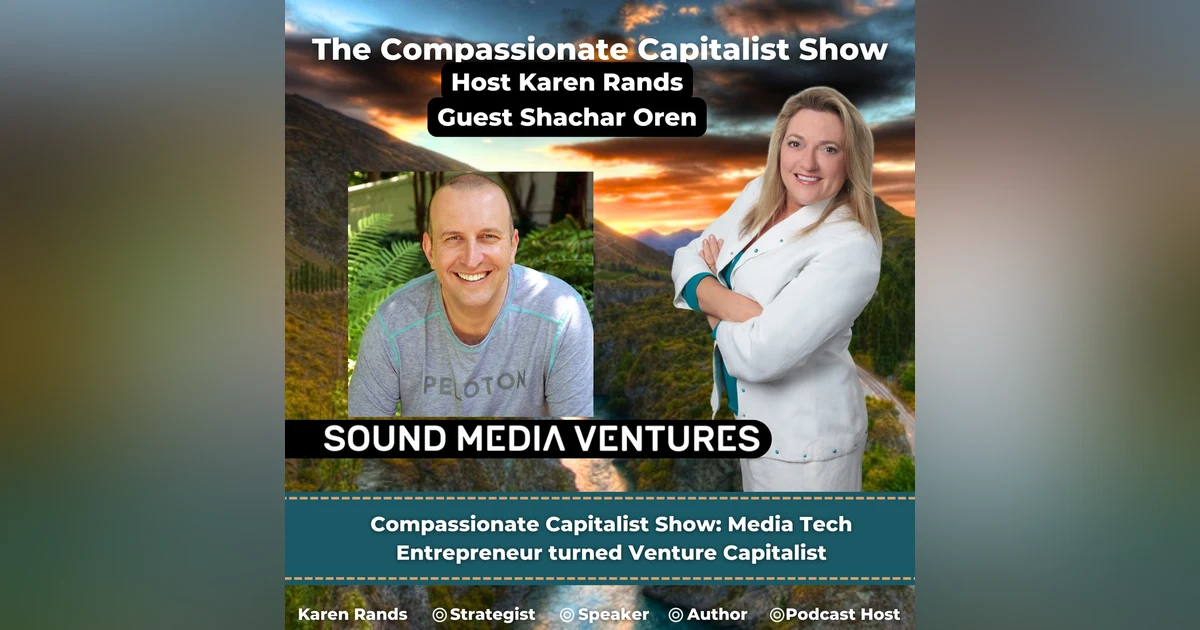
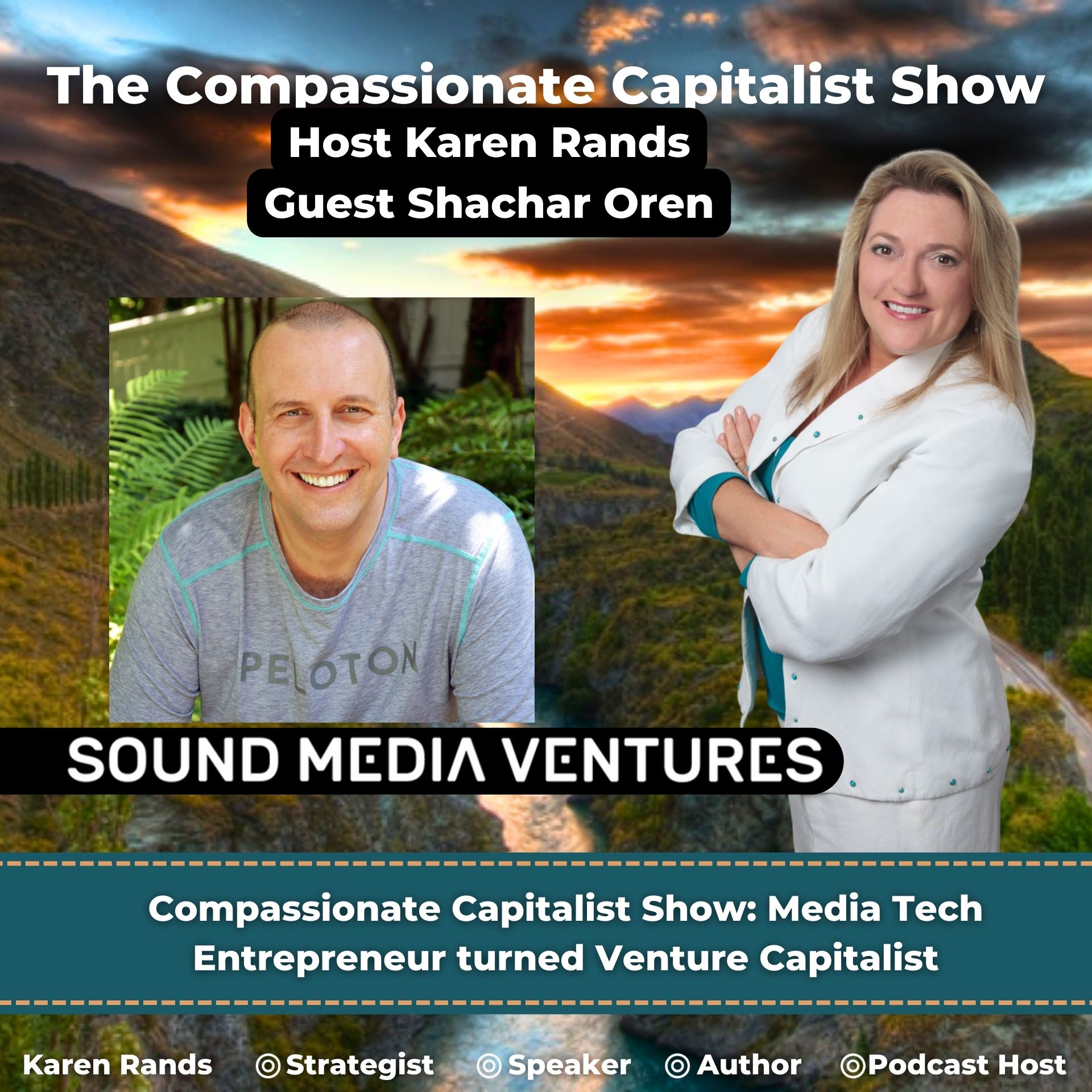


Listen to Karen's interview of Shachar Oren, of Sound Media Ventures, as he shares his journey from boot strapped startup to successful exit to lead a Media Tech VC firm in Atlanta, GA. Karen first met Shachar nearly 2 decades ago when he was raising capital for Neurotic Media and wanted to present to her angel group, the Network of Business Angels & Investors. Shachar's journey as an entrepreneur gave him keen insights into the concepts of growth hacking, lean start up, boot strapping, raising capital, and getting to a profitable exit. His experience has provided an unique perspective as an angel investor and venture capitalist sitting on the opposite side of the table. Shachar also shares his insights as to what he looks for when considering investments in the emerging field of Media Tech. Enjoy their conversation and learning moments.
Shachar Oren is the Founder & CEO of Sound Media Ventures, a venture capital firm that invests in companies at the nexus of media and technology. Prior to starting this fund, Shachar founded Neurotic Media, a high-tech music platform that served global Fortune 500 brands for 18 years. Shachar led the successful exit of Neurotic Media to Peloton Interactive in 2018. For the last decade, Shachar has also offered executive counsel pro bono for incubators, educators, and start-up founders. He currently serves as the President of Georgia Music Partners, and advises startups in technology, media and entertainment through organizations such as TechStars Music, GA Tech's Create-X and College of Creative Design, ATDC, GSU Main Street among others. He is a member of Atlanta Technology Angels and active in the growing entrepreneur/investor ecosystem in Georgia. For more information please visit: https://soundmedia.vc/
Karen Rands is the leader of the Compassionate Capitalist Movement™ and author of the best selling investment primer: Inside Secrets to Angel Investing: Step-by-Step Strategies to Leverage Private Equity Investment for Passive Wealth Creation. She is an authority on creating wealth through investing and building successful businesses that can scale and exit rich. Karen is an enthusiastic speaker on these topics for corporations, economic development groups, angel investor networks, and professional business networks. About Karen https://www.karenrands.co/about-karen-rands/
Visit http://Kugarand.com and click on the Services tab, to learn more about the Compassionate Capitalist Wealth Maximizer System™. Read about the Due Diligence Services, Investor Relations, Capital Strategies, Capital Access, and Capital Readiness Coaching serviced offered by her firm, Kugarand Capital Holdings.
The Compassionate Capitalist Show™ is a Podcast on YouTube. Please visit and subscribe and share. It is great to watch Karen and her guests live, in action. The whole library of podcasts and interviews since 2020 can be found there by category or chronological. https://bit.ly/CCSyoutubepod
Imagine the feeling of investing in a way that had massive impact and a potential pay you back 10x your money. The time is now to find out if Angel Investing / CrowdFunding Investing is the wealth creation strategy for you. Take action on Karen's offer to learn how to invest with confidence in entrepreneurs and sign up (FREE FOR NOW) the new Compassionate Capitalist Wealth Maximizing System.
0:03 Hi, Karen Ranz here. Welcome. To the Compassionate Capitalist Show, this is not the normal intro. This is a teaser explaining the upcoming show. The upcoming show that you're about to listen to is a reboot of a prior episode of my interview with Shahir Oren. It is relevant still today because it is a story of his journey of building a tech company and selling it to a company and then starting his own boutique Super Angels VC firm. Isn't that a dream that we we all wish we had could do and that big company that bought his company would not be a name brand today if they had not integrated Orange Tech into their value proposition for their product.
0:56 He did this all by bootstrapping with a ton of grit and super sized belief in what he was doing and where he was going. And when he couldn't get the outside capital he needed, he did the good oldfashioned way of growth hacking it. And you'll hear about that and basically growing off of revenue, really thin streamlined operation so that he could do that, get the traction, get the stuff, get the proof that he needed so that he could raise capital. Just not as a seed company. And I'll tell you, I think part of the reason why it was difficult for him to get outside capital and in fact he came through my Angel investor group at one point in time and I I tried to advise him on stuff and I too didn't truly understand what he was trying to do with his technology. He he a lot of times tech technologists and inventors get caught up in the science and the tech of what they're doing and they don't understand the real value proposition and how to articulate that.
2:15 And it it comes with time and sometimes it comes with flushing out the actual value proposition. But I think he also had a bias against his accent. It's just human nature. And that's one of the benefits of crowdfunding. Either raising capital under crowdfunding or investing under crowdfunding is because often times those biases are removed because you're focused on just what the value proposition is and the structure, the offer and how they're going to make money. So I debated on on this teasing. You a little further with what the company and product was because you know well I wanted you to.
2:57 Listen to the whole thing. But I'm going to go ahead and tell you because maybe I'll make you listen to it even more if you own a peloton. And and also part of the reason why I brought this one back is my live stream earlier this week talking about inflated valuations and how venture capitalists can ruin the the trajectory of a company. I'm working on that the life cycle trajectory of companies in my new book about scaling. And so it's been a top of mind lately. And anyway, we, you know when you do that Peloton is under the examples that I referenced in this live stream earlier this week.
3:37 And so if you know that because you've, you know, own one or you've seen a promo video that customizing the song, the motivational entertainment is a big feature of Peloton, well that's Orange Tech. So listen up and I'll say one. More thing. One more thing. Thank you. I wish I had like a some kind of, you know, something. Thank you for listening and sharing this podcast. If you've been listening to The Compassionate Capitalist Show for longer than six months, then you know this podcast is over 10 years old. The name changed a few years into it and became The Compassionate Capitalist Show, and I've recorded well over 500 episodes. I've purged a few over the years when it decided it was time to. Because they just, they weren't relevant, they were timely or they have wrong information in them or they were specific to some time event that was happening. That is no longer important to my to my audience and what I'm trying to build with this compassionate capitalist movement and helping people understand the value and the power of investing in entrepreneurs. And so when I had to make a decision to migrate off my old podcast platform because it just was really old tech and not doing what I wanted it to do,
5:08 and I moved over here, I had over 300 episodes and 155,000 listens. Long story short, I lost all of that in the migration. It's just the way it is with tracking RSS feeds. They're unique to the platform. So when you move a platform, there is no more information because that old platform doesn't exist anymore. But the good news is, and why I am putting out this huge thank you for all you that have returned and those that are new listeners. I'm now averaging about 400 downloads a day with just about 60 episodes, Mostly new recordings, but all weave in the most popular and relevant from the archives and bring them back to you.
6:03 And with that, here is my standard intro and promo for the launch of the Compassionate Capitalist Wealth Maximizing System. If you've heard it before, Fast forward about 3 minutes and you should be good to go to hear my interview with Shahaoran, founder of Neurotic Media and managing member of the Sound Media Ventures. Welcome to the Compassionate Capitalist Radio Show with host Karen Rands. A compassionate capitalist is someone who invests their money into entrepreneur endeavors to bring innovation in the market, impact their community, create jobs and generate wealth for all those involved.
6:50 Karen and her guests share insights and best practices for entrepreneurs to succeed and scale their business and investors to share. And that success? Read out all the risks. And now? Sorry to interrupt. Karen here. Real quick. I want to share some good news with you as a listener of this show. You know that being a successful entrepreneur is the number one way to create wealth. But have you thought about the wealth you can create by being an investor in entrepreneurs? Probably not, because if you knew, it was the 2nd greatest way to create wealth. You would be doing everything in your power to figure out how to invest in entrepreneurs with competence and confidence. So why not?
7:44 Maybe it was because it was illegal and a secret for anyone not already in the secret Society of the Super wealthy investor clubs to be invited to invest. That's right. If you haven't heard my story, given my influence now, you would be surprised to hear I had never heard the term Angel investing. Until after I left my corporate career and walked into my first Angel investor meeting, it really was like walking into a secret society. Not a dark room with candles and shadowy figures, but secret because of the laws that made it illegal for Main St. investors like you and me to be invited to have a seat at that table of plenty.
8:27 And really, the power those investors had to pick and choose the founders. And the companies, they believed, had the potential to be the next big thing and invest to own a piece of that company as a silent partner and Angel investor until the rest of us knew about that company. Only after they had gone public. They had the money. They made the rules. But not anymore. That all started to change in 2012, just a decade ago. You can now invest and own a piece of multiple companies and share in their success as those entrepreneurs grow their business and exit rich. What that means to you?
9:11 Whether you are a busy executive, a successful business owner, a real estate investor or someone thinking of starting a business, you now have the power to invest like high net worth investors have for decades, but without all the risks of being the founder. And with not as much money required to make those investments, whether this is the business down the street that is expanding or the next big tech company creating positive impact. That's right, it's now legal for anyone to invest in an entrepreneur's business. And I'm on a mission to reveal the secrets of Angel investing by teaching you the step by step process to build a portfolio using my Angel Profitability Blueprint. You know, I went on to own that same Angel investor group and played the secret society games.
10:03 As we even made sure we shut the doors in the rooms. We had the investor pitch dinners for fear that any random Joe walking by might hear about the opportunity being presented in that room. Really kind of funny to me now, but taking what I learned working with those investors for nearly 20 years. Building upon the lessons and tools provided in my best selling primer, Inside Secrets to Angel Investing Step by step Strategies to leverage private equity investment for passive wealth creation, I'm launching the Digital on Demand investor learning platform, the Compassionate Capitalist Wealth Maximizing System.
10:46 You can learn how to create a portfolio investment in private entrepreneur stocks. That has the potential to generate more than three times returns as the average stock and real estate portfolio. So go to dothedeal.org, sign up as an early adopter, get a free access for when the platform goes live. You'll also receive a free gift, an ebook of the 12 Secrets for Innovation and Wealth. Don't miss out on this opportunity to create wealth as an investor in private businesses. Click the link now and start your journey. Towards financial freedom and generational wealth. You can find it in the show, notes dothedeal.org.
11:27 And now. So welcome to the Compassionate Capitalist podcast and video for those that are watching on video. Thank you for joining us again today for our our weekly session where we talked to entrepreneurs and investors that and service providers and all those that are actively working on and trying to promote. The creation of wealth through successful business entrepreneur endeavors and for those investors that take the ride with them and help fuel the acceleration of that company from launch to growth. And what is the what are all the best practices all along the way. And part of what we do is the show for those that listed on a regular basis is that we like to dive into different sectors.
12:14 And and understand what what is work, what is hot in that sector, what is what are some of the problems that are being solved in a certain sector. And today we're going to talk about media, tech or in other technology of media and entertainment. And it's always a really unique and great opportunity when I have a guest that not only has it has walked the walk and can talk to talk, but is still doing it today. And going from being a very successful entrepreneur and having a vision and an idea and taking it all the way through to being able to sit on the other side of the table as a as a an investor, an Angel investor and A and a venture capitalist. And so I'm going to tell you my my guest, he's here is going to wait for those that are are watching. Sir Oren.
13:02 He is the founder and CEO of Sound Media Ventures. It's a venture capital firm that invests in companies at the Nexus of media and technology. The fund pursues early stage targeted investment opportunities primarily in scalable technologies, powering and media tech and a number of the elements that that fall within that technology platform. It can be. It's amazing the stuff that solves problems in the media and entertainment spirit from a technology standpoint in media and entertainment industry, and we're going to dig into that as we go through our conversation. He has a fascinating history of using his job, starting out at the low at the a local college radio station into the promotional side of music industry and really understanding some of the issues that were going on that.
13:49 But then it's getting an idea for a business and his inspiration to actually start that business in the midst of the Great Recession. So Shahar founded and built and led neurotic media. It it was a high tech music platform that served global Fortune 500 brands for 18 years. Johar led the successful exit of Neurotic media to Peloton Interactive back in 2018 and for the last decade. Overlapping all of that, Johar has also offered Executive Council for Pro Pro Bono for incubators, educators, startup founders, and currently serves as the president of Georgia Music Partners. And advises several executive leaders in the technology, media, entertainment, including Tech Stars Music, Georgia Tech's Create X and the College of Creative Design ATDCGSU Main St. as well as the founders of several media and technology startups.
14:49 And he's now sits on the other side of the table as an Angel investor and the founder of Sound Media Ventures. Welcome to the show, Shahar. How are you? I'm great. Thank you for having me, Karen. Hello everybody. Yes. So you have specific unique insights into these concepts of growth, hacking, lean, startup, bootstrapping, raising capital, getting to an exit because of your experience with neurotic media. And I. And I think it's really so valuable for the entrepreneurs that are listening out there to understand a little bit of your journey of what you experienced with that because when we first met. You were raising capital but it turned out to be you know difficult even though you had really strong intellectual property, you had great technology and great traction. So you know for the afternoon the entrepreneurs that kind of get stuck with this idea of progressing their company, what one might call that lean startup right with investor capital, they feel like they can't do anything till they get money to do this or that.
15:51 The other you solved all of that? In the way that you brought it to market and built a huge value of proposition for that led up to your exit and your story. The stories you told me are just fascinating. So you know it's been a few minutes talking to our audience about this idea of of getting started growing with actual customer revenue and you know share with them on how you know you how you were able to generate millions in revenue without the benefit of seed capital. Sure. It's a it's interesting because I'm pretty envious of the reality in the marketplace today because in relative terms there's so much investment capital, VC Angels in Atlanta, the local market and I've been in Atlanta since 1990. The market has changed so much, especially even in just the last five years.
16:49 So when I founded Neurotic Media in 2001. The bubble just crashed and we were coming out of that and creating a new company and there was there was no VC. There was only one VC in Atlanta and it was not an Angel VC. They were investing in a later stages. I started the company with an SBA loan and my own sweat equity and some savings and. We had to be customer focused and figure out a way to be generating revenues from from month number one. And we ended up growing organically with a lot of grit and a lot of years of several years of sweat equity. And only in 2000 and seven 2008 did we find traction with some investors.
17:47 And this is in the height of another recession. There was there was still not a lot of folks to talk to in Atlanta. So at the time we only raised which today is extremely modest. Our raise was about 1.5 million and we were already making almost a million a year in revenue and the expectation at the time investors put us through the ringer, we needed a 80 page business plan and the technical white paper and. A former? I mean, ask those things from a founder. Nowadays, everybody laughs at you Like you want me to do what?
18:27 That's why I laughed. You're lucky to get three years projections, but you know, and so it was a totally different environment for raising money. And in Atlanta there were not a lot of people to talk to. So the discipline expected of us as founders. And and I was a member of a TDC at the time. So I was networking with a lot of other founders from other industries at a TDC, which is an incubator in Georgia Tech. Everybody was in the same boat, Everybody was seeing the same stuff. It was really hard. The process of raising money was a lot harder and the result evaluations were depressed. It was hard to find money in town.
19:11 It's totally different today. It's a wonderful. Space today for founders, I think nationally, but we certainly see that here in in in Georgia and in Atlanta where gosh, there's probably about 20 plus funds, micro funds in Atlanta alone. Many of them are journalists, some of them are market specific like Sun Media venture is and Sun Media Ventures is. And there's so many opportunities for founders to go raise money. And the valuations are a lot higher, but we had to apply a lot of grits to the process and we learned how to have this discipline of being revenue centric because we kind of had no choice. Right.
19:58 Yeah. So talk about that, cuz that was one of the things I thought was so interesting, how you figured out how to engage customers to fund your growth and even your technology developments and your iterations as you went along the way. We did so because we we were so nimble and agile in the way we developed every step of the way we had to engage with customers and drive the value for the customers and we we were a B2B music platform. So the path for us was to deeply understand the potential customers and then present them with strong proposition about what we're going to build. I already had and this is going back to my activity in the digital space circa 1998.
20:43 I had a good network within the industry to leverage. And so we leaned on those relationships to kind of sit with folks and say hey, what do you need in the marketplace? What do you want to build, what would you pay us to build? The major record companies engaged us in the middle of that decades to build what they defined at the time as an iTunes in a box, white label opportunity, iTunes like services and beyond B to B music services that they can white label for a variety of different purposes. So they had a need and we knew how to build it and there was a lot of trust created over the course of a few years of a variety of different services being provided.
21:25 We were able to go to the labels and say we're the right party to build you this platform and we are asking you to advance us two years of service fees and we were able to fund at least the beginning of the platform with customer advances towards fees with the. And it was a big risk, it was a big gamble. First of all, it was just one nugget of the money we needed. I needed to borrow a lot more, which was a lot of personal borrowing and you know enterprise borrowing taking the risk on borrowing a lot of money. Also the financials only make sense if we expanded the clientele beyond those record companies. So we had a long term plan of hey if if we can leverage this opportunity to build this tool.
22:15 We believe that we can sell a lot more of it to other clients once it's built and we aggregate the catalog. So it was a multi year gamble, but we we got it funded initially with clients money which is non deludive. We got the mission done. It was a lot about execution and we got, we got it done. We came out of the recession by 2010 after we also raised a little bit of money from local Angel groups. So we're able to really fulfill on the promise of what we're trying to build for our clients. We came out of that process eight years into the company and one pivot later into a real SAS model with APIs and whatnot.
22:58 But we came out of the recession and profitable, and from 2010 until we exited in 2018, we were constantly growing as a size and eventually kind of found our hockey stick and got really, really scalable. Yeah, so I. Was going to say all along that growth is painful too. Growth is also expensive, so even as we were profitable and growing, we needed to come up with with innovative ideas of how to fund the technology costs during the growth period. Absolutely. And we kept going back to clients as well. So at that point, it was beyond just regular companies. We had all sorts of SAS customers and we had SAS customers that were already on board for 8/10/12 years each and they were paying a monthly retainer for years. So we would go back when whenever we needed a bump to build something on the technology side, we would go and say, hey, here's what we're doing. Technically it, it may or may not be in your wheels, but you're going to benefit from it as well. And and you've seen that in the past, you know that what we're doing right now is going to benefit you if you're willing to advance us your next 12 or 18 months of monthly recurrent fees which are not in your budget anyhow, you're paying us anyhow. We'll give you a 10% or 15% discount if you advance us the money and customers always chose to do it because of the savings. Yeah, over time we started going for non dilutive and very minimal.
24:31 Well, there was no interest. It was not really a loan. We were just you know giving up a little bit of our income in order to get the money when we needed it. Cash is king at that point. You need to build something, solve a technical problem, you need the cash. So it was a non dilutive way to continue and expand our cash flow to invest in the technology and in the growth of the company. But we we got it done efficiently over the years. Well, it's a great strategy because yes, you're taking a discount, but people offer discounts all the time for things, you know, for people to sign up and stuff. But you know, you've got this growth in revenue that will come from the new functionality that'll make up for that discount that you gave existing customers. But you didn't give have to give up equity. You're not paying interest on that. It's not on your balance sheet dragging you down. Well, you got to pay out every month on something, right? You just got cash in and.
25:25 You're paying your developers and things, but in general you know a SAS solution is going to have a high margin on it that you've got a little bit of wriggle room. So I think that was just a a brilliant strategy to do what I wish more customer or more entrepreneurs would believe in what they're doing and do take those kinds of bold moves in order to move forward and create a value in it and. It it creates a situation that you because you because like you keep emphasizing and you didn't have to dilute it. So you get to keep more at the end of the day when you get ready to exit. And so let's let's switch over and let's talk a little bit about that because most entrepreneurs and founders, you know, they start a company not just to invent something cool, but to do what you've done.
26:09 We just create great wealth from their innovation and hard work right there. And that's the exit. You know, often entrepreneurs will dream of an IPO, but most often the exit comes through the sell of the company. And now you sold your company to Peloton, who you know. Really, in recent years people have become massively aware of, you know and and I and I like to think that part of the reason why they became such a dominant solution, it wasn't just because it was a bike, but it was the. The experience of that bike and I think your technology from neurotic media probably was a real integral factor of them being able to accelerate their business model. And and what's interesting is that they didn't come knocking on your door necessarily to say we need this and this is what's going to propel us to the future. It was almost your vision of how they would use it as a customer. They gave them the vision that ultimately led to the exit. So talk about that process of how. How that happened, because it didn't happen overnight. It was you know and it's a really a fascinating piece of your story.
27:18 It is. And you know we're we play a very specific role within that ecosystem and the vision is all, I mean the Peloton team is an amazing team. It's an amazing product and amazing service and users, you know, the members are so passionate about it. We just really got lucky and interesting. Think about this. Yes, exit. Exit is king. Exit is what it's all about. It's all about the exit for an entrepreneur and it's also about the journey. I truly believe it. It's very much about the journey and hopefully you do have a great exit in the end. We were always cognizant. I had great mentors and advisors early on, which is phenomenally important for for an entrepreneur to identify and lean on, on really wise mentors and advisors and then also to find and develop and promote the right team around you.
28:18 It's the success of a company. It's all about the teamwork and the talent that you bring in and and foster within the culture within the company and the so. So first of all I was always acutely aware that I didn't have to. Neurotic media didn't have to be the biggest animal out there to be successful from an exit perspective. We actually because we we had an 18 year run and we saw several competitors that came and went during the years. Often times they raised way too much money over capitalized which normally then when you over capitalized 2 years in it leads to the VC's taking over. The founders lose control and disappear and the company ends up.
29:03 Even if the company raises $100 million, the founders live with nothing and eventually it melts. There's a loss for the investors. We've seen that happen several times to our competitors and we at that stage when many of our competitors over capitalized. In 2007 when we raised 1.5 million in Atlanta, we had three or four competitors at the time in other markets, bigger markets that raised 50 to $70 million each, which really was what kept us up at night. We're going to lose our pain. So this big client competitors, how we're going to win, they you know they tend to then when they raise too much money, they spend it very, very fast on on whatever the VC's think they need to do literally within 12 months and they kind of burn through it and then crush and burn basically. And so we over time with our slow momentum, we eventually became a leader in the space.
30:01 All the competition disappeared. It was like the story about the rabbit and the the turtle. We were the turtle and we won the race. And so I always now encourage when I work with the entrepreneurs we found us today, I I work with them early on in the process on the waterfall that shows them how raising money in different stages of their company in the next five years going to affect what they personally get out of the hard work. Because I want them to realize what over capitalization for business looks like for the founder. So they don't make mistakes and don't you know overshoot what they need financially and really think about the process of valuation versus capital leading to an exit and what that means to them as an early investor our interests are aligned.
30:54 I want to make sure that they know about this because it benefits us so. So by the time we ran into Peloton, it's interesting because we never when we were looking at our potential exit from erratic media and over the years we would, we would contemplate who would be our exit as a B2B company. We we never saw ourselves it wasn't big enough to go off to an IPO or the market was never big enough to support an IPO for B2B music company. So who's going to buy us and for how much? And over the years we banked on, well, a big retailer and then we thought maybe a big carrier or big technology company. Or a publisher. Or yeah, we never thought it was going to be a fitness company. Nobody really saw this coming A.
31:39 Customer explosion of Yeah, but we never thought that a fitness company would be a major customer. So by the time Peloton came to talk to us, they already created a monster. They were already a Unicorn and they knew that they needed to take a sledgehammer to a challenge. They recognized that music was part of the NDA of what the service was about, and they needed the source of truth for everything within. How they were fitting music through the system all the way down to reporting that they needed an end to end solution for music. And they they came to us with an RFP. They went to the marketplace with asking folks to. Quarter this thing okay and they say you know we need this, we need that.
32:27 They had a certain vision and a lot of it was the sole member centric. They knew what they wanted to create. As far as membership experience, it was a phenomenal vision. Where we were able to add vision is to really show an elegant and scalable and automated option of how to execute on the vision that removed a lot of manual elements from the process and created a a really exceptional ecosystem soup to nuts a real supply chain for them that doesn't, nobody else is doing it that way in the marketplace even today. It's born on just an exceptional solution and they got very excited about that vision.
33:10 So that conversation organically pretty quickly developed into a conversation about an acquisition and and then you know the team is still there, super proud of the team and what they've built within the organization. I still don't vote for the obligatory year to get a vision executed, move the team and the technology over. So that's interesting. So they they didn't just buy your tech, they bought the team to continue momentum and movement in the advancement and innovation within that element of what your your technology brought to them. So that's good, because that's another thing that entrepreneurs often worry about is. You know, they're just buying us for the tech because it's easier to buy than to build it.
33:57 But they wanted the team too. And then a lot of founders really struggle because they don't want to, they don't want to have the team not benefit from the hard work that they've put into it all those years. So I'm glad to hear that was a a key component that was probably also part of your deciding factor to sell. Absolutely. You know we looked at various options and this was the option exit option where we felt so excited about the brand. When we looked at different options of where do we want to exit at the time already there was so much buzz about Peloton and when we looked at opportunity and talked to the company and studied the brand, we thought what a great place to to, to to go to work with to join.
34:43 I knew that for the for, for my team, it would be a huge positive experience. Everything but the Peloton brand is so positive. It's an empowering brand. You just if you look at just what what you can see publicly and in so in social networks and in the peloton social channels, on Facebook and other social places, it changes people's lives for the better on so many levels, which is why there's so much passion by the members for the brand. And when we looked at all this, we thought, you know, this is just fantastic, this is so exciting. We would, you know we would. I was excited to see all of the hard work we've put into it serve a growing amount of members in such a unique way. And knowing that the technology and capabilities and the team is not part of this bigger family which has grown by leaps and bounds.
35:33 And even our team here in Atlanta that specializes, that focuses on the Peloton technology side for music. The music technology arm has grown and the team is just, they're doing great and they're so pleased with where they are now. Yeah, from a career perspective, I just couldn't be more happy for everybody involved and proud of what they're doing. Yeah, that's great. That's a really good story because I think it's really important for entrepreneurs to understand, you know, the destination. And the reason why investors invest in entrepreneurs is because they expect to have an exit like that. But so often you know, they think of the obvious exits like you mentioned at the beginning and not always necessarily a customer or somebody that would take their novel tech and use it in a slightly different way like you say in a consumer product for the fitness industry.
36:23 And you know transform what they're doing in their business because they had an idea and they needed your tech to do that. So after your successful exit, you spent some time and and I guess along the way you have been mentoring and accelerating companies and seeing interesting and compelling media tech. When we recently, we participated as judges at the annual Siege Business Plan competition. For those listening that aren't familiar with that, it's the. It's a it's a conference for gay, for people that are inventing games and entertainment here in Georgia. So it's an annual convention or it was done virtually this year. Business plan and there's a business plan competition. That's an element of it.
37:05 So I was struck by some of the entrepreneurs there. They seem to focus on just better mouse traps, right, for their innovation rather than some kind of transformational innovation that moves an industry forward. Your background, you know has music in it. Your company was music tech. You've pivoted your business, you know at the onset in this platform for business to business, right. You saw this opportunity. So you know, share your and and you don't have to necessarily go into the whole nature of what you know streaming music was back then, but share your insights into the experience of. You know the value proposition of creating a different way of doing business, right? A platform, because ultimately that's kind of what you look at from an investment standpoint.
37:52 But as an entrepreneur, the value of creating something that's not just a better mousetrap in doing stuff, well, the the underlying idea I believe for for founders that are really, really looking for big value creation in a short period of time, what we call a quick IRR or significant annual growth. To do that you need to fundamentally, usually fundamentally disrupt or make a big difference in an industry, whatever your segment is. If there's a lot, there are a lot of businesses that one can create that are valid businesses that are going to generate a lot of cash. Maybe, you know, doctor's offices, lawyer's offices. There's a lot of different businesses in all across industries where you can generate, you know, 7 or even 8 figures a year.
38:51 Everybody takes a nice living home. It's what we call a lifestyle business and that's fine for those kind of businesses, you don't necessarily need venture capital. You can usually build them with some with maybe some grit applied as well, but ultimately if there's real value in that business, you can get a non deluded loan specific banks, maybe friends of the family, maybe some angels would invest in those type of businesses, but it's not suitable for venture capital. Venture capital usually seeks significant potential rate of return on an annual basis. We're sort of hunting for unicorns and we we are aware that statistically speaking most of the bets would fail 1 intend, 2 intend would succeed and go big, and that's if we're lucky. So it's a it's a bit of a gambling game and high stakes gambling game.
39:54 So it forces us to ensure that every investment we make, we have to go into it with certain conviction in the size of the opportunity and the ability of the management team to execute on a vision that's sizeable. That provides significant annual growth and significant exit potential. That provides a pretty hefty multiple and it depends on which stage of the company you invest in. So the earlier stage, the more risk and the higher the return. There's different teams, bigger VC teams that invest in what we call further down downstream, which is Series B, Series C, where a lot of the risk is already off the table because usually in those bigger rounds the company is well established and the product is well established and the revenue is well established and you really investing in growth.
40:50 So you're not necessarily looking for the same huge multiple. And when you invest early on, you're looking for pretty significant multiple opportunity because you're taking a lot more risk, Right. Right. So, so founders need to understand that before they set themselves up to starting to talk to venture capitalists or even angels. The story has to take that approach into consideration. They need to put themselves in the investor seat and realize that we're looking at hundreds of opportunities. You're basically competing with other opportunities when you talk to an Angel investor. Yeah, that's one of the things I always tell entrepreneurs, it's like you're, you know, you are.
41:39 It's a, it's like a a beauty contest, right? When I sometimes when I do some of my education on this, I say, you know, how does a female Peacock pick a a male Peacock? Because they're all pretty. But there's like, which one, right? It's like there's and that's when when investors are looking at deals. Every deal says I'm going to, I'm going to be the best. I'm changing this, I'm doing this. And so they have to to figure out which one that looks great is the one that's really going to do what they say or change a market or shift a market or have this kind of compounding effect because of. And there's also that risk of, like you talk about the reason why some of them don't make it is because they're so much involved with creating a market.
42:27 Or wedging into a market and displacing how the status quo, how somebody might do stuff like that. So you know, one of the things that I also want you to to talk about is because I think you have some real unique insights and some of the stuff that you shared already and and kind of you know your focus is that and the end this thing about media and entertainment, right. You know investors flock to software, tech, cloud based s s, Internet of Things, fintech, all these catchphrases. Yet media and entertainment seems to be a category that they that struggles to get mass attention of investors as groups and V CS and so and so the entrepreneur make that fine define themselves as a media and entertainment company and then investors go up media and entertainment, right we're underneath it.
43:14 There's a tech that is good that is that is solving a problem within the media and entertainment sector. So you have a unique perspective. In the in sort of the investments you've already made in some of the companies that you've mentored in the roles that you play now on the side of the investor table. So talk about understanding the tech behind media and entertainment, and how do entrepreneurs overcome the stigma of a startup in that space when they're really actually are. They're not just entertainment, they're actually in the technology side of that and. And you know, maybe something interesting that you've seen or a problem that you're hoping somebody will solve that you've identified from your experience in the industry.
43:59 There's there's a few issues that are of interest to us that we're talking to companies that kind of solve for them and we're trying to get into those deals. So I cannot get into specifics, but we're very bullish about the opportunity in general because I've been in the space now for two decades plus. It has changed so much in the last 20 years and it seems like over the year that the rate of change keeps accelerating. What's happening in the space today with some of those novel technologies, with blockchain, with a I, with robotics, Internet of Things, 5G, machine learning, ARVR, there's so much fundamental, so many fundamental shifts are happening in how consumers, fans are tapping into media broadly.
44:50 And we look at media very broadly. Yes, it's music and video and but it's also communication, education, fitness, art, it's all media. So we had some of the adventures. We look at media broadly and we're looking at those type of technologies because we believe that they allow founders to create a lot of unique value and innovate and create meaningful changes fast and usually faster than big companies would do it, which leads to growth and potential big exit opportunities. So we're not looking at nice to have models or this exists for the last 20 years, but I did it a bit better. That can be a nice lifestyle sort of business like Okay, you're doing something better and that's a, you know, there's all these other companies that make 10 million a year. Yeah, it's a basic.
45:41 So now you can maybe can disrupt them and you'll make 10 million. It's not a, it's not a home run, not a home run. So we're looking for those home runs and and So what we're looking for our opportunities that fundamentally change how media broadly is created, distributed and monetized and the underlying technologies that are platform scalable in nature. We're not looking at the media itself, that's a different sort of thesis. So not investing in media per se, but the underlying technologies and and there's a lot going on in the space, a lot of exciting opportunities and and you can look at me, we've got a small portfolio already on our website, it's Sun Media dot VC and you can see the kind of things we we're squinting at and and and what we invest in.
46:33 So we're very bullish about the space. It has performed, I believe, ahead of most, if not all other spaces in 2020 well. There you go. Most media companies in the early stages really find their money with angels and struggle to find institutional money. Not until maybe Series B&C, when something's already big and moving, yeah. When you have $1,000,000 in revenue, a lot of folks, a lot of VC's like yourself have told me that they the $1,000,000 revenue is sort of their starting spot to. Look at a deal, but I think you you work a little bit earlier if you find really compelling and and I guess are you Co investing with angels now as well.
47:16 We Co invest with angels. We're not opposed to be in the first check but normally we won't necessarily be the Angel invest investment in a company. We look for the product already be there to see a most viable viable product example and we're looking for some sort of traction if it's KPIs or on users or early revenue trends. We want to join the team when we can add value to growth, not to the creation of the product, but to the growth of the product. And that step when the entrepreneurs need to cross the chasm and really reach scale, that's where we can add value both with expertise as well as our network. So we kind of roll up our sleeves and not only, you know, make a financial contribution to the effort, but really roll up the sleeves and work with an entrepreneur or whatever needs they might have on the C-Suite level to help them prepare for their growth and really accelerate their business. Right.
48:18 And you mentioned it and I apologize, I should have said it earlier, but the website for those that are listening. Is sound media dot VC. So it's just like it sounds SOUNDNEDIA dot VC. So you're an entrepreneur in that space. If you're an investor that's trying to you're looking at a deal and you want to because of the network that Shahar has, you know it. I think he take a coffee or anymore. It's just a zoom call and say hey, let's bounce these ideas off each other and things like that. Because I remember you talking about one deal that you, I believe you guys have already invested in that was really fascinating on delivery of art through streaming on, you know streaming on TV or something like that.
49:08 It was. It was, it was completely novel when you described it to me before and I I I was fascinated that somebody not only had an idea, but they identified their marketplace for that and it has developed it and it it is, it is a game changer. Yeah. And I know we only have two minutes left. It's the company is called Loop Art Lou, P/E, art.com and they are a a market maker, if you will, in streaming art. So the vision is that what Spotify is to music and Netflix is to movies and TV loop art is to high end art.
49:51 So it's curated contemporary art. It streams on your flat screens and you can now already find it through Pluto. We launched a linear channel on Pluto TV. We also launched on Comcast where you're preloaded on the X1 modem and others modems and and there's more now we're working on several other distribution partnerships this year. In 2021, the company has grown tremendously just in the fourth quarter since deploying with those first initial partners I mentioned. And so we went from very small amount of users to over a million Unix per month. Wow.
50:35 We did like 2 1/2 months. Yeah. So fantastic growth, very exciting product. Okay, great. So now as we wrap up, I'd like you to sort of explain because I thought it was interesting why you chose to start a VC fund. And do what you're doing versus just being just a straight, you know, Angel that puts it writes a personal check every quarter or participates in somebody else's fund. You know, it was, I think it was a brave, but of course you've always been sort of a, you know, a. I guess a brave I'm trying to think of the word I'm trying to think of it but you know leading the way into you know doing things you know and it's and you and you chose to start sound media these sound media ventures. So you know, just, you know quickly tell our audience on what was, what's your passion behind it, why did you choose to do that instead of just you know being an Angel, not just an Angel investor but you know taking your wealth and doing that or going off to the lake and. You know, building another house, you know you, you've committed your own.
51:46 Now it's a new business, which is, you know, helping these other entrepreneurs go about creating and and you know and sharing in their wealth, but in a different way. So talk a little bit about your, your passion and your reason for for being. You're taking that space within the capital framework. Sound me to venture checked toolboxes for me. First of all, I enjoy paying it forward. I enjoy working with entrepreneurs and hear about exciting new ideas that founders are developing and being able to help. You know, at this stage in my career after being an operator for two decades plus and you know what?
52:28 I can, you know, bring to the table is a lot of wisdom and experience, for better or worse, and what young, you know, all founders are bringing to the table. Often times young creative founders is a lot of creativity and deep understanding of current and future technologies coming out of universities doing a lot of R&D. That's super interesting. So when you marry that passion and that knowledge of bubbling new technologies with mentorship and experience, which is what I I had when I was young and I know the benefit it gave me at the time, I think it makes a big difference. I enjoy the work. I enjoy paying it forward. I wanted to have a bit more structure behind how I engage founders and how I work with them and why I'm doing it. #1, #2, I was looking at things as an investor. I'm a member of a TA Atlanta Technology Angels, just joined Venture South and other Angel networking the Southeast. So I enjoy looking at different opportunities as an Angel, but when I was running the numbers investing in this particular area of media and technology, it's kind of like making a salad with the vegetables I have.
53:42 It's an area of expertise for me. I understand the space both from the content and IP perspective, which is really the product and how it it correlates with technology and how to apply technology to distribution and monetization. So, so that's where I can bring in a lot of value from an investment perspective. I understand the market and I felt after looking at all the numbers, talking to a lot of colleagues, I felt that with a a fund that's bigger than my own firepower, we can make a bigger impact, write bigger checks to investors. So I just decided to put a lot more discipline around the whole process of investing and how much money is being invested and how we advise and work and consult the founders we engage with. And investing some media ventures gives the whole process a lot more structure with the goal of creating a lot more value for for everybody involved, which at this point is the investors, the Lps that are involved in sub media ventures and of course the the founders we curate and invest in and work with.
54:52 Yes. Well, thank you so very much for joining me on the show. Shahar, it's been great talking to you. I think hopefully listeners out there please comment, give us a you know five stars on this and you know share it with other people that you know that are interested in media tech or interested in getting started in Angel investing in media tech or whatever. You know, interested in understanding the Atlanta landscape for capital? You know, this is, I think one of the things that you mentioned at the very beginning is that Atlanta has become a very dynamic community for entrepreneurs and investors. And this is just another flavor color that of the spectrum of what is out there.
55:38 And it's really exciting the things that are happening here and I'm excited to be a part of it with you. Well, thank you very much for having me today, Karen. Appreciate the time and thank you all for watching. Yes. Sound media dot VC everybody. And of course my website is Karen rands.co for those that are listening. You can go there and get access to all the other podcasts and blogs and on the blog page and and information about the book Inside Secrets to Angel Investing. And so as I always close out the show onwards and upwards. Thank you very much. Appreciate it. Well, that's a wrap for.
56:21 Another episode of The Compassionate Capitalist Show. Thank you so much for tuning in. Please go to dothedeal.org and also Karen Rands dot Co If you are already established as an investor and need help with due diligence or your company trying to figure out what your capital strategy could be, we offer services for all those things. And please share this podcast with folks that you believe that will be interested in the topic and benefit from it. And give us a thumbs up, a star and a like or whatever is on your platform so that we can spread the word and you can be part of the compassionate capitalist movement. Onwards and.