Unlocking Capital: Innovative Strategies for Business Growth - with Scott Boruff
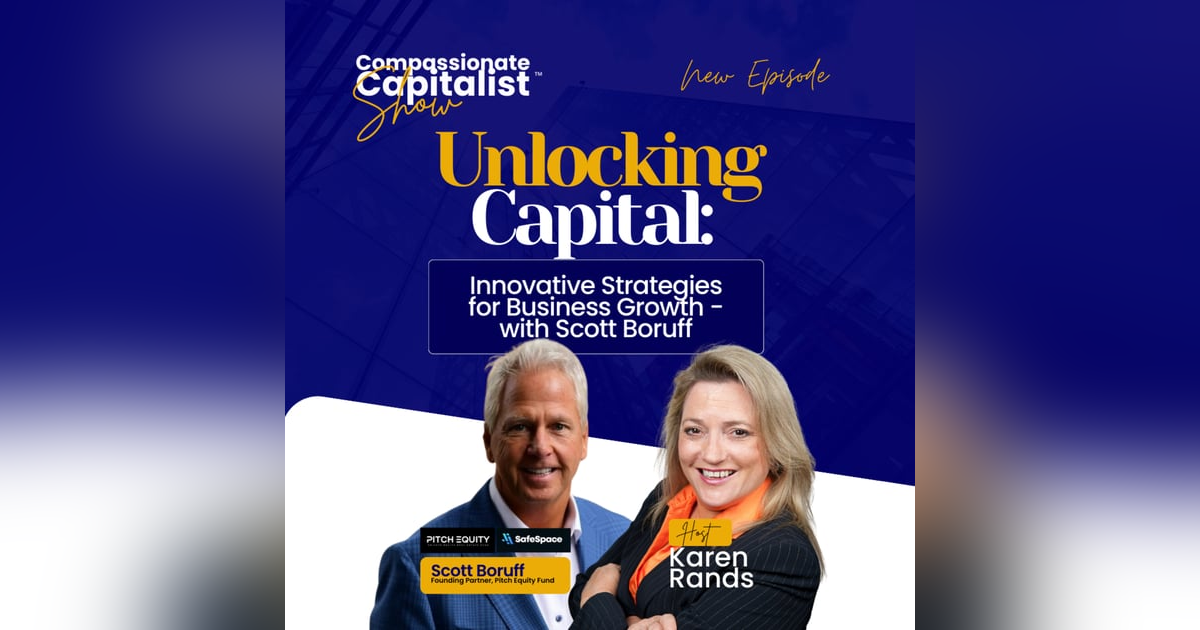


You’ve been sold a lie: going public is “easy.” File some papers, raise some money, and voilà—you’re trading shares.
Not even close.
In this episode, Scott and I break down what really drives successful capital raises and public-market strategies: experience, disciplined execution, and action.
Failures, not wins, taught Scott the hardest lessons, and the biggest risk for entrepreneurs? Doing nothing. Ideas left untested quietly die.
Capital architecture & financing strategies, non-traditional paths to going public and why brand visibility isn’t optional but essential
Growth isn’t about speed. It’s about structure, credibility, and learning from mistakes before they cost you.
For anyone serious about building a lasting company: there is a roadmap. But it only works if you’re willing to do the work.
Key Takeaways
- Money changes hands when problems are solved.
- You make money when you buy, not when you sell.
- Every deal has its own unique intricacies.
- You need to create market demand for your stock.
- The bigger the problem, the bigger the money.
Chapters
00:00 Introduction to Financial Architecture
04:10 Scott's Journey into Capital Raising
09:01 Navigating Complex Deals and Financing
14:01 Understanding Reverse Mergers and Public Offerings
18:55 Creating Value in the Public Market
27:06 The Challenges of Going Public
28:27 Understanding Reverse Mergers and Reg A+
30:46 Common Pitfalls in Capital Raising
33:11 The Importance of Brand Awareness
35:13 Future Trends in Capital Markets
About Scott Boruff
Scott Boruff is the founder of Pitch Equity Fund and Safe Space, a unique early-stage company breaking new ground in capital architecture and public-market strategy. I like to call Scott a financial architect because he doesn’t just raise capital; he structures it in ways most founders never see, opening doors to non-traditional markets and public pathways.
He is also a visionary real estate developer and dealmaker who has raised over $1 billion in debt and equity to fund transformative projects across golf, retail, residential, and adaptive reuse sectors. Scott builds developments that reshape communities, create lasting value, and leave a legacy.
Simply put, Scott sees opportunities where others see risk and knows how to turn them into impact.
About Karen Rands
Karen Rands is the founder of The Compassionate Capitalist Movement™. As a Venture Catalyst and best-selling author, she is disrupting the status quo by equipping a new generation of "Compassionalists" to bridge the wealth gap through private equity and small business investment.
Bridge the Wealth Gap: Get Karen’s Books on Amazon -https://amzn.to/47D5Lwz
Join the Academy: The Compassionalist Academy™
If you found value in this episode, please like, subscribe, and share it with a fellow leader ready to disrupt the average.
karenrands.co
http://compassionalistacademy.com
Karen Rands (00:02.377)
Hello, welcome back to the Compassionate Capitalist Show, the show where founders and CEOs learn what it really takes to scale and exit rich. The Capitalist Strategy Beyond the Typical Angel to VC Path and investors that will learn how to create wealth, sharing in those entrepreneurs' successes. Today we're talking with Scott Boroff. He's the founder of Pitch Equity Fund and Safe Space. So you're gonna get two...
Scott (00:03.842)
Yeah. Yeah.
Scott (00:13.271)
Yeah.
Scott (00:23.713)
Thank you.
Karen Rands (00:31.155)
perspectives on financial architecture, capital strategies, growing companies to get to a successful exit, a profitable exit on the public markets and through acquisition. And we'll learn more about both of those as we go through this. And so Scott is what I like to call a financial architect, someone who has built and structured capital raises and exit pathways for companies.
Scott (00:31.362)
Yeah.
Karen Rands (00:59.495)
outside of the standard route, including taking companies public in ways most founders never get exposed to. Scott is a visionary real estate developer, deal maker with a proven track record of raising over a billion dollars in debt and equity to fund high impact developments. His expertise spans golf, retail, residential, adaptive reuse sectors, and technology. And you're gonna learn about with the really timing. mean, I always think it's so
Scott (01:01.551)
Yeah. Okay.
Karen Rands (01:29.435)
It's like the overnight test that only took 20 years, right? So his expertise stands, so we'll hear all about that. And the mechanics of financial architecting a capital stack with the specific intent to exit. So Scott's experience isn't just theoretical. It mirrors a lot of the work that you may have heard on some of my podcasts with my partner talking about the bit mine immersions tech, how that got architected.
Scott (01:34.222)
Yeah.
Scott (01:51.959)
Yeah. Yeah.
Karen Rands (01:58.239)
And so it's great to have somebody here that can talk about it with lots of different cases. I mean, it's been fascinating hearing and getting to know Scott and hearing some of his stories and what he's been involved in. And so if you're a CEO, a founder, wondering how to raise big money, structure your business for selling a company to acquirers, public markets are unlocking a transformational value for your shareholders. Today's conversation is for you.
With that, I would like to say welcome to the show. Scott, thank you so much for joining the Compassionate Capitalist Show.
Scott (02:29.772)
Wow. Wow. Yeah. Thank you, Karen. That's, that's, that's, sounds like a lot of work. That's good. That's good. Yeah. That's a lot of, a lot of learning, a lot of experience and a of, a lot of failures that turned into successes. And, so that's fun. Yeah. I'm happy to share, but thanks for having me here. Yeah.
Karen Rands (02:37.167)
Ha ha ha ha!
Karen Rands (02:47.942)
Yeah, well, I love it when I get somebody on the show that not only can talk the talk, but knows how to walk the walk. And you are definitely that type of person. So, and you're in, it looks, it sounds like you're on the road all the time, meeting with clients and putting, meeting with investors, putting all these things together. So thank you for taking time out of your schedule, finding a quiet place to do this podcast.
Scott (02:56.011)
Yeah. Yeah.
Scott (03:08.107)
Yep. Yeah. I'm in the Delta Sky Lounge and what they call a phone booth. I got here, said, I gotta find me a quiet place to talk to Karen and her clients. so I'm here. This is pretty cool. These little phone booths. And so it's nice. So happy to be here. Yeah.
Karen Rands (03:24.496)
Yeah. So how did you first get into the world of structuring these large capital raises and helping companies transition to a public market? Because that's not something that people just kind of know.
Scott (03:27.787)
Thank
Scott (03:38.669)
Yeah, that's a great question. I always say the first half of my life, I came from a real estate and insurance company, family background. So the first half of my life, I did real estate development, structured finance, thinking outside the box. My parents were in real estate, shopping centers, commercial, and I tried to take that at a different level. And so we've had the pleasure of building golf courses and shopping centers and dealing with trustees all over the country.
Kind like it's, we built a network that was like a specific use case, like special situations. So it seemed like I always get called for, I just got divorced. I'm selling my house. I just got divorced and I have to sell my office buildings. I just got divorced or the trustee foreclosed on a, on a shopping center. And what's wrong with the shopping center? I said, how can you foreclose on a shopping center that has no debt on it? I'm like, it has no debt. says, I never knew that. I'm like, well, three people were fighting for nine years, three Greek guys.
And the judge just said, I'm going to throw it in bankruptcy and we're going to auction it off. we, you know, we got a call and said, Hey, they're going to postpone the auction. If you want to buy it, you can buy it. So again, when you get a call from a bankruptcy trustee and says you got 35 days to close for $3 million, that leaves all the normal banks out of the picture. so, you know, when he says 35 days, I'm like, wow, that's, that's, that's close. You know, it's usually 45, 60, 90 days start to finish, don't even get appraisals and all that stuff. So.
but we were able to go down to two weeks worth of due diligence, which is the key to all of it. And, once we got comfortable with it, we went and found a hard money lender. And it was kind of interesting caring because I've been doing this a long time and I sat down with a guy and he said, you know, we're buying it for 3 million. It's usually 80%. So they'll loan you, you know, 80, maybe 90%, but this guy's like, I'll give you 95%. I'm like, so I only had to put 150 down. They said, yeah. Which, and then it was just term sheet. I'm used to getting.
commitment letters. And I said, this is just a term sheet. I need a commitment letter from you from on closing two weeks. And the guy looks at me and says, I'm the one writing the check, sign this, give me 15 grand for due diligence or get them all. So I was like, well, I didn't have any other anywhere else to go, but it felt a little weird. Yeah. It felt a little weird, but so sure enough we're going to get it. Yeah. Get up on my, exactly what he said. Just sign this, give me 15 grand or I've got another client out there in the back, you know, waiting on me. So.
Karen Rands (05:49.694)
Or get up out of my office.
Scott (06:02.796)
I signed it, gave him 15 grand for his due diligence and for his attorneys. And I'm an honest guy. Like I called him up and say, everything's going good. You know, we only had to raise, you know, 150 grand. And I'm telling him that, so it came with a vacant lot beside it and I'm telling him, Hey, I've got good news. You know, the roof's got some leaks and we're working with the tenants because they're still arguing. So these three guys are still tenants in my shopping center. So I knew I had to get them out. And so I'm.
talking to Starbucks about the vacant lot. Long story short, a day before the closing, the lender calls and says, hey, you know, we've been thinking about what you're talking about, that roof, we're gonna make you put $100,000 reserve up for that roof and a $300,000 reserve up for the tenants that are arguing. So we need an additional 400,000 on the top of the 150 that you give us. Yeah, yeah, yeah, yeah. I'm like, yeah, yeah, like one day. And I've got, you know, I've got.
Karen Rands (06:54.161)
Oh my god, in the final hour, god how much I hate when people do that.
Scott (07:01.011)
Money up, money's hard. I'm like, you yeah, you know, he, just actually, he was like, you have lenders that are called loan to own. So this was a literally a loan to own lender. He didn't want me to close. He, you know, he wanted to own the shopping center and the building, but I have some very, strong mentors, during my life that, that I look to. And when I need money in a, in a flash, these guys call, they, they come through and I was able to make two phone calls.
to two of my best guys, one guy owns 16,000 apartment units in Nashville and the other one owns 4,000 up in New Jersey. so literally 20 minutes before closing the next day, they wired the money and we got it closed and got it done. And so that was a learning experience, a tough experience. I paid high interest for the money, but I took him out in 90 days with another hard money lender, which actually ended up buying the center from us for what I owe this gentleman.
So we bought it for $3 million and we cleared the land next to it. So we cleared about a million dollar piece of vacant land that at this time now we had a Starbucks committed to. So we took the million dollar piece of land, gave it to the bank, borrowed money from the bank. I went to the bank and said, I need two and a half million dollars to finish. You've got the land, we're gonna put that in as equity. I need two and a half million dollars to finish this Starbucks. And the bankers like Scott, if he needed that quick, I can only loan up to a million and a half dollars. Just let's do the million and a half, because I can approve that.
And then we'll go get the rest later. I'm like, here we go again. Why does everything have to be complicated? Why does it have to be complicated? So long story short, we did the million and a half and sure enough, didn't need a million and a half. We didn't need another million later. We needed a million and a half later. So we had over budget 500 grand because COVID was going on. And so we ended up finishing it up, borrowing extra money and sold it for a five cap with Starbucks trades like a bond.
Karen Rands (08:31.09)
Yes.
Scott (08:54.695)
And so we made good money on that, but it's just kind of funny how every single deal has its own little interstices, you know, so kind of cool.
Karen Rands (09:02.62)
Yeah. yeah. No deal is alike. And even the investors that say they do this kind of deal, they will do these kind of deals if they think they can make money at it and it makes sense to them. nothing is ever set in stone. And I've had deals that fell apart at the last minute because an investor changed the terms, and that's like the most frustrating thing. Right?
Scott (09:13.224)
Yeah. Yeah.
Yeah. Yeah.
No.
Scott (09:27.038)
Yeah. Yeah. it is. No, no, totally. No, totally. And so one last deal that I'd like to share with is, a deal. again, we bought, it was 130,000 square foot building, 13 story building in downtown Knoxville. the gentleman was getting divorced and it was an A location and a C building. his office half, half occupied.
you know, 60,000, 70,000 square feet occupied. Uh, no bank would finance it. So it appraised for about six million. We had it on a contract for four, but no bank would finance it because it really didn't make economic sense. You know, the debt service coverage ratios weren't there. And so while we were under, uh, contract, I said, I need 120 days because we're going to go condo this building out. Um, because the banks will give you what? And they'll give you what, what you're paying for it.
or, or, or, you know, like if you, it doesn't, doesn't matter what you like, they'll give you what you pay for it or 80%, 80 % of cost or loan to value, whichever is less. So in this case, we were paying 4 million. So they're going to give us 3.2 million, even though it appraised for six. And so I'm like, that doesn't make sense. So we condo the building out and I went back to the same bank and said, I got good news for you. I'm only going to give you 10 stories out of the 13. We're going to keep the three for ourself, loan me money on these 10 stories. So again,
Contract price is four million. They're still just going to loan us 3.2, but now I had three stories that I didn't give them for collateral. So me and my two partners went and took each floor. We all had our own businesses. I'll take floor 10, 11, and 12. And we went to our banks and said, Hey, these floors appraised for a million dollars and we want to borrow $300,000. Yeah, it's 13 stories. So 13 floors. So I gave the bank 10 stories because they're only going to give me, you know, my cost.
Karen Rands (11:13.042)
And you broke it up by floors?
Scott (11:23.913)
or 80 % less, appraised value, which is 6 million, 80 % appraised million was 4.8. They're not gonna give me that because my contract was four. So the appraised value was six, but my contract was four, so they're just gonna give me 3.2. That's how banks, that's their box. And it's like, well, that's your box. My box is thinking different. I don't put money down on properties. I find properties and the properties I find are steals. You make money when you buy, not when you sell. And so...
We went to three more different banks in town and each one of our, me and my two partners got a loan for $300,000 on the other three floors. So now we've got 900 grand from our banks, 3.2 million from the bank for the first 10 floors. And now we've got $4.1 million to close the $4 million deal. And at closing, because there was $250,000 in lease deposits, we closed the deal with 250 plus an extra like 350 grand.
You know, the moral of story is like, you don't have to put money down if you're buying a good deal or getting a good deal or have structured finance. And since it didn't cashflow, we knew we had about 18 months. So we started having architects draw plans for apartments, condos, and a hotel. And about 12 months into the deal, hotel buyer, big guys got about 60 hotels, put an NBC suites flag on it and bought it from us for $7 million. So it was, it was a good deal.
you know, zero down and exit and now we're on to something else. And, and, so again, it's, called thinking outside the box. don't, you know, and everybody's like just full disclosure, like the banks knew we didn't have anything down, but it fit their box and, everybody won.
Karen Rands (12:49.607)
Yeah.
Karen Rands (13:03.89)
because they were using the asset as their, for their underwriting. Right, so.
Scott (13:06.031)
Yes. Is it claddle? Yep. Yep. So, yeah, that was perfect.
Karen Rands (13:13.662)
All right, so, you know, some people will hear that, hear what you just described. And then, you know, might think that's an investment banker. You know, I call it the financial architect, but most people only know, they know traditional SBA lending. They know angel to VC path. They really don't know about these alternative ways that, you know, capital is put together.
Scott (13:20.987)
Yeah.
Scott (13:28.934)
Yeah.
Scott (13:32.528)
Right. Yeah.
Yeah.
Karen Rands (13:42.889)
to fit a specific project or what it's doing. So how would you describe your role and how it differs from these traditional things that people know about, right? Is it just, I mean, I feel like you're like George Clooney could be playing your character of a person that does this, who do you know? It's a one degree separation is.
Scott (13:56.315)
Yes.
Scott (14:01.671)
Yeah. Yeah. Yeah.
Karen Rands (14:10.27)
is who do you know that can get this finance done?
Scott (14:14.055)
Well, that's it. And again, uh, there's several ways to go public. So I watched that original movie Wall Street where he's walking down the beach, holding a big old phone saying, I can remember when 800,000 was a good year and now it's just a good day. And I'm like, what does he do for living? it was, it was, yeah, it was, was reverse mergers. was mergers and acquisitions. Like I want to grow up and do that. So the last half of my life I've spent living in Knoxville, Tennessee.
working out in New York, raising over a billion dollars in debt and equity. just again, it's just structured finance. So the company I'm running now is called Safe Space Global. So it was a private company. just exited an oil and gas company. It's a private company. I call it Bootstrap to New York City. So you can do the traditional IPO round, which is about five to $7 million to go public, or you can bootstrap, which, and do what they call a triangular reverse merger.
And so from 16 to 18, I funded my own money. No angel investors, no investors. I put everything I had into this company. Yeah. Yeah. Yeah. Yeah. There you go. Yeah. Yeah. 2016. That's right. Yeah. Yeah. Woo.
Karen Rands (15:15.806)
Not 16 years of age, 2016 to 2018. I'd be like, dude, well, tell them what it is. Because once they know what it is, it'd be like, he was doing that at 16 years old. What a brain, man. Why are you doing real estate? You could be like, you know.
Scott (15:26.406)
Yeah, yeah, yeah, yeah, yeah
Yeah. Yeah. Yeah. So in 2016, we formed what was then called a healthcare integrated technologies, which was literally everybody's heard of help. I'm falling. can't get up where the person, the old lady wears the lanyard and falls and pushes a button. I'm like, yeah, people are living longer and there's less nurses and doctors to take care of them. So AI has to fill in the gap. So I knew from early on that, you know, money exchanges hands when problems are solved.
I'm like, so in everything I do is like, what is the problem? How do we solve it? And what, how big is the problem? And so this was a big problem. Like people are falling every day and dying. And my dad said, I'm not going to move into nursing home. And he's been passed away for like 20 years. So was like, I got to fill this gap. So it started out as a passion for like, how do we help people age at home longer? How do we help people age in the nursing home with dignity? And cause they hate wearing the Landers. They hate wearing the watches and cause it makes them feel old.
And so I tried everything to, know, LIDAR, radar, sensors, and we ended up on cameras. And so, uh, when I ran out of money in 2018, I've down to my last 250 grand in this company and, uh, bootstrapping it, I reversed, merged it into a public company and public companies. There's all kinds of public companies in the OTC markets that are sitting out there. And for whatever reason, they didn't go bankrupt.
But the product didn't work. The management didn't work. Something didn't work. And so you can buy these companies out there. And so instead of going the traditional route, I went the old fashioned way. And so we did a triangular reverse merger. So I'm private, they're public. We reversed it into, and all of sudden our shareholders agreed, their shareholders agree. And now all of sudden, within a month, we're a public and we're trading on the over the counter markets. And then you start building from there. With that, you can now sell your stock. Now have
Scott (17:22.746)
Now I have actual liquid stock to sell. So Karen, if you want to invest at 10 cents a share, could say you, a hundred thousand shares and raise capital that way. There's the Reg A way to raise capital if you're public and they do that too. So that's, know, you can raise up to $75 million in the Reg A. And so we did, yeah.
Karen Rands (17:38.271)
Yeah, we're going to come back to that. Let's get into the, you know, this, and because this company is not, I've fallen and gotten up anymore. Right. And so let's, let's stick to that and say, how did you, the filing product, cause this is what, you know, Eric did with Bitmine and you were telling me how you got it to $2 a share. So you can be fully trading, but you know, I think it's, it's important for people to understand that it is creating value in the company, filing the proper paperwork, knowing what the steps are. this.
Scott (17:46.465)
No, it's, it's, yes. Yeah.
Scott (17:53.944)
Yeah.
Scott (18:04.514)
Yeah.
Karen Rands (18:07.506)
You know, the SEC provides a step ladder for how you could do it. And, and it's so amazing to me how many companies are, you know, in threat of being delisted because they don't keep up with their paperwork, some basic stuff like that. you know, talk about that and because sometimes reverse mergers can get a, it can have a bad reputation because entrepreneurs.
Scott (18:10.627)
Yeah. Yeah.
Scott (18:31.78)
Mm-hmm.
Karen Rands (18:33.566)
you know, just like they do when it comes to equity crowdfunding, know, build it and they will come and they, and, know, just get it, finally you have to create the market and you did this, you were telling me the story of safe space and how you created the market to get it to $2 a share. it's one of those things where when you're, you know, it's
Scott (18:38.018)
Yeah. Yeah.
Scott (18:46.06)
Yeah. Yeah.
Scott (18:53.177)
Yeah.
Karen Rands (19:00.776)
people like I see, would go to these luncheons where companies that had done a reverse are out, you know, peddling, they're talking about their stock and it looks like it's great. But if they don't get more, this is the thing about the stock market. If they don't get more people buying it than selling it, then the stock doesn't go up. so, you know, you got to get, and if you don't have like, to me, well, I want to come back to that on the different, how I see with,
Scott (19:04.313)
Yeah.
Scott (19:10.114)
Yeah.
Scott (19:19.788)
Yeah.
Scott (19:27.758)
Yeah.
Karen Rands (19:29.936)
like one of the challenges of reverse mergers compared to reg A plus process in creating awareness. So tell the story specific to safe space or how you pivoted, I guess, from the fallen part to what you're doing now, which is public safety.
Scott (19:37.314)
Yeah.
Scott (19:45.764)
Yeah, so public. So when we were doing what we were doing in the nursing homes, right? It's AI technology. We created this biometric facial recognition, which now is used across many, many, many use cases. We have four verticals. One of them is transportation. So we're in the Kansas City Transit Authority in their buses where the FIFA World Tournament is coming, soccer tournament is coming this summer.
we're into signature healthcare, which again is nursing homes and we're in 25 facilities there and just signed up seven more for those guys. And we're doing fall detection and, and investigations and just, there's many, many, many things that you can do there within the nursing homes. and so in schools, the main thing we're most proud of is schools. You know, we have a mandate to eliminate all these school shootings. Like cameras are reactive, our
product is predictive. our AI looks, know, we're AI first camera agnostic. So we look at in the parking lot, it identifies the person, place or thing. It detects the threats. So if they're carrying a bomb, a gun, a knife, whatever, then once it identifies that, sends an alert to 911 inform, which is a school resource officer in the school.
And he looks at his phone. Yeah, that's, that's a real gun and that's an alert. He pushes the button, skull locks down, calls nine on one and we save lives. So that's part of our motto is we help save lives. So yeah, so we're, yeah, so we're excited about that. And, and we can just over and over and over how that's going to work. And, and so, yeah, it's, it's been a process. So again, when we reversed merged, we, again, you begin with the end of mind. So my end of mind is New York American. And, to get there. Yeah.
Karen Rands (21:13.596)
Wow, yeah, there you go.
Karen Rands (21:33.063)
Right, were now, and also because when you told me before, part of your reason for doing that was that you had struggled to get the traditional angel money and you had a pathway to this other type of money that looks for those kind of opportunity as a thinly trading company that can work their way up to fully tradings, right? So that's why it's important for the audience to understand that
Scott (21:47.895)
Yes.
Scott (21:57.858)
Yeah. Yeah.
Karen Rands (22:02.532)
It is an alternative. It's not it's not easier. It's not this not really probably not cheaper. And but it is a way it is a method if you're willing to do it the right way to be able to get the capital that you need in order to to grow your business through the public market. So yes talk about so you filed with the goal to get the New York Stock Exchange. Have you said or.
Scott (22:08.962)
No.
Scott (22:15.171)
Yeah.
Scott (22:31.083)
Yeah. So, So, yeah. So it's a, it's a New York American. So the good news is like for us, we've taken the last five years to what I call checking boxes. So you have to be what they call PCAOB compliant. That's the largest, that's the biggest, best audit that you can get. It's not a regular audit, but it's a PCAOB audit. So we're PCAOB audited. We built the board. So you have to have an independent board, independent, comp committee member board, independent.
Karen Rands (22:31.09)
the American state exchange.
Scott (22:59.394)
So you got comp and you got audit and you got corporate governance. So it's three independent board members that you have to have. So we have three independent board members that fit those slots, plus an alternative board member that's not independent. It's actually just a board advisor and can sell products for us as well. So again, for us, it's meeting these shareholders. You have to have like a minimum of 400 shareholders. And when we started out, we had one, which is me. And then, and now we've got
$1400, so we've checked that box. You have to have what they call a minimum $50 million market cap, which is basically share price times shares outstanding. So we've checked that box. So the last box we have to check as we see here today is the $2 share box. And so now that we have a product that solves a problem, board members that can execute and are independent, a team that can execute on selling the product.
We're ready for that next step, which is get it from 20 cents to $2 and that's a 10 extra turn on your money So people buying our stock today at 10 cents when we get to $2 they made you know They've made good money and it's kind of hard to do on pink sheet companies because most pink sheet companies do not File the reports they do not file their cues. They do not file their case They do not file their annual reports and they don't do the hard stuff, but we we play like pros So we weren't on even though we're on the over-the-counter pink sheets
we're acting as if we're already uplisted. So when we uplist, the only different thing we wanted to do is have quarterly earnings calls, which I've done that, you know, my whole life as well. So it's, it's a, it's an exciting inflexion point for us to go to the next level. And that's, that's why I've been up here in New York this week, talking to institutions, talking to research who can't cover us yet, cause we're not there yet, but they like our story and it, it's, you know, creates, you know, creates excitement and we're, we're excited to be here.
Karen Rands (24:28.104)
Right.
Karen Rands (24:51.74)
Yeah, you got to plant those seeds, you know, and tell folks, here's what we're doing, here's what we're going to do. And then when you do it, then they'll be like, okay, you said you did what you said you were going to do. you know, one of the reasons why, like, so my, one of my areas of focus for companies raising capital is specifically in the pink sheets. I mean, in the reggae plus space, mostly because, you know, one, it's part of the equity crowdfunding. part of, you know, that's.
Scott (24:53.961)
Yeah. Yeah.
Scott (24:59.209)
Yeah. Yeah. Yeah.
Scott (25:07.286)
Yeah.
Scott (25:20.469)
Yeah. Hell yeah.
Karen Rands (25:21.586)
You know, and, and it's, and I felt, and I had, because I have seen so many companies not do what they needed to do when they elected to do a reverse, I mean, I put a bunch of, of my investors in my angel group into a company that was a high tech biomed company. And somehow that, you know, they, they had been raising angel money for a long time. I think they were kind of.
Scott (25:34.591)
Yeah.
Scott (25:42.816)
Yeah.
Scott (25:49.758)
Yep.
Karen Rands (25:50.247)
earn out on it and like they were like, and somebody dangled this thing, like, we can do a reverse and get you money. And what ended up happening was the company that did it got a bunch of shares for their services. And they basically threw a back door of another firm, dumped the stock and the stock has never recovered.
Scott (25:56.448)
Yeah.
Scott (26:05.387)
Mm-hmm. Yeah.
Scott (26:12.917)
Gosh, that happens all the time. Yeah, yeah, that's.
Karen Rands (26:15.278)
It went public at like $6 a share and is now wobbling around under two and the dollar thing. Never been able to get back up because, know, to me, fundamental difference, you risk the people dumping your stock, but the real fundamental risk that most I see entrepreneurs come in on this on is that in order, they can just file paperwork and spend some money and then they're a public company, you know, over the counter.
Scott (26:18.603)
Yeah.
Scott (26:22.785)
Yeah.
Scott (26:30.91)
Yeah.
Scott (26:35.881)
Yeah.
Scott (26:42.686)
Bruh.
Karen Rands (26:43.538)
But then the hard work of going and creating your market, getting it in front of investment bankers. And they always want to know, you know, what's your float? What's your trade? Right? What's your trade volume? And if you're not doing trade volume, it's the pipe money for people who don't know that's private investment into public entities. And so there's institutions that that's what they do, but they need to have float. They need to have the trade stuff happening. So with a Reg A plus.
Scott (26:53.172)
Yeah, yeah, yeah.
Scott (27:02.986)
Yeah.
Yeah, yeah, yeah.
Karen Rands (27:09.662)
in order to raise the money, you got to create that market to begin with, right? Before you could go public, before you, I mean, that's the whole purpose. mean, you had to finish filing your paperwork and all that kind of stuff, but you have to, you're growing it and creating your brand, creating brand awareness by general soliciting to the public. And it's sort of like a mindset that says, have to prepare a budget to do this. And for some reason, it seems like with pink sheets, companies just,
Scott (27:15.73)
Yes. Yeah.
Scott (27:29.985)
Yeah.
Karen Rands (27:37.641)
think that it's just gonna happen because now they're on the counter. so what has been your experience and kind of explain why you have, why, I mean, obviously you know how to do reverses right, right? But pink sheets are fairly new. We were talking earlier about how it is a way for a company that's not yet, they didn't start out this way, but they now allow.
Scott (27:40.265)
Yeah.
Scott (27:53.544)
Yeah. Yeah.
Karen Rands (28:04.936)
public companies that aren't fully trading to go raise capital under a reggae plus model. But talk about that. Talk about sort of your experiences in that space, why you would choose one or the other or why you think certain models fit better for certain companies.
Scott (28:24.35)
Yeah, I mean, I've always, and again, there's several ways to go public. I've always literally did, you know, and don't get the reverse merger confused with once you're public, a reverse share exchange, right? So a lot of companies do that as well. And a lot of people get convinced, like you did a reverse merger versus share. As I know, we did a reverse merger to go public. And then again, then we can sell shares under what, you know, what they call rule one to 44.
at private placements. so we, my path has always been that because now you're selling to a credit investors and those are credit investors that have invested before have to, you know, have to hold their shares for six months and then they become unrestricted and then they can trade. And so again, if you don't have any shares in the float, you don't have anything to trade and then it becomes a problem. So you want to make sure you have a pretty good float. And again,
If you got a stock that's at $5, but only trades 100 shares a day, then you really don't have a public company. got a private company. so the key is whether it's 10 cents or $10, it's that liquidity, it's that trading volume, which again, as you work your way up the capital stack, while you want to be on the NASDAQ or the New York American or the New York big board, because again, as you roll up the capital chain, you have more liquidity. When you have more liquidity, you got better pricing on your stock. And that's the kind of routes we have.
I haven't done many reg A pluses because I've done just literally to reverse into public and then take my shareholder base that I've had and sell them shares under 144. Those shares get registered, they get inside the float and then it becomes trading, that becomes the trading vehicle. so, both, you know, there's, again, it depends on what you like and which route you want to go. mean, you know, filing those reg A pluses are kind of, you know, you got to have the audited financial for two years and a clean cap table.
Karen Rands (30:07.88)
Yeah.
Scott (30:19.923)
You gotta, you you gotta start reporting and, you know, transfer agent coordination and just all the things that go along with it. And if you've never done it, it's, know, you need an advisor to help you do that. And so.
Karen Rands (30:29.168)
Yeah, so that kind of leads into, you know, I talked about by underestimating the effort because both require it to create your market demand with stockholders. Are there any other common patterns or pitfalls you see when, and we talked about not filing timely in your paperwork, but you see when they choose one without understanding the implications.
Scott (30:38.321)
Yeah. Yeah.
Scott (30:46.494)
Yeah.
Scott (30:52.102)
Yeah. I mean, again, it's, it's literally, you know, it's you've, when you choose that route, you have to commit to filing timely. Otherwise you're just a private company as well. Cause if you don't file timely, then you're out of compliance and you can't raise money. And again, you might as well be private. So my first and foremost is a commitment to, have audited financials, have current, you know, cues and case format, you know, AKs, if you're have big news and just do that part of it, right. And then go grow the company over here.
at the same time. you're, you're getting all your accounting, right? And you're growing your company and then you're, and then you're coming in New York and, talking to research analyst and getting ready for the next step. It's always looking six months down the road. What can we do for the next step and get ready for the next step? And you have this much cash on the books. What's your burn rate and when are you going to be out of cash? Cause that's what happens to most companies. They run out of cash and the vision dies and then you go to something else. And so again, my job as CEO is to make sure that we have plenty enough runway to get us to, know,
to get us to our goal and that's what happens to most pinks. come as they just run out of cash and they run out of runway and they die and they just quit and they go out of business and it just lays there. Yeah.
Karen Rands (32:00.666)
Well, mean, Scott, is consistent with most companies because I see the angel to VC pathway is that both entrepreneurs, founders and angels often underestimate the amount of capital it's going to take for that company to get all the way to the point of being able to exit, whether it's through acquisition or through a public company. earlier I was a guest on a
Scott (32:04.283)
Yeah
Yeah.
Scott (32:19.122)
Yes.
Karen Rands (32:28.838)
somebody else's podcast, you know, because I'm, you know, I'm talking about my books, right? Inside Sequs to Angel investing and Inside Sequs to Crowdfund investing. you know, part of the thing that I try to encourage angel groups to do is to look at Reg A plus as an alternative to the VC route, because most often times those companies aren't candidates for private equity funds are not big enough or they're leveraged buyout thing. And the model doesn't really work.
Scott (32:30.088)
Yeah.
Scott (32:33.777)
Yeah.
Scott (32:42.685)
Yeah.
Scott (32:46.066)
Yeah.
Scott (32:50.045)
Yeah.
Karen Rands (32:57.542)
And so, you know, it is a pathway to get the capital needed to get that next product out, to acquire that next company, to expand into a new sector, whatever it may be, to be able to then be a public company and get your exit because they think they can build a multi hundred million dollar company with a $2 million capital raise and that ain't ever going to happen. Yeah. Right, right. So.
Scott (33:03.496)
Yeah.
Scott (33:17.798)
That's not going to happen. No, it doesn't. good. Yeah, that's, that's great. Yeah. Yep. Yep.
Karen Rands (33:24.476)
Okay, we got we're wrapping up here and I got one more question for you, but I want to tell people they can find out more about you at pitch equity fund.com is just like it sounds pitch P I T C H equity EQ you I T Y fund F U N D dot com. Is there anything else you want to tell people a way to reach out to you?
Scott (33:27.09)
Okay.
Scott (33:34.13)
Yeah.
Scott (33:46.341)
Yeah, that's for the real estate and private equity company and then safespaceglobal.ai is for the public company SSGC. And if you like investing in alternative investments, SSGC is the stock symbol. And we'd love to have you look at our website and look at our management team and look at the problem that we're solving. And my job is to get retail investors in and for the long haul and grow this thing. So it's exciting and yeah.
Karen Rands (34:14.108)
Yeah. Well, I wrote it down. I'm to go look at it because I know what the safety that you're the solution you're providing with that technology is it is it is it is needed and it's going to be I have a feeling that the the future is bright for that kind of a cut for that company too. So
Scott (34:15.536)
We've some new announcements in the last couple of years. Yeah. Go look at it. It's a great time. Yeah.
Scott (34:26.577)
Yeah.
Scott (34:36.803)
Yeah. I my kids to tell their, I want my kids, grandkids to be able to tell their, that grandpa solved the school shooting problem. It's just, it shouldn't happen. It's, it's, it's crazy and we're living in a crazy time and we need to stop that and put it to bed. And so I'm excited to be part of it. Yeah. Yeah. Predictive analytics. Yeah.
Karen Rands (34:51.934)
Yeah. Stop it before it happens. Right. You know, so, uh, okay. So, you know, if a CEO came to you today saying, I want to explore non-traditional capital markets, of course, I'm not going to use those words. Non-traditional. I need money and I can't raise it from angels and VCs. What would be the top must do steps?
Scott (35:03.548)
All right.
Scott (35:08.174)
Yeah, yeah.
Karen Rands (35:20.23)
you know, to see whether they even have what it takes to go through a process of a reverse merger or Reg A plus or things like that. I know the answer is I would say, but I want to hear what you have to say.
Scott (35:33.327)
Yeah, I mean, again, you know, what is your product and what problem does it solve? And if you've got a product that solves a big problem, then money's not the problem. That's what I would say. And most people don't have... Yeah, money changes hands when problems are solved. And the bigger the problem, the bigger the money. And so...
Karen Rands (35:43.345)
yeah, what was the quote you used earlier? Money is made when problems are solved?
Karen Rands (35:53.104)
Yeah, okay.
Scott (35:53.499)
Uh, yeah. So we, you so we have four verticals. So anybody and I get people come to me all the time as a man, I don't, uh, you know, and are you passionate about it? Right. Everybody's like, you know, you've got to love what you do and you got to love your product. And, and if you've got a product that solves a problem, then money's usually not the problem. Just like real estate. If you've got a great piece of real estate, money's not the issue. Most of the time money's the issue is your real estate is not a piece of property or there's something wrong with it whatever. so, uh, yeah, you know, again,
Karen Rands (36:18.622)
Yeah. Yeah.
Scott (36:22.683)
There's money for everything. There's a lot of money sitting on the sidelines looking for a home. And it's a good time to be investing.
Karen Rands (36:30.898)
Yeah. So looking ahead three to five years, okay. So the last question looking ahead three to five years, how do you see capital raising and public markets transitioning, evolving for emerging companies? Where is the, you know, we have a, a semi crisis that people talk about that not as many companies are going public as they have in the past and people keep trying to pass laws to make it easier. That's kind of how Reg A plus.
Scott (36:34.073)
Yep. Yep.
Scott (36:54.456)
Yeah.
Karen Rands (37:00.456)
happen, they feel like we're not competitive on the world stage, if companies can't, if there's not capital and liquidity for that. you know, where are the opportunities and where should founders focus their energy in, you know, skating to that puck?
Scott (37:17.627)
Yeah, mean, capital markets won't disappear, right? But they will end up concentrating around quality is the way I look at it. Right now, the New York Stock Exchange and the NASDAQ Stock Exchange are raising their equity requirements. It used to be, you know, $4 million equity, $6 million equity. Now, if you want to up list to the,
uh, NASDAQ or New York, it's a, it's a $15 million shareholders equity. So that changes the market quite a bit from a normal traditional way. Right. And so, but the markets will reward, you know, like real revenue, real tech, real governance, real everything. So it'd be a concentrated effort. uh, and it, know, reg A can be a big force in that with, direct listings. see direct listings where you got a product, you go out and raise $15 million, go straight to the.
Bypass the OTCs, go straight to the NASDAQ or New York. I see that as, I mean, I was at dinner last night and it's like exactly what we was talking about. brand, building your brand, like two companies are the same, but one has a brand, they do the same thing, but one's got a brand. Those are going to get funded more than the non-branded. So spend time and money branding whatever your product is, which is why we call it Safe Space Global. It's a great name, it's a great brand.
And we do the same thing a lot of other people do, but we just do it different and do it better. And so, you know, the mission and narrative I think is going to come more important as well as founders go out and tell their story. And, and they'll have a clear, distinct path to capital. But I think direct direct direct offerings are going to be in the future that, you got the Texas, Texas exchange is trying to get opened up and that's failed a couple of times.
Karen Rands (39:01.274)
Yeah!
Scott (39:04.154)
You know, we can talk about that.
Karen Rands (39:05.97)
I know. was like, I'm like, when I heard that, I was talking to Eric, I was like, do we need to do a show just on this? Why do we need another stock exchange?
Scott (39:14.956)
Yeah, exactly. Well, you know, it's Texas, right? Yeah. Texas got to be Texas. All right. It's crazy. So I think the market punishes the toxic stuff that we've all seen, the floorless convertibles and all that stuff. And the SEC has cracked down a lot of that stuff. again, clean beats clever. You know, again, reggae, race capital. Yeah. Yeah. Yeah. Yeah. So that's it. mean, again,
Karen Rands (39:17.16)
Texas gotta be Texas though, you know?
Karen Rands (39:34.62)
I love you guys all kinds of good sayings clean boots clever. Yeah
Scott (39:42.488)
You always have to have options. Like even me where I'm sitting today, like my options are standard equity, you know, deviation increments or eight, you know, there's all different types of structures on wall street. And most of them, you just need to stay away from, but wall street pitches you everything. being smart about and focused about, like if we do this equity line of credit and you set it up and then all of a you're giving them the right to sell your stock five days before they give you the money. And what they do is sell it down.
make a bunch of money and then give you the balance. It's structured the wrong way. And as you see, got onto them a year ago, thank goodness, and find a bunch of them and put a bunch of them out of business. again, me being as a banker and a CEO, I know both sides of the story. So when I go on in and sit down to bankers and said, don't give me no crap. I've seen all the crap. I used to do the crap. And I said, let's do a clean deal. That's good for you, good for us and go make money.
Karen Rands (40:12.659)
Yeah!
Karen Rands (40:37.406)
I tell you, there's nothing that can take the place of experience.
Scott (40:42.647)
Yeah, no, and I got these gray hairs from not the failures, but the failures that I learned from. got the PhD in education and learning. So I've learned enough that I want to teach people not to do the things I did in the past, the mistakes that I made. it's a, but that is your past. That's what, that's what gets you prepared for the future. Right? If I hadn't have done some of the mistakes that I made in the past, I wouldn't be prepared for the day where we're going. And so that's, I would tell people to take risks. mean, not take calculated risks, but you got to get off and you got to take action. You got to do something.
Karen Rands (40:55.827)
Yeah.
Scott (41:12.995)
Most people just sit around and think about it and that's where dreams go and they die. you know, whoever's out there, if you've got a thought, no I did. And just, you just go for it.
Karen Rands (41:22.3)
Yeah. Okay. With that, you know, I want to thank you, Scott. This has been incredibly insightful. Thank you for breaking down not only the mechanics, but the strategy behind capital architecture, financing, you know, the capital stack and non-traditional public paths and exits and mindset of the CEOs where they need to bring to the table. And, you know, it's, it's, it, to me, it's, it's not.
Scott (41:32.567)
Yeah.
Yeah. Yeah.
Scott (41:42.499)
Yeah.
Karen Rands (41:50.001)
You know, the financial architecting is really like you keep talking about checking the boxes. It is methodical and, and there is a clear roadmap. If you have the right person doing this, it's not going to cut corners, not going to over promise what can be delivered or how long it's going to take or what it's going to cost or any of that kind of stuff. And with every, every business that wants to scale.
Scott (41:56.685)
Yes.
Scott (42:00.642)
Right.
Scott (42:04.032)
Right. Yeah.
Scott (42:09.377)
Yeah.
Scott (42:19.373)
That.
Karen Rands (42:20.094)
Brand awareness, knowing about your company is a must to be a public company. Whether you do it beforehand, right? You know, you're either big enough that you're a big tech name and you can go public and no problem. It's only cost you, you know, a hundred million dollars to do it, right? Or you're a not so known name and you got to commit to spending the money, whether you're getting ready to raise capital under Reg A plus.
Scott (42:22.762)
Yeah. Yeah. Right. Yeah. Yeah. Yeah. Yeah. Right. Yeah. Yeah.
Karen Rands (42:48.41)
You're you know, you're going to be going into a reverse but have a private direct offering as part of that Whatever it might be that you're legally allowed to talk about because if you're just doing straight-up private placement memorandums and not set up in a public To be able to general solicit. Hello entrepreneurs out there You can't you can't solicit like a public company unless you are a public company or on a pathway to a public company. So
Scott (42:55.085)
Yeah.
Scott (42:59.49)
Yeah.
Scott (43:09.29)
Yeah. Yeah, exactly. Yeah. Yeah. Yeah. That's great. It's great Doug. It's Karen. Yeah.
Karen Rands (43:17.662)
Yeah, and so you're gonna go to Scott, connect with Scott over at PitchEquityFund.com or Savespace.ai, was it?
Scott (43:26.413)
Yep.
Scott (43:32.12)
Yeah, safespaceglobal.af. That's our website.
Karen Rands (43:35.248)
safespacesglobal.ai. And then for me, it's going to be just go to karenrands.co, my name with a co for company.ai. know, .co for company is where you get there. it's the contact page is a couple of you get some free gifts if you go there and all that. And please, you know,
Scott (43:56.024)
I like it.
Scott (44:00.791)
Yeah.
Karen Rands (44:04.39)
We cover a lot of good ground and I get feedback from listeners all the time about wow, had no idea until I heard your podcast. It was fascinating. Not sure how I'm going to use that information, but it was fascinating. and you know, other people need to know that other people need to know the stuff we're talking about. So please put a, put a five star there, go figure out, use it to scroll down. Every system is different, you know, share it with somebody.
Scott (44:10.645)
wow.
Scott (44:15.468)
Yeah. Yeah, yeah, yeah.
Yeah. Yeah.
Scott (44:28.758)
Yeah.
Scott (44:33.942)
Yeah.
Karen Rands (44:34.01)
Share this podcast out there, put it on your LinkedIn, say you listen to it. I really appreciate it. You can't even imagine how much it helps with just that little bit of effort. So thank you so much for tuning in to the Compassionate Capitalist Show. Thank you, Scott. Onwards and upwards.
Scott (44:38.701)
Yeah.
Scott (44:43.286)
Yeah. Yeah.
Scott (44:48.62)
Yeah. Enjoyed it.

